
Pruning
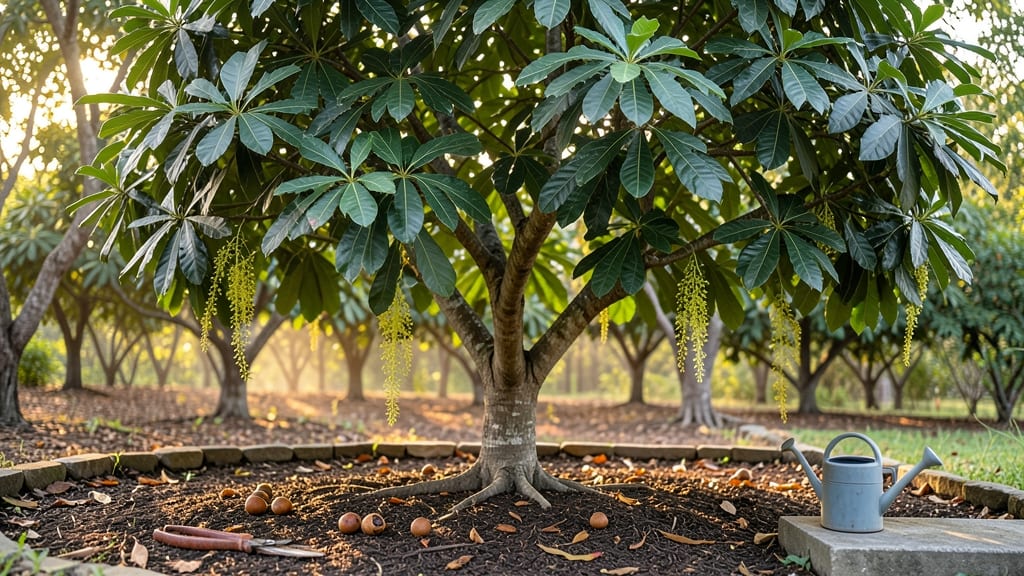
African mahogany trees need strategic pruning to stay healthy year-round, and I’ve learned the hard way that cutting at the wrong time can stress these majestic trees. 🌿 Their thick, glossy leaves and towering branches make them a standout in any landscape, but without proper care, they can become weak or even diseased.
The key is timing—prune in late winter or early spring when the tree is just waking up from dormancy, before new growth begins.
You’ll need basic pruning tools: sharp bypass pruners for smaller branches and a chainsaw for thicker limbs, plus gloves and safety glasses. Always sterilize your tools with rubbing alcohol to prevent spreading disease between cuts.
Start by removing dead, diseased, or crossing branches first—they’re the easiest to spot and the most urgent to address. This isn’t just about aesthetics; it’s about keeping the tree strong and sustainable for years to come.
What you’ll achieve is a tree that thrives with a balanced canopy, allowing sunlight to reach lower branches while maintaining its natural shape. The right cuts encourage new growth in the right places, so you’ll see fresh, vibrant foliage by summer.
Plus, strategic pruning helps prevent storm damage by removing weak limbs before they become hazards. It’s a small effort now that pays off in long-term health.
This method works for both young saplings and mature trees, though larger specimens may require professional help for heavy limbs. Whether you’re shaping a single tree or managing a grove, these principles keep African mahogany trees looking their best while supporting their natural resilience. Let’s get those branches in check!
📚 In This Guide
- What you need
- Instructions
- Tips and common mistakes
- Wrapping up and next steps
What you need
- ● Pruning shears: Bypass pruners (for small branches, ¼"–¾" diameter) – 1 pair (sterilized with rubbing alcohol).
- ● Loppers: For medium branches (¾"–2" diameter) – 1 pair (with a long handle for reach).
- ● Pruning saw: For thick branches (2"+ diameter) – 1 saw (bow or folding saw with sharp teeth).
- ● Gloves: Heavy-duty, cut-resistant (e.g., mechanics’ gloves) – 1 pair (protects from splinters and sap).
- ● Disinfectant: 70% isopropyl alcohol or bleach solution (1 part bleach to 9 parts water) – small bottle (prevents disease spread).
- ● Rag or paper towels: For cleaning tools between cuts – 5–10 sheets.
- ○ Tarp or drop cloth: To collect debris – 1–2 large sheets (optional but handy!).
- ● Extension pole: For high branches (e.g., 3–6 ft reach) – 1 pole (saves your back!).
- ● Safety glasses: Protects eyes from debris – 1 pair (highly recommended!).
- ● Tree wound dressing: (e.g., Tanglefoot or pruning sealant) – small tube (controversial but some swear by it!).
- ● Notebook & pen: To track pruning dates and notes – 1 notebook (for long-term tree health tracking).
Step-by-Step guide for pruning African mahogany trees
Here's how to keep your African mahogany thriving with precise, seasonal cuts.
✂️ Step 1: Assess the Tree Structure and Plan Your Cuts
Start by examining your African mahogany for dead, crossing, or overcrowded branches. I always work from the top down—this prevents accidentally damaging healthy lower limbs when removing heavy upper branches. Use a pruning saw for branches thicker than 1 inch and hand pruners for smaller stems.
Look for branches growing inward or rubbing against others—these compete for sunlight and nutrients. Mark these with a piece of tape or a small flag so you don’t miss them. Healthy branches should have a smooth, green bark and leaves that spread evenly. Avoid cutting more than 25% of the tree’s canopy in a single session—this keeps the tree strong and prevents shock.
✂️ Step 2: Make Clean Cuts at the Right Time
For African mahogany, the best time to prune is late winter or early spring, just before new growth begins. This timing ensures the tree can heal quickly and avoids exposing it to winter stress. Always cut just outside the branch collar—the swollen area where the branch meets the trunk—to promote faster healing and prevent disease.
If you must prune in summer, do it on an overcast day to reduce stress. Make your cuts at a 45-degree angle for branches thicker than ½ inch, sloping away from the trunk. For thinner branches, a straight cut across the branch collar works fine. Sterilize your tools with rubbing alcohol between cuts to prevent spreading bacteria or fungi.
☀️ Step 3: Shape for Airflow and Light Penetration
Open up the canopy by removing branches that block sunlight from reaching the inner foliage. African mahogany responds well to an open, airy shape—this reduces humidity buildup and fungal risks. Focus on thinning out rather than shearing, which can weaken the tree. Aim to create a balanced silhouette where light can reach all branches evenly.
Watch for water sprouts—fast-growing, vertical shoots that appear after pruning. These saplings drain energy from the tree, so remove them as soon as they appear. You’ll know you’ve done it right when the tree’s lower branches start filling in naturally within a few months. This indicates the mahogany is redirecting its energy to strengthen its structure.
🌿 Step 4: Post-Pruning Care for Faster Recovery
After pruning, apply a tree sealant to cuts larger than ½ inch to protect against pests and disease. Water the base of the tree deeply to help it recover, especially if you’ve removed a significant portion of the canopy. Mulch around the base with 2-3 inches of organic mulch, keeping it 6 inches away from the trunk to prevent rot.
Monitor the tree closely for the first few weeks. New growth should appear within 4-6 weeks if conditions are right. If you notice yellowing leaves or wilting, it could mean the tree is stressed—reduce watering slightly and avoid fertilizing until it recovers. A healthy African mahogany will reward you with glossy, dark green leaves and a sturdy, well-shaped form.
Tips & tricks for pruning African mahogany trees
Let me share the hard-won lessons that'll help your African mahogany recover faster and look its best after pruning.
Tool Selection Matters: In Step 1, don't underestimate the importance of sharp tools. Dull blades tear bark instead of making clean cuts, which slows healing and invites disease. I keep a dedicated pruning saw for branches over 1 inch thick and a pair of bypass pruners for smaller stems. Sharpen your tools before each session—it makes all the difference when working with this dense wood.
Seasonal Timing is Critical: The late winter/early spring window in Step 2 isn't just a suggestion—it's when African mahogany enters its growth cycle. Pruning then lets you shape the tree while it's still dormant but ready to heal quickly. If you must prune in summer, that overcast day rule is non-negotiable. Direct sunlight after cuts creates stress points where pests can enter.
Visual Cues for Healthy Cuts: When making your 45-degree angle cuts in Step 2, look for the branch collar—the swollen ridge where the branch meets the trunk. Your cut should end just outside this collar, leaving a small bump. This natural feature helps the tree seal the wound faster. For branches under ½ inch, that straight cut across the collar still needs to be precise—any higher and you'll damage the trunk's protective layers.
Post-Pruning Monitoring: Those first 4-6 weeks after pruning are crucial. I check for new growth every 7-10 days during this period. If you see water sprouts appearing, remove them immediately—they might look vigorous, but they're stealing energy your tree needs for recovery. The goal is to see lower branches starting to fill in naturally, which tells you the mahogany is redirecting its resources to strengthen its structure.
Pro Tips for African Mahogany Tree
- Let me share the hard-won lessons that'll help your African mahogany recover faster and look its best after pruning.
- Tool Selection Matters: In Step 1, don't underestimate the importance of sharp tools.
- Seasonal Timing is Critical: The late winter/early spring window in Step 2 isn't just a suggestion—it's when African mahogany enters its growth cycle.
Frequently asked questions
Got questions about pruning your African mahogany tree?
Here are answers to the most common ones—so you can keep your tree thriving year-round!
When is the best time to prune an African mahogany tree?
The ideal time is late winter to early spring (before new growth starts) or summer (after flowering). Avoid heavy pruning in fall—it can stress the tree before winter. Light shaping in mild seasons is fine, but major cuts should wait for dormant periods.
What happens if I prune at the wrong time?
Pruning in late fall or winter (especially in colder climates) can expose the tree to frost damage or disease. Over-pruning anytime weakens its structure, making it vulnerable to pests. If you must trim outside the ideal window, do so lightly and avoid removing more than 25% of the foliage.
How much can I safely remove during pruning?
For African mahogany, never remove more than 20-30% of the canopy in one session. Heavy pruning stresses the tree, slowing growth or inviting pests. Focus on dead, diseased, or crossing branches first, then shape gradually. Think of it like a haircut—small adjustments over time keep it healthy!
Can I prune an African mahogany tree in all seasons?
Yes, but with caution! Light pruning (removing a few small branches) is safe year-round, but avoid heavy cuts in fall or winter. Summer is the second-best time for shaping, as the tree can recover faster with warm weather. If pruning in summer, do it early in the morning to reduce stress from heat.
What tools do I need for pruning African mahogany?
You’ll need:
- Bypass pruners (for small branches, up to ½ inch thick)
- Loppers (for branches ½ to 1½ inches thick)
- Pruning saw (for thicker branches, 1½+ inches)
- Sterilizing solution (rubbing alcohol or bleach) to clean tools between cuts and prevent disease.
Wrapping up and next steps
The African mahogany tree thrives on care, and strategic pruning is your secret weapon for year-round health and beauty! 🌿 By mastering the right techniques—like timing, tool selection, and structural shaping—you’ll encourage lush growth, prevent disease, and even boost its timber value.
Whether you’re a seasoned gardener or just starting, every careful cut brings your tree one step closer to its full potential.
Ready to take action? Roll up your sleeves and schedule your first pruning session this weekend! Start small, observe your tree’s response, and soon, you’ll be a pruning pro. Happy trimming! ✂️🌳