
Pruning
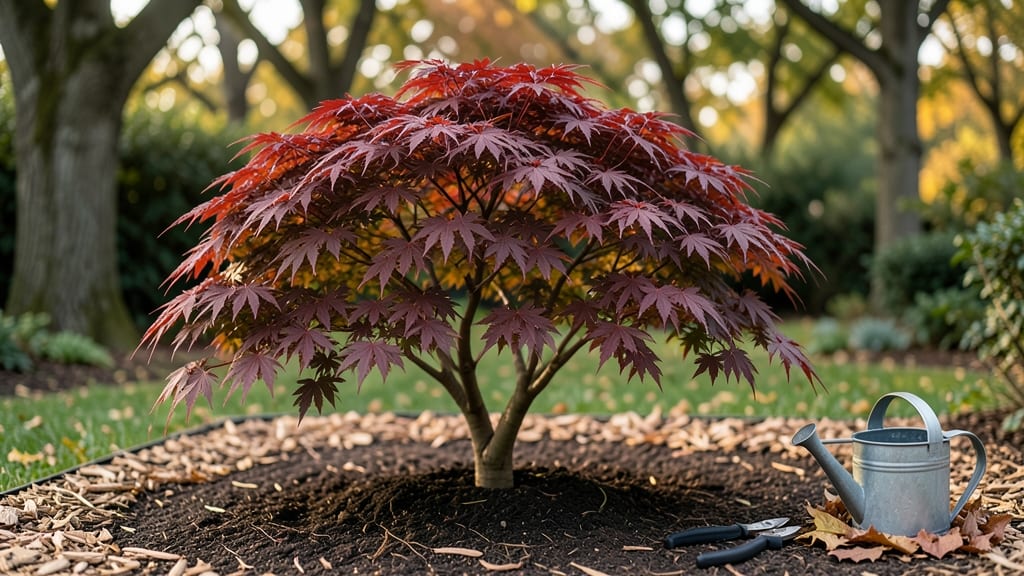
Japanese maple tree care starts with understanding their delicate nature—these trees thrive when treated with gentle hands and thoughtful attention. 🌿 I’ve watched mine go from a fragile sapling to a lush, spreading canopy by following a few key rules: never prune in extreme heat, always use sharp tools, and work slowly to avoid stressing the branches.
The payoff is worth it—your tree will reward you with vibrant foliage and graceful form year after year.
Pruning isn’t just about cutting back; it’s about shaping growth for long-term health. Start with light trimming in late winter to remove dead or crossing branches, then do light maintenance pruning in early summer to encourage bushier growth.
Japanese maples hate heavy pruning—they respond best to gradual adjustments that maintain their natural beauty. Think of it like sculpting: small changes over time create the most stunning results.
What you’ll end up with is a tree that stays compact, vibrant, and resilient through all four seasons. The foliage will remain a rich, jewel-toned green (or your chosen color), and the structure will stay balanced, even in windy conditions.
The key is consistency—30 minutes every few months keeps your tree looking its best without overwhelming you.
This approach works for both container-grown and in-ground Japanese maples, though dwarf varieties need less aggressive pruning. Whether you’re dealing with a 10-foot specimen or a miniature bonsai-style tree, the same principles apply. Let’s get your tree thriving for decades to come.
📚 In This Guide
- What you need
- Instructions
- Tips and common mistakes
- Wrapping up and next steps
What you need
- ● Pruning shears: Bypass pruners (sharp, 6–8” blades) for small branches (1/4” thick). Pro tip: 💡 Sanitize blades with rubbing alcohol between cuts to prevent disease!
- ● Loppers: Bypass or anvil type (18–24” handles) for medium branches (1/4”–2” thick).
- ○ Pruning saw: Curved-tooth saw for thick branches (>2” thick). Optional: A folding pruning saw for hard-to-reach spots.
- ● Gloves: Heavy-duty, cut-resistant gloves (e.g., mechanics’ gloves) to protect hands from thorns and sap.
- ● Ladder or step stool: Sturdy, extendable ladder (or a 3–4 ft. stool) for high branches. Safety first: 🌡️ Use a spotter if working over 10 ft. high!
- ● Disposable pruning bags: 1–2 heavy-duty bags (10–20 gal.) for collecting debris. Eco-friendly tip: ✨ Compost small clippings!
- ● Rag or paper towels: For wiping sap/sticky resin from tools and hands.
- ● Sealing wax or pruning paint: Small tube (e.g., Tanglefoot Tree Wound Pruning Sealer) for cuts >1/2” thick. Note: Only use on large wounds—small cuts heal naturally!
- ● Handheld leaf blower: For clearing debris from the canopy without climbing.
- ● Tree tie or zip ties: To secure branches during heavy pruning (e.g., after storms).
- ● Magnifying glass: For spotting pests or diseases up close.
- ● Notebook & pen: To sketch a pruning plan or track growth progress.
- ● Water spray bottle: For rinsing tools mid-session to prevent sap buildup.
Step-by-step year-round pruning for a thriving Japanese maple
Here’s how I maintain my Japanese maples’ iconic foliage and structure—season by season.
🌿 Step 1: Spring Pruning for New Growth
Start in late March or early April, after the tree has pushed fresh buds but before new leaves fully unfurl. This timing ensures you remove dead wood while avoiding the stress of pruning when the tree is still dormant. Focus on thinning out crowded branches—aim for an open canopy that allows light to reach the interior.
Use clean, sharp pruning shears to make cuts just outside the branch collar (the swollen area where the branch meets the trunk). Avoid leaving stubs, as they invite disease. For larger branches, use three-step pruning cuts to prevent bark tearing. After pruning, apply wound dressing only if the cut is larger than ½ inch—Japanese maples heal best with open air circulation.
✂️ Step 2: Summer Maintenance for Shape and Health
Mid-summer is the time to refine shape and remove any water sprouts (vigorous, upright shoots) that detract from the tree’s graceful form. These sprouts compete with the main canopy for nutrients, so prune them back to a lateral bud or side branch. I also check for diseased or pest-damaged leaves—snip them off immediately to prevent spread.
If your tree looks leggy, lightly tip-prune the longest branches to encourage bushier growth. Never remove more than ¼ of the tree’s canopy in a single session—this prevents shock. Water deeply after pruning to help the tree recover, especially in hot, dry weather.
🍂 Step 3: Fall Cleanup for Winter Readiness
By October or November, remove any dead, diseased, or crossing branches that could weaken the tree over winter. Japanese maples are susceptible to silver leaf fungus, so sterilize your tools with rubbing alcohol between cuts. Focus on structural integrity—this is the best time to address any weak limbs that might snap under snow or ice.
Reduce watering in late fall but keep the soil slightly moist until the ground freezes. Mulch lightly with 2-3 inches of organic mulch (like shredded bark) to insulate roots. Avoid heavy mulching, which can suffocate the tree and attract pests.
⏰ Step 4: Winter Inspection and Light Pruning
Even in winter, take a quick walk around your tree to spot damaged branches from ice or heavy snow. Prune these immediately in dormant season (December–February) to avoid stressing the tree when it’s already conserving energy. Use hand pruners for small branches and a pruning saw for anything thicker than ½ inch.
If you notice buds forming on the wrong branches, lightly prune to redirect growth toward the tree’s natural shape. Avoid heavy pruning in winter—Japanese maples are sensitive to cold stress, and excessive cuts can delay spring flush. A light touch now ensures vibrant foliage come spring.
Tips & tricks for perfect Japanese maple tree care
Here’s what I’ve learned after years of keeping my Japanese maples thriving—these details make all the difference between a struggling tree and one that flourishes.
Timing is Everything: The window between late March and early April for spring pruning is narrower than it seems. I’ve learned to check for bud swell first—when you see tiny green buds but leaves haven’t unfurled, that’s your cue. Miss this timing, and you risk pruning while the tree is still dormant (which stresses it) or too late (when new growth is already vulnerable). For summer maintenance, I schedule my pruning sessions on overcast days to reduce stress from midday sun.
Tool Precision Matters: Japanese maples heal differently than other trees. That’s why I never compromise on tool quality—dull shears tear bark, inviting disease. For branches thicker than ½ inch, I always use the three-step cutting method: first a notch on the underside, then a second cut to create a hinge, and finally the clean break. This technique prevents bark from stripping away, which can take years to heal properly. I also keep rubbing alcohol handy between cuts to sterilize tools, especially during fall cleanup when silver leaf fungus risks lurk.
Seasonal Adjustments: Winter pruning requires extra caution. I’ve seen too many trees suffer from overzealous winter cuts—Japanese maples are particularly sensitive to cold stress. When inspecting for damaged branches in December-February, I only remove what’s absolutely necessary. For any cuts larger than ½ inch, I apply a thin layer of wound dressing to protect the exposed area. The key is to think of winter as a time for light maintenance rather than major restructuring.
Canopy Balance Secret: The ¼ canopy rule in summer isn’t just about quantity—it’s about distribution. I’ve found that thinning from the inside out creates the most dramatic improvement in light penetration. Start by removing the smallest, most crowded branches first, then work your way up. This approach maintains the tree’s natural shape while preventing the leggy growth that often follows aggressive tip-pruning. After each session, I always water deeply to help the tree recover, especially during hot, dry spells.
Pro Tips for Japanese Maple Tree Care
- Here’s what I’ve learned after years of keeping my Japanese maples thriving—these details make all the difference bet...
- Timing is Everything: The window between late March and early April for spring pruning is narrower than it seems. I’v...
- Tool Precision Matters: Japanese maples heal differently than other trees. That’s why I never compromise on tool qual...
Frequently asked questions
Got questions about keeping your Japanese maple thriving?
Whether you're a first-time grower or a seasoned gardener, these answers will help you navigate common challenges with ease.
When is the best time to prune a Japanese maple?
Prune your Japanese maple late winter or early spring (just before buds swell) for best results. Avoid heavy pruning in summer—it stresses the tree. Light shaping can be done in early fall, but skip winter pruning if temperatures drop below freezing. Pro tip: Always sterilize tools to prevent disease!
Can I prune a Japanese maple in summer?
Yes, but minimize heavy cuts—summer pruning can cause stress and attract pests. If you must prune, do so early morning or late evening to reduce water loss. Focus on removing dead branches or shaping lightly. Warning: Avoid pruning during heatwaves or droughts.
What should I do if my Japanese maple’s leaves turn brown?
Brown leaves often signal overwatering, underwatering, or sunburn. Check soil moisture (it should be evenly damp but not soggy). If leaves scorch, move the tree to partial shade. Fungal issues? Prune affected branches and apply fungicide. Pro tip: Mulch to retain moisture and protect roots!
How much can I prune a young Japanese maple?
For saplings (under 5 years), limit pruning to 10-15% of the canopy per year. Avoid cutting into the main trunk or large branches—this can stunt growth. Focus on removing dead, crossing, or weak branches to encourage a strong structure. Remember: Patience is key!
Are there alternatives to traditional pruning for shaping?
Try pinching (removing new growth tips) to encourage bushiness or thinning (selectively removing branches to improve airflow). For dramatic shapes, use coppicing (cutting back to the trunk) on older trees—but only if the variety tolerates it (e.g., Bloodgood or Shishigashira). Caution: Avoid aggressive methods on delicate cultivars like Dissectum.
Wrapping up and next steps
Caring for your Japanese maple tree is all about patience, precision, and love—just like nurturing a prized piece of art! 🌿 With the right tools, seasonal pruning techniques, and a watchful eye for its unique needs, you’ll reward yourself with a stunning, vibrant canopy that brings beauty to your landscape year after year. Now’s the perfect time to grab those shears and get started—or plan ahead for your next pruning session!
Ready to take the next step? Bookmark this guide, sketch a quick pruning plan, and schedule your first session—your Japanese maple will thank you with breathtaking foliage! 🌸