
Pruning
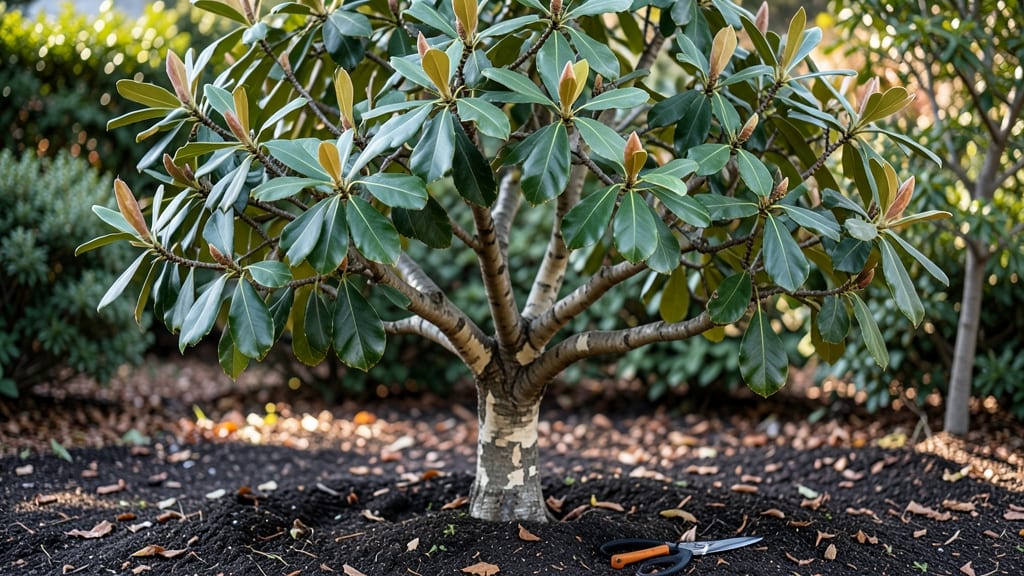
Fall is the perfect time to shape your Jane magnolia tree for next year’s showstopping blooms—before the first frost arrives. ✨ This glossy-leaved beauty thrives when you prune after it drops its flowers but before winter dormancy sets in, giving it time to heal before spring’s growth surge.
The key is removing dead wood and thinning crowded branches, but never cutting into next year’s flower buds hidden along the stems.
Your Jane magnolia’s fall prep only needs three simple tools: sharp bypass pruners, rubbing alcohol for sterilizing cuts, and a ladder if branches reach higher than your head. I’ve learned the hard way that skipping sterilization leads to fungal infections—now I wipe blades between cuts to keep the tree healthy.
The goal is to open up the canopy so sunlight reaches the center, where those iconic pink blooms form.
What you’ll end up with is a tree that bursts into bloom earlier and more dramatically than ever before. Those glossy leaves stay vibrant longer, and the structure supports heavier flower clusters without sagging.
Plus, you’ll avoid the heartbreak of broken branches under next spring’s weight. Think of this as a spa day for your magnolia—it’ll thank you with bigger, bolder blooms come spring.
This method works for both young trees and mature specimens, though older magnolias may need more gradual thinning over a few seasons. If your tree is in a windy spot, now’s also the time to check for weak limbs that could snap in winter storms.
With just 30 minutes of focused work, you’re setting the stage for a spectacular show next year.
📚 In This Guide
- What you need
- Instructions
- Tips and common mistakes
- Wrapping up and next steps
What you need
- ● Pruning shears: Bypass pruners (sharp, clean, and disinfected with rubbing alcohol or bleach solution—1 pair).
- ● Loppers: For thicker branches (3/4"–2" diameter)—1 pair with a bypass blade for precision.
- ● Pruning saw: For branches over 2" in diameter—1 handheld or folding saw with a fine-toothed blade.
- ● Gloves: Heavy-duty, cut-resistant gardening gloves (1 pair) to protect your hands from thorns and sap.
- ● Disinfectant: 70% isopropyl alcohol or a 10% bleach solution (for sterilizing tools between cuts).
- ○ Pruning sealant: Optional but helpful for larger cuts (1 small bottle) to prevent disease entry.
- ● Ladder or step stool: Sturdy and tall enough to reach the tree’s canopy (1 unit—ensure it’s stable!).
- ● Heavy-duty trash bags: For collecting debris (2–3 bags).
- ● Notebook & pen: To jot down notes on cuts made (helpful for tracking progress!).
- ● Safety glasses: To shield your eyes from flying debris.
- ● Work apron: With pockets for tools and quick wipe-downs.
- ● Tree wound dressing: For sealing larger wounds (use sparingly—Jane Magnolias heal best with minimal interference!).
- ● Extension pole pruners: For high branches without a ladder (if available).
- ● Weather check: Plan for a dry, overcast day—humidity can spread disease!
Step-by-Step instructions for pruning Jane magnolias in fall
Here's the method I use to refresh Jane magnolias—timing and technique matter most.
✂️ Step 1: Time Your Pruning Precisely
Wait until after the first hard frost but before new growth starts—typically late November to early December in most climates. The tree will be dormant, making it easier to see the structure without risking spring blooms. If you prune too early, you might encourage tender new growth that won't survive winter.
Here's the thing—Jane magnolias bloom on old wood, so never cut back into last year's growth. Look for thick, woody branches that have already flowered. These are your candidates for shaping, while current season's growth should stay untouched until spring.
🌿 Step 2: Assess and Remove Problem Branches
Start by removing any dead, diseased, or crossing branches—these compete for energy and create weak spots. Use clean, sharp bypass pruners to make 45-degree cuts just outside the branch collar (the swollen area where the branch meets the trunk). Never leave stubs; this invites rot and weak regrowth.
Next, target overly dense growth that blocks sunlight from reaching the center. Magnolias need good airflow, so thin out branches that grow inward. You'll know you're doing it right when you can see light filtering through the canopy after removing 10-15% of the foliage.
☀️ Step 3: Shape for Next Year’s Blooms
Step back and visualize the tree's natural shape. Jane magnolias thrive with an open vase form, so aim to create a rounded silhouette by shortening overly long branches by one-third at most. Always cut back to a bud or lateral branch—never to a stub. This ensures the tree directs energy to strong new growth in spring.
Focus on the outer third of the tree first. The goal is to encourage blooms on exposed branches where sunlight can reach. Avoid heavy pruning in the center unless absolutely necessary—this is where next year's flower buds form.
💧 Step 4: Clean Up and Protect the Tree
After pruning, sterilize your tools with rubbing alcohol to prevent spreading disease. Collect and dispose of all clippings—never leave them on the ground, as they can harbor pests. A quick spray of copper fungicide on cuts larger than ½ inch helps prevent infection.
Mulch the base with 2-3 inches of organic mulch (like shredded bark) to insulate roots. Keep mulch 6 inches away from the trunk to avoid rot. Water deeply if fall has been dry—this helps the tree recover before winter dormancy.
Tips & tricks for perfect Jane magnolia tree pruning
Real talk: Pruning Jane magnolias in fall can feel intimidating, but these simple tricks will help you avoid common mistakes and set your tree up for spectacular spring blooms.
Timing is Everything: That late November to early December window is non-negotiable. I learned this the hard way after accidentally pruning too early and watching new growth get frostbitten. Check your local frost dates—if you're unsure, wait until you see those first brown leaves that stay put. A quick phone call to your local cooperative extension office can confirm your exact frost date if you're on the fence.
Branch Collar Matters More Than You Think: When making those 45-degree cuts in Step 2, focus on the branch collar—the swollen area where the branch meets the trunk. This isn't just a detail—it's where the tree's natural healing begins. If you cut too close or leave stubs, you're basically inviting rot and weak regrowth. Think of it like making a clean incision when you're gardening—you want that clean break to heal properly.
Light Test is Your Best Friend: After thinning that dense growth, step back and do the light test. You should be able to see sunlight filtering through the canopy like a dappled forest floor. If you're still struggling to see light, you haven't removed enough. Remember, magnolias need that airflow—it's what keeps them healthy and encourages those gorgeous blooms. Aim for that 10-15% reduction, but don't be afraid to go a bit further if needed.
Tool Care Prevents Disaster: That rubbing alcohol sterilization in Step 4 isn't just a suggestion—it's critical. I've seen pruning tools spread disease from one tree to another faster than you can say "magnolia blight." Keep a small bottle of rubbing alcohol in your tool bag, and wipe down your pruners between every 3-4 cuts. It takes 10 seconds and saves months of heartache. Also, sharpen those bypass pruners regularly—they should cut cleanly through a small branch with just a slight squeeze.
Pro Tips for Jane Magnolia Tree In Fall
- Real talk: Pruning Jane magnolias in fall can feel intimidating, but these simple tricks will help you avoid common m...
- Timing is Everything: That late November to early December window is non-negotiable. I learned this the hard way afte...
- Branch Collar Matters More Than You Think: When making those 45-degree cuts in Step 2, focus on the branch collar—the...
Frequently asked questions
Got questions about pruning your Jane magnolia tree in fall for stunning spring blooms?
Here are the answers to the most common queries—from timing to tools and troubleshooting—so you can prep like a pro!
When is the exact best time to prune a Jane magnolia in fall?
The ideal window is late October to early November, after leaves drop but before hard frosts. Pruning too early risks stimulating new growth that won’t harden off before winter. Wait until temps dip below 50°F (10°C) at night for safety.
Can I prune a Jane magnolia in late fall or even winter?
While you can prune in late fall or winter, it’s not ideal. Late fall pruning (Dec–Jan) risks frost damage to fresh cuts, and winter pruning (Feb+) may wake the tree too early, leaving blooms vulnerable to late frosts. Stick to fall for best results!
Will pruning my Jane magnolia now affect next year’s flowers?
Jane magnolias bloom on old wood, so prune lightly—focus on removing dead, crossing, or weak branches. Heavy pruning now can reduce next spring’s blooms. Aim to remove no more than 20–30% of the canopy total.
What if my Jane magnolia’s branches are already dead or diseased?
Remove dead/diseased branches anytime, but do it last to avoid spreading pathogens. Sterilize tools with rubbing alcohol between cuts. For severe issues, prune in late winter (Feb–March) to assess regrowth before spring.
Are there alternatives if I miss fall pruning?
Yes! Prune in late winter (Feb–March) instead—just avoid pruning after buds swell (late March–April), as this cuts off next year’s blooms. Light shaping in summer (June–July) is also safe, but avoid heavy cuts.
Wrapping up and next steps
The Jane Magnolia tree in fall is your golden opportunity to set the stage for next year’s breathtaking blooms!
By pruning now—with the right tools, timing, and technique—you’ll encourage healthier growth, vibrant flowers, and a stunning silhouette. Don’t wait until spring: a little effort now means big rewards when those iconic white blossoms return.
Ready to take action? Grab your pruners, mark your calendar for late fall, and give your Jane Magnolia the care it deserves. 🌿✨ Your future spring garden will thank you!