
Planting
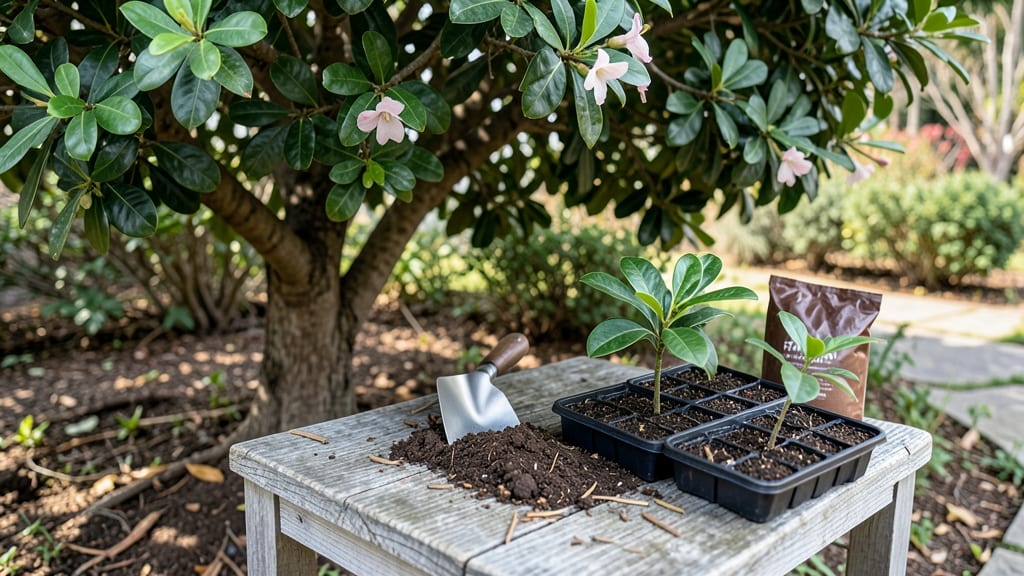
Planting a guava tree in your backyard means sweet, tropical fruit within 2-3 years—if you nail the soil and climate first. 🌱 I learned the hard way that guavas hate soggy roots and cold snaps, but once established, they reward you with fragrant blossoms and juicy fruit.
The secret starts with well-draining soil and a spot where temperatures stay above 25°F year-round.
You’ll need a 1-2 gallon container for young trees or a hole twice as wide as the root ball for outdoor planting. Guavas thrive in full sun, so pick a location with 6+ hours of direct light daily.
Amend heavy soil with compost or sand to prevent waterlogging—the #1 killer of young guava trees. Container growers should use fast-draining potting mix with perlite.
After planting, water deeply to settle the roots, then keep soil consistently moist but not soggy for the first month. Yellowing leaves? That’s usually overwatering or poor drainage.
Prune any dead branches early to encourage strong growth. With patience, you’ll see glossy new leaves within weeks and your first fruit by summer.
Outdoor cultivation works best in USDA Zones 9-11, but container growers in cooler climates can move trees indoors during winter. Just avoid sudden temperature drops—they’ll shock the tree.
Once established, guavas need minimal care, but watch for scale insects and fruit flies. Sweet rewards come to those who plant right!
📚 In This Guide
- What you need
- Instructions
- Tips and common mistakes
- Wrapping up and next steps
What you need
- ● Guava sapling or seeds: 1 healthy Psidium guajava sapling (preferred for faster growth) or 5–10 fresh guava seeds (if starting from seed).
- ● Pro tip: 💡 Buy saplings from a reputable nursery to ensure disease-resistant varieties.
- ● Planting site: Full sun exposure (6+ hours daily).
- ● Well-draining soil (pH 5.0–7.0).
- ● Space: 15–20 feet between trees (guavas need room to thrive!).
- ○ Soil amendments (optional but helpful): Compost (1–2 gallons) or aged manure to enrich soil.
- ● Sand or perlite (1 part) to improve drainage in heavy clay.
- ● Tools: Trowel or shovel (for digging).
- ● Garden gloves (to protect your hands).
- ● Watering can or hose (with a gentle spray nozzle).
- ● Pruning shears (for shaping later).
- ● Mulch (straw or wood chips) to retain moisture and suppress weeds.
- ● Fertilizer (balanced 10-10-10 or citrus-specific fertilizer for young trees).
- ● Pest control (neem oil or insecticidal soap if pests appear).
- ● Drip irrigation system (for consistent watering in hot climates).
Step-by-step guide to planting a thriving guava tree
Here's how to establish a productive guava tree with minimal stress and maximum yield.
🌱 Step 1: Select and Prepare the Planting Site
Guava trees thrive in full sun with at least 6-8 hours of direct sunlight daily. Choose a location with well-draining soil—guavas despise soggy roots. If your soil is heavy clay, amend it with 3-4 inches of compost mixed into the top 12 inches of soil. The ideal pH range is 5.5-7.0, so test your soil before planting.
Dig a hole twice as wide as the root ball but only as deep as the container the tree came in. Loosen the sides of the hole with a shovel to encourage root spread. Here's the thing—guavas grow fast, so give it space. Aim for 15-20 feet between trees to allow airflow and easy harvesting.
🪴 Step 2: Plant with Proper Spacing and Support
Remove the guava tree from its container and gently loosen the roots if they're circling. Position it in the hole so the top of the root ball sits level with the surrounding soil—burying the trunk too deep suffocates the plant. Backfill with native soil mixed with a handful of balanced 10-10-10 fertilizer to give it a nutrient boost.
Tap the soil lightly around the base to eliminate air pockets, then water deeply until moisture reaches 6 inches down. I always add a 4-inch layer of wood chips around the base (but not touching the trunk) to retain moisture and suppress weeds. Install a stake or support if needed—young guava trees can get top-heavy with new growth.
☀️ Step 3: Establish a Watering and Fertilizing Routine
Water your guava tree twice weekly for the first month after planting, then taper to once weekly once established. The key is deep watering—aim for 1-2 gallons per watering to encourage deep root growth. You'll know it's right when the soil feels moist 6 inches down but not saturated.
Fertilize lightly 3 months after planting with a low-nitrogen, high-phosphorus blend (like 5-10-10) to promote root development. Avoid heavy nitrogen—it encourages leafy growth at the expense of fruit production. Here's what I do: sprinkle ½ cup of fertilizer around the drip line, then water thoroughly to distribute it evenly.
✂️ Step 4: Prune for Shape and Fruit Production
Prune your guava tree once in late winter (before new growth begins) to remove dead, diseased, or crossing branches. Use clean, sharp pruners to make cuts just above a leaf node. Guavas fruit on new wood, so avoid heavy pruning—just shape it to open the canopy for sunlight penetration.
Real talk: guavas grow aggressively, so prune sparingly the first year. Focus on removing suckers (shoots growing from the base) and any branches growing inward. You'll see better fruit set when the tree receives even sunlight and air circulation—this prevents fungal issues and encourages flowering.
Tips & tricks for planting a thriving guava tree
Between us, these little details make the difference between a struggling sapling and a fruit-bearing powerhouse. Here's what nobody tells you about guava tree success.
Soil Prep Secret: That 3-4 inches of compost isn't just about nutrients—it's about creating the perfect air-to-water ratio guavas crave. I've seen heavy clay soil turn into a guava-friendly environment simply by mixing in compost to that 12-inch depth. For extra insurance, add a handful of perlite or coarse sand to break up compaction, especially if your native soil feels dense. Guavas hate waterlogged roots, so this prep work prevents future headaches.
Planting Depth Matters: The instructions say to position the root ball so its top sits level with soil—but here's the thing: if your container had drainage holes, the root ball might be slightly compressed. Gently loosen those bottom roots before planting to prevent them from growing in a tight circle. This encourages outward root spread, which means better stability and nutrient uptake. I've seen trees planted too deep struggle with trunk rot, so double-check that depth before backfilling.
Watering Wisdom: Those first two weeks are critical. While the instructions call for twice-weekly watering, I've found that morning watering (before 10am) prevents fungal issues that thrive in damp foliage. Use a rain gauge or trowel to check moisture—if the soil 6 inches down feels dry, water again. Pro tip: Water at the base, not overhead, to avoid wetting leaves which can lead to mildew. A soaker hose makes this effortless.
Fertilizer Timing: The 3-month wait before fertilizing might seem long, but it's intentional. Guavas need time to establish roots before they can handle nutrients. When you do fertilize, that ½ cup of 5-10-10 should be spread in a ring about 12 inches from the trunk—not piled at the base. This encourages outward root growth rather than concentrating nutrients where they might burn tender new roots. Think of it as feeding the roots first, not the leaves.
Pro Tips for Plant Guava Tree
- Between us, these little details make the difference between a struggling sapling and a fruit-bearing powerhouse.
- Soil Prep Secret: That 3-4 inches of compost isn't just about nutrients—it's about creating the perfect air-to-water ratio guavas crave.
- Planting Depth Matters: The instructions say to position the root ball so its top sits level with soil—but here's the thing: if your container had drainage holes, the root ball might be slightly compressed.
Frequently asked questions
Got questions about growing your own guava tree? You’re not alone! Here are answers to the most common queries to help you succeed—from timing to troubleshooting.
What’s the best time of year to plant a guava tree?
Plant your guava tree in early spring (after the last frost) or late summer (before fall temperatures drop). Guavas thrive in warm climates, so avoid planting in winter if you live in a colder zone. Young trees are sensitive to frost, so wait until the soil is at least 60°F (15°C).
How long does it take for a guava tree to bear fruit?
With ideal conditions, a guava tree can produce fruit in 3–5 years. Dwarf varieties may fruit sooner (2–3 years), while standard trees take longer. Patience is key—focus on proper care (water, sunlight, and soil) to speed up the process.
Why isn’t my guava tree growing? Common problems and fixes
Slow growth often stems from:
- Poor drainage: Guavas hate soggy roots. Amend clay soil with compost or sand.
- Nutrient deficiency: Yellow leaves? Fertilize with citrus-specific or balanced fertilizer (10-10-10) in spring.
- Pests: Watch for aphids or scale insects. Spray with neem oil or insecticidal soap.
- Cold stress: If leaves brown in winter, mulch the base and protect young trees with frost cloth.
Can I grow a guava tree in a pot? What size container do I need?
Yes! Guavas adapt well to containers, but they need space. Use a pot at least 18–24 inches wide and deep with drainage holes. Dwarf varieties (like ‘Mexican Cream’) work best. Move pots indoors or to a garage if temperatures drop below 40°F (4°C). Repot every 2–3 years for root health.
Do guava trees need a pollinator to produce fruit?
Most guava varieties are self-pollinating, meaning they don’t need bees or other pollinators to bear fruit. However, cross-pollination can improve yields—plant two different varieties nearby if possible. Wind or gentle shaking of branches can also help transfer pollen.
How much sunlight does a guava tree need daily?
Guavas are sun-worshippers! They thrive with 6–8 hours of direct sunlight daily. In hot climates, provide afternoon shade to prevent leaf scorch. If growing indoors, place near a south-facing window or use grow lights for 12+ hours/day.
Wrapping up and next steps
Planting a guava tree is a rewarding journey that brings tropical flavors right to your doorstep! 🌱 With the right soil, sunlight, and care, you’ll soon enjoy sweet, fragrant fruit—plus stunning foliage year-round.
Whether you’re a seasoned gardener or a beginner, these steps make it easy to nurture a thriving guava tree.
Now that you’re ready to plant, take the next step: mark your calendar for regular watering and pruning sessions. Watch your tree grow, and soon, you’ll be harvesting homegrown guavas to share with friends and family. Happy planting! 🌟