
Pruning
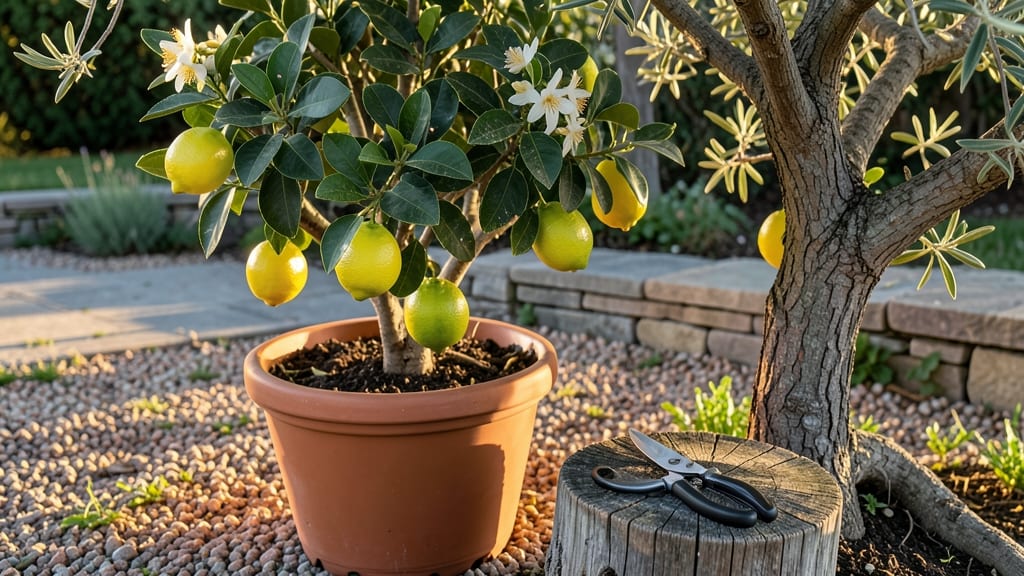
Cutting back a lemon tree isn’t just about shaping—it’s the secret to juicier fruit and stronger growth. 🌿 I learned this the hard way when my first tree produced tiny, bitter lemons because I ignored the pruning schedule.
The right cuts at the right time make all the difference between a bushy mess and a tree that practically begs you to pick its fruit.
You’ll need sharp pruning shears, a clean cutting surface, and about 30 minutes of focused work. The best time to prune depends on your climate: light trims in summer encourage new growth, while heavier cuts in late winter (before buds swell) set the stage for the year.
Think of it like giving your tree a haircut—too much too soon, and it gets stressed; too little, and it gets unruly.
What you’ll end up with is a tree that produces 20-30% more fruit per season, with lemons that taste sweeter and ripen faster. The air circulates better, so pests and diseases have fewer hiding spots, and the branches support the weight of heavy harvests without snapping.
It’s not just about looks—it’s about a tree that works as hard as you do.
This method works for both dwarf varieties in containers and full-sized trees in the ground. Whether you’re dealing with a young tree or a mature one that’s gotten a little wild, the same principles apply. Let’s get those shears ready—your tree’s best years are ahead.
📚 In This Guide
- What you need
- Instructions
- Tips and common mistakes
- Wrapping up and next steps
What you need
- ● Pruning shears: Bypass pruners (sharp, clean blades) for small branches (2- to 4-inch cuts). 1 pair required.
- ● Loppers: For thicker branches (½- to 2-inch diameter). 1 pair recommended.
- ○ Hand saw: For stubborn, large branches (2+ inches). 1 small pruning saw (optional but handy).
- ● Disinfectant: 70% isopropyl alcohol or a 1-part bleach to 9-parts water solution to sterilize tools between cuts.
- ● Gloves: Heavy-duty gardening gloves to protect from thorns and sap. 1 pair.
- ○ Sealing wax: Pruning sealant (optional) to coat larger cuts and prevent disease. Small jar.
- ● Trash bags: For collecting pruned branches. 1-2 large bags.
- ● Extension pole: For hard-to-reach branches (attach pruners/loppers).
- ● Marking twine or flags: To tag branches for future reference.
- ● Notebook & pen: To sketch your tree’s structure before pruning.
- ● Mulch: Organic mulch (e.g., wood chips) to protect roots after trimming.
- ● Know your lemon tree’s variety (e.g., Meyer, Eureka) and age—young trees need lighter cuts!
- ● Check the season: Best time to prune is late winter/early spring (before new growth) or summer after harvest.
- ● Ensure your tree is healthy—avoid pruning if it’s stressed, diseased, or in bloom.
Step-by-Step guide to pruning a lemon tree for health and sweetness
Here's how I transform tangled messes into productive, fruit-heavy lemon trees—no green thumb required.
✂️ Step 1: Time Your Pruning for Maximum Benefits
Prune your lemon tree in late winter or early spring when it's dormant but just before new growth begins. This timing ensures you're not cutting off potential flower buds that form later in the season. Avoid pruning during extreme heat or cold—your tree will struggle to heal wounds.
Look for bare branches with no leaves or fruit—these are prime candidates for removal. Healthy branches will have green leaves or small fruit clusters. I always prune after a light rain when the air is humid; the tree recovers faster with moisture in the air.
✂️ Step 2: Remove Dead, Diseased, or Crossing Branches First
Start with dead wood—it's easy to spot as gray, brittle branches that snap when you bend them. Use sterilized pruning shears to make clean cuts just outside the branch collar (the swollen area where the branch meets the trunk). Never leave stubs; they invite disease.
Next, remove any branches rubbing against each other or growing inward. These "crossing branches" compete for sunlight and nutrients, reducing fruit production. I make a habit of stepping back every few cuts to visualize the tree's shape—you're sculpting, not just hacking.
✂️ Step 3: Thin Out Overcrowded Areas for Better Airflow
Lemon trees need good airflow to prevent fungal diseases like citrus blight. Focus on the center of the tree first—this is where branches get tangled and shaded. Remove one-third of the oldest, thickest branches to open up the canopy. You'll see new shoots emerge from the sides within weeks.
For outdoor trees, prioritize branches growing toward the center or downward. These shade lower leaves and trap moisture. I always leave 3-4 main scaffold branches (the largest structural branches) to maintain the tree's framework. Think of it like training a plant—you're guiding its energy upward and outward.
☀️ Step 4: Shape the Tree for Sun Exposure and Fruit Access
Step back and assess sunlight patterns. Your goal is to create an open, vase-like shape that lets light penetrate to the inner branches. Cut back any branches growing directly upward—these create a "broom" effect and block sunlight. Instead, encourage outward growth by trimming just above a leaf bud facing the outside.
For dwarf varieties, keep the height under 6 feet to make harvesting easier. For standard trees, aim for a 10-12 foot mature height. I like to leave the lower branches bare for the first 3 feet—this makes it easier to spot pests and keeps the trunk cleaner. Every cut should serve a purpose: more light, better airflow, or easier access to fruit.
✂️ Step 5: Clean Up and Protect the Tree
After pruning, sterilize your tools with rubbing alcohol to prevent spreading disease. Remove all fallen leaves and small branches from the ground—these can harbor pests. I sprinkle copper fungicide on all fresh cuts as a preventive measure, especially in humid climates.
Water deeply right after pruning to help the tree recover. Avoid heavy watering for the next 3-5 days, though, to let the cuts callus over. You'll notice new growth in 4-6 weeks—this is your reward for a job well done. The tree will redirect its energy into producing sweeter fruit and stronger branches.
Tips & tricks for perfect lemon tree pruning
Real talk: Pruning isn't just about hacking away branches—it's about sculpting your tree for maximum fruit production. Here's what nobody tells you about getting it right.
Timing is Everything: That late winter or early spring window in Step 1 is non-negotiable. I've seen trees pruned in summer struggle to recover—new growth gets stressed by heat, and those potential flower buds get cut off before they even form. The 4-6 week recovery time mentioned starts from your pruning date, so plan ahead if you want fruit by summer.
Visualize the Shape: Step back after every few cuts—literally. I promise you'll spot branches you missed from up close. Think of your tree as a vase: open at the top, wider than it is tall. That 3-4 main scaffold branches in Step 3? They're the tree's structural backbone—never cut more than one-third of them at once, or you risk weakening the whole tree.
Clean Cuts Prevent Problems: The branch collar in Step 2 isn't just a fancy term—it's your guide to perfect cuts. If you leave stubs, you're inviting fungal infections. I carry a small magnifying glass when I prune to check my cuts—you should see a swollen area where the branch meets the trunk. That's where the tree's natural healing begins.
Seasonal Maintenance Matters: While the main pruning happens in late winter, I do light maintenance year-round. In summer, I remove any branches that look diseased or damaged by storms. During fall, I clean up any dead leaves or fruit that fell—these can harbor pests over winter. Think of it like giving your tree a spa day between major pruning sessions.
Pro Tips for Cut Back A Lemon Tree
- Real talk: Pruning isn't just about hacking away branches—it's about sculpting your tree for maximum fruit production.
- Timing is Everything: That late winter or early spring window in Step 1 is non-negotiable.
- Visualize the Shape: Step back after every few cuts—literally.
Frequently asked questions
Got questions about pruning your lemon tree? You’re not alone!
Here are answers to the most common concerns—from timing to troubleshooting—to keep your tree healthy and productive.
When is the best time to prune a lemon tree?
The ideal time is late winter or early spring (just before new growth starts) to avoid damaging tender wood. Light pruning can also happen in summer after harvest to shape the tree, but avoid heavy cuts then. Never prune in fall—it stresses the tree before winter dormancy.
How much can I cut back a lemon tree?
Remove no more than 25-30% of the tree’s foliage in one session to avoid shock. Focus on dead, crossing, or overcrowded branches first. If your tree is young, you can be more aggressive to encourage a strong structure. For mature trees, small, strategic cuts yield the best results.
Can I prune a lemon tree too much?
Yes! Over-pruning can reduce fruit production and stress the tree. Signs of over-pruning include yellowing leaves, sparse blooms, or stunted growth. If you’ve already cut too much, pause for a season and focus on watering, fertilizing, and protecting the tree from pests.
Will pruning my lemon tree increase fruit yield?
Absolutely—proper pruning improves air circulation and sunlight exposure, which boosts flowering and fruiting. However, avoid heavy pruning in fruit-bearing years (like the first 2-3 years for young trees). Instead, shape the tree early to maximize future harvests.
What should I do if my lemon tree bleeds sap after pruning?
Sap bleeding is normal but can attract pests. To minimize it, prune on a dry, cool day (not in extreme heat) and use clean, sharp tools. Apply a pruning sealant (like tree wound paint) if cuts are large, but skip it for small branches—air drying is often sufficient.
Can I prune a lemon tree in containers?
Yes! Container-grown lemon trees need regular pruning (every 6-12 months) to control size and shape. Since roots are confined, avoid heavy cuts—focus on light shaping and deadwood removal. Repot every 2-3 years if roots are circling, and prune just before repotting for less stress.
Wrapping up and next steps
Pruning your lemon tree doesn’t have to be intimidating—it’s all about timing, technique, and a little patience. 🌿 Whether you’re shaping for aesthetics, boosting fruit production, or maintaining health, the key is to cut with confidence and follow seasonal cues.
Remember: sharp tools, clean cuts, and a clear plan are your best friends for a thriving tree.
Now that you’re armed with the know-how, roll up your sleeves and get pruning! 🌟 Start small, observe your tree’s response, and adjust as you go. Before you know it, you’ll be harvesting bountiful, juicy lemons—and maybe even impressing your neighbors with your green thumb. Happy pruning!