
Size
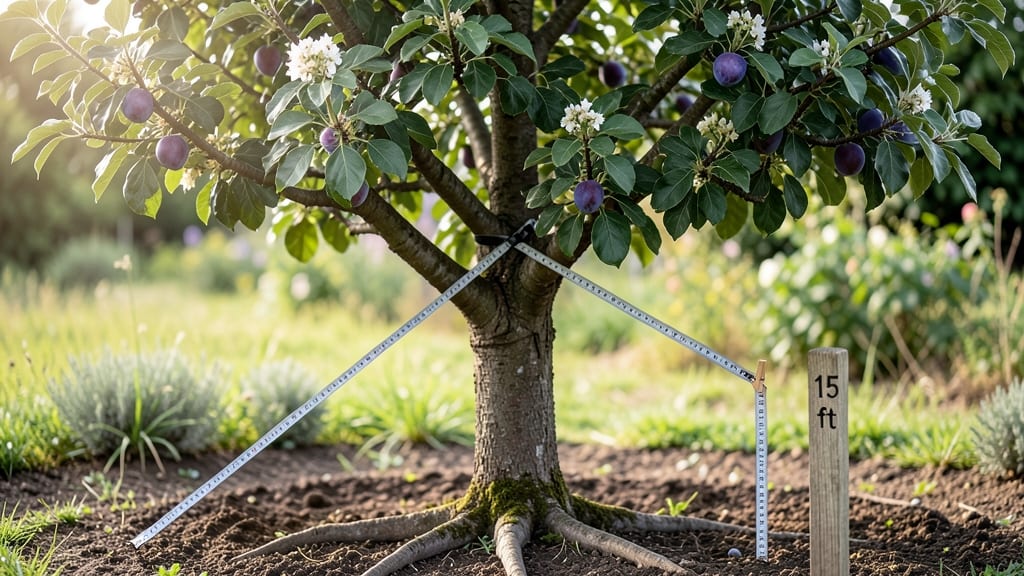
Plum trees can dwarf your expectations—or your backyard—depending on the variety and rootstock. 🌳 My first plum tree, a standard Japanese plum, stretched 25 feet tall and spread nearly as wide, forcing me to rethink my small suburban yard.
The difference between a 20-foot European plum and a 6-foot dwarf hybrid is night and day, and rootstock choices can shrink even full-size varieties by half.
Most standard plum trees need 15-25 feet of space, with some vigorous types reaching 30 feet if unpruned. Dwarf and semi-dwarf varieties, though, fit neatly into 8-12 feet of space, making them perfect for urban gardens or small orchards.
Growth rates vary too—some varieties add 2-3 feet per year, while others grow slower, especially in cooler climates.
With proper pruning, you can control spread and height, keeping branches manageable even on larger trees. A well-maintained plum tree will produce abundant fruit while staying within your space limits, whether you have a sprawling orchard or just a sunny corner for a single tree.
Before planting, check your variety’s mature size—it’s the key to avoiding overcrowding and ensuring years of sweet harvests. Whether you choose a towering standard or a compact dwarf, the right space makes all the difference.
📚 In This Guide
- What you need
- Instructions
- Tips and common mistakes
- Wrapping up and next steps
What you need
- ● Plum Tree Sapling: Choose a variety (e.g., Stanley, Santa Rosa, or Methley) based on your climate and desired size. Buy from a nursery or garden center (1-3 years old for best establishment).
- ● Shovel: A round-point shovel (18-24 inches) for digging planting holes.
- ● Garden Gloves: Heavy-duty, waterproof gloves to protect hands from thorns and soil.
- ● Pruning Shears: Bypass pruners (sharp, 6-8 inch blades) for trimming branches.
- ● Measuring Tape: 25-foot tape to track tree height and spread over time.
- ● Mulch: 3-4 inches of organic mulch (wood chips, straw) to retain moisture and suppress weeds.
- ● Watering Can or Hose: A soaker hose or 5-gallon watering can for deep watering.
- ● Soil Amendments: Compost or well-rotted manure to improve drainage in heavy clay soil.
- ● Tree Stake & Ties: For young trees in windy areas (1-2 stakes, soft fabric ties).
- ● Fertilizer: Balanced 10-10-10 or fruit-tree-specific fertilizer (apply sparingly in early spring).
- ● Drip Irrigation Kit: For automated watering in dry climates.
- ● Thorn-Proof Clothing: Long sleeves and pants if your variety has sharp thorns!
Understanding plum tree dimensions: height and spread by cultivar
Plum trees vary wildly in size—from dwarf varieties that fit patio pots to sprawling orchard standards. Here’s how to match the right tree to your space.
🌿 Step 1: Identify Your Plum Tree’s Mature Height Range
Most plum trees fall into three broad height categories at maturity. Standard varieties like Stanley or Santa Rosa typically reach 20–30 feet tall, with a 15–25-foot spread—ideal for rural properties or large yards. These trees need 150+ square feet of growing space to prevent overcrowding and ensure proper airflow, which reduces disease risk.
Semi-dwarf cultivars (such as Methley or Shiro) top out at 12–18 feet tall with a 10–15-foot spread, making them perfect for suburban backyards. They still require 80–100 square feet of space but are easier to manage than full-size trees. I always recommend these for homeowners with limited room—you’ll still get abundant fruit without the maintenance hassle of a giant canopy.
Dwarf plums, like Pacific Giant or Flame Prince, stay under 8 feet tall and spread 6–10 feet wide. These are the only varieties suitable for containers or small urban gardens. They need 40–60 square feet of space, but their compact size makes them ideal for patios or rooftop gardens. Just be prepared to prune aggressively in early spring to maintain their shape.
🌿 Step 2: Assess Spread and Canopy Shape for Space Planning
The spread of a plum tree often matters more than height—especially if you’re planting near fences, driveways, or walkways. Most standard plums develop a rounded or slightly oval canopy, with branches extending 10–15 feet outward from the trunk. This means a 30-foot-tall tree could easily cast shade over a 40-foot diameter area, blocking sunlight for nearby plants or even your home’s foundation.
Semi-dwarf varieties tend to have a more controlled spread, with branches growing at a 45-degree angle rather than sprawling horizontally. This makes them better for tight spaces where vertical growth is less of an issue. I’ve seen Methley plums in city yards where the tree’s width was contained by a 6-foot-tall fence, but the height still required careful pruning to avoid overhanging power lines.
Dwarf plums often have upright growth habits, with narrower canopies (sometimes just 4–6 feet wide). However, their branches can become dense and heavy, so staking may be necessary in windy areas. Always check the cultivar’s description—some dwarf plums (like Pacific Giant) are columnar, while others (like Flame Prince) spread wider. Measure twice before planting!
☀️ Step 3: Consider Root Spread and Soil Competition
Plum tree roots spread farther than the canopy—often 2–3 times the width of the mature spread. A 25-foot-wide standard plum could have roots extending 50–75 feet outward, competing with grass, shrubs, or even neighboring trees for water and nutrients. This is why planting too close to sidewalks, patios, or other plants leads to stunted growth or poor fruit production.
For semi-dwarf and dwarf varieties, root spread is more manageable but still significant. A 10-foot-wide semi-dwarf will have roots extending 15–20 feet, while a dwarf’s roots may spread 10–12 feet. To minimize competition, I always amend the soil with 3–4 inches of compost in a 10-foot-radius circle around the tree at planting. This encourages deeper root growth and reduces the need for aggressive irrigation later.
If you’re planting near a fence or property line, leave at least 8–10 feet of clearance for roots. Roots can crack sidewalks, lift pavement, or invade sewer lines if given the chance. I’ve seen plum roots grow under driveways in search of moisture—something you definitely want to avoid. Always check local regulations on setback requirements before digging.
✂️ Step 4: Adjust for Pruning and Training to Control Size
Even if you choose a dwarf plum, pruning is non-negotiable to maintain its size. Standard plums need annual pruning to remove water sprouts, dead wood, and crossing branches, while dwarf varieties benefit from more aggressive structural pruning in their first 2–3 years. This keeps them from outgrowing their intended space.
For standard and semi-dwarf plums, I recommend open-center pruning—removing 30–40% of the canopy in late winter to improve airflow and fruit production. This prevents bacterial spot and silver leaf disease, which thrive in dense, humid foliage. Dwarf plums, on the other hand, respond well to central leader training, where you prune to maintain a single dominant trunk and scaffold branches at 45-degree angles.
If you’re growing a plum in a container, prune 20–30% of new growth every 4–6 weeks during the growing season. This encourages bushier growth and prevents the tree from becoming top-heavy. Just be sure to repot every 2–3 years into a larger container (up to 24–36 inches in diameter) to accommodate root growth. Without proper pruning, even dwarf plums can double in size within 5–7 years.
Tips & tricks for perfect plum tree sizing
Choosing the right plum tree starts with understanding how it'll grow—and these insights will help you avoid costly mistakes down the road.
Visualize the Full Canopy: When planning your space, draw a rough circle with the mature spread measurements (15–25 feet for standard varieties, 10–15 feet for semi-dwarfs) to visualize the tree's footprint. This helps you spot potential conflicts with driveways, sidewalks, or neighboring structures before planting. I've seen homeowners plant standard plums just 10 feet from their garage, only to discover years later that the branches were brushing against the roof—something you can easily avoid with this simple exercise.
Root Spread Reality Check: Remember that roots often extend 2–3 times wider than the canopy. For a 20-foot-tall standard plum with a 15-foot spread, that means roots could reach 30–45 feet outward. This is why I always recommend planting at least 15 feet from property lines, utility lines, or any structures you don't want damaged. The roots of a mature plum tree are relentless—they'll find water and nutrients, even if it means lifting pavement or invading sewer lines.
Pruning Timing Matters: For container-grown dwarfs, prune 20–30% of new growth every 4–6 weeks during the growing season to maintain shape. The key is to prune just after the tree finishes flowering but before summer heat sets in. This timing encourages bushier growth while preventing the tree from becoming top-heavy. I've had clients call me in panic after their container plum toppled in a summer storm—always prune early to avoid this heartbreak.
Soil Prep Strategy: Before planting, amend the soil with 3–4 inches of compost in a 10-foot radius around where the tree will go. This creates a nutrient-rich zone that encourages deeper root growth right from the start. For container plums, use a well-draining potting mix with perlite or sand to prevent root rot. I've seen plum trees in poor soil struggle for years, while those with proper soil prep thrive—sometimes producing fruit just 2–3 years after planting.
Pro Tips for How Big Is A Plum Tree
- Choosing the right plum tree starts with understanding how it'll grow—and these insights will help you avoid costly mistakes down the road.
- Visualize the Full Canopy: When planning your space, draw a rough circle with the mature spread measurements (15–25 feet for standard varieties, 10–15 feet for semi-dwarfs) to visualize the tree's footprint.
- Root Spread Reality Check: Remember that roots often extend 2–3 times wider than the canopy.
Frequently asked questions
Got questions about plum tree sizing? You’re not alone! Here are answers to the most common queries—whether you’re planning your garden or troubleshooting space issues.
How tall does a plum tree grow at maturity?
A mature plum tree typically reaches 15–25 feet tall, depending on the variety. Dwarf cultivars stay under 8 feet, while standard trees can tower up to 30 feet. Always check the specific variety’s growth habits before planting!
What’s the average spread of a plum tree?
Plum trees spread 15–25 feet wide at maturity, though dwarf varieties stay compact (8–12 feet). Prune young trees to control spread and avoid overcrowding nearby plants or structures.
How long does it take for a plum tree to reach full size?
Most plum trees take 5–10 years to reach full height and spread, with faster growth in ideal conditions (sun, water, and soil). Dwarf varieties mature quicker—often in 3–5 years.
Can a plum tree grow in a small yard or container?
Yes! Dwarf or semi-dwarf varieties (like Santa Rosa or Methley) thrive in containers or small spaces. Ensure the pot is at least 18–24 inches deep and use well-draining soil.
Why is my plum tree not growing as expected?
Slow growth could stem from poor soil, lack of sunlight, overwatering, or pests. Test soil pH (plums prefer 6.0–6.5), ensure 6+ hours of sun daily, and inspect for aphids or borers. Adjust care as needed!
Wrapping up and next steps
So, whether you're dreaming of a towering Stanley plum tree or a compact Methley for your patio, knowing the size is your first step to success! 🌳 With the right variety and care, you’ll enjoy fresh plums for years—and maybe even share them with neighbors.
Ready to plant? Start by picking the perfect spot based on your tree’s mature size, then dig in and watch your plum paradise grow!
🌱 Next Steps:
- Research local climate zones to pick the best plum variety for your area.
- Check soil conditions and sunlight needs before planting.
- Visit a nursery or online grower to find young trees ready for your garden!