
Pruning
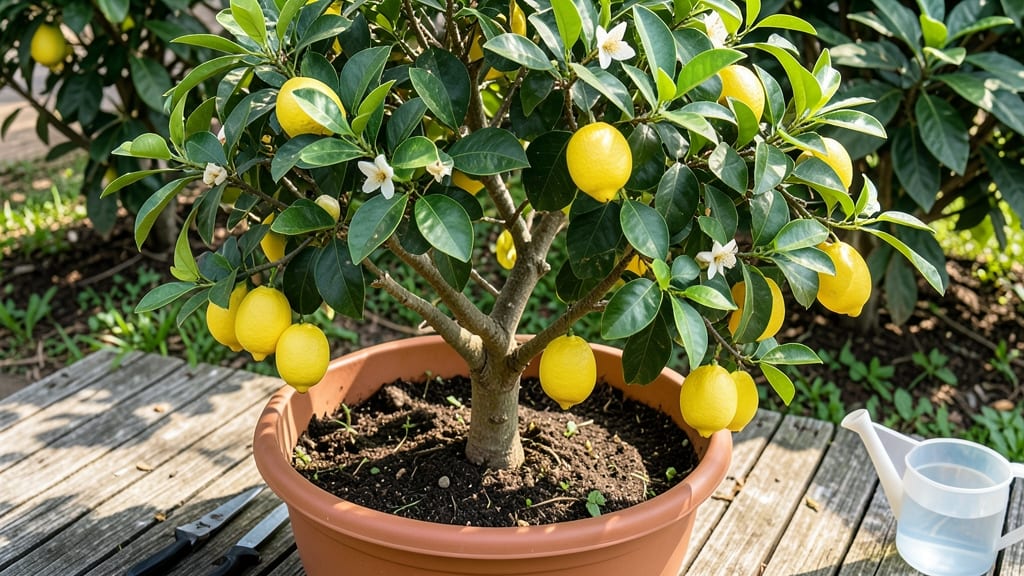
Understanding the growth stages of lemon tree transforms a risky experiment into a reliable harvest—because knowing what to expect at each phase means you’ll never miss a critical window. 🌱 I’ve watched my own lemon tree go from a tiny seedling to a fruit-bearing giant, and the difference between thriving and struggling comes down to timing: watering too much in the wrong stage, pruning at the wrong time, or ignoring pests when they’re most vulnerable.
The first two years focus on root and branch development—not fruit. That’s when you’ll shape the tree’s structure, protect it from frost, and ensure it gets enough sunlight (at least 6-8 hours daily). Skipping this step means weak limbs later, or worse, a tree that never flowers.
After year two, the real magic begins: tiny white blossoms appear in spring, followed by those iconic green fruits that take 9-12 months to ripen.
By year four or five, a healthy lemon tree becomes a self-sustaining machine—producing 50-100 lemons annually if you’ve nailed the care. The key? Pruning after harvest to encourage new growth, fertilizing in early spring, and watching for citrus leaf miners or scale insects before they take hold.
Even in winter, when growth slows, the roots stay active if you keep the soil slightly moist.
This isn’t just about waiting for fruit—it’s about creating the right conditions at every stage, from seed to maturity. Whether you’re starting with a seed or a nursery sapling, the principles stay the same: patience, observation, and adjusting your approach as the tree changes.
Let’s break it down step by step so you can avoid the mistakes I made along the way.
📚 In This Guide
- What you need
- Instructions
- Tips and common mistakes
- Wrapping up and next steps
What you need
- ● Lemon seeds: 3–5 fresh, organic seeds (from a ripe lemon—avoid conventional store-bought ones if possible!)
- ● Seed-starting mix: 1 small tray (10"x20") of sterile, well-draining potting soil (or coco coir for organic growers)
- ● Containers: 1–2 small pots (4" diameter) with drainage holes for seedlings
- ● 1 large container (12"–18" diameter) or nursery pot for mature trees (ensure it’s at least 12" deep)
- ● Pruning tools: 1 pair of bypass pruners (sharp, clean, and sanitized with rubbing alcohol)
- ● 1 small hand saw (for thicker branches, 3/8"–1/2" diameter)
- ● 1 pruning saw (for mature wood, 10"–12" blade)
- ● Fertilizer: Balanced granular fertilizer (10-10-10 or 20-20-20, 1 lb for young trees)
- ● Citrus-specific liquid fertilizer (e.g., Miracle-Gro Citrus Food, 16 oz)
- ● Mulch: 2–3 inches of organic mulch (straw, wood chips, or shredded bark)
- ● Support: 1 small stake or trellis (for young trees, 3–4 ft tall)
- ● Grow lights (LED, full-spectrum) for indoor seedlings
- ● pH test kit (ideal range: 6.0–7.0 for citrus)
- ● Slow-release fertilizer pellets (for convenience)
- ● Hose with gentle spray nozzle (for hydration checks)
- ● Glove (to protect from thorns and sap)
Understanding the lemon tree's growth journey: step-by-step development
Here's how your lemon tree transforms from a tiny seedling into a fruit-bearing beauty.
🌱 Step 1: Germination and Seedling Stage (0-6 Months)
This is where everything begins. Plant your lemon seeds ¼ inch deep in a 65-75°F environment with bright, indirect light. Germination takes 2-4 weeks—be patient. You'll know it's working when you see the first cotyledons (those little shield-shaped leaves) push through the soil.
Once the seedling reaches 2-3 inches tall, it's time to transplant into a 4-inch pot. Use well-draining soil and keep it moist but never soggy. Overwatering now can cause root rot before the plant establishes itself. You'll notice the first true leaves (not the cotyledons) appear after about 6-8 weeks. These are your plant's first real foliage, and they'll look like miniature versions of adult lemon leaves.
Here's the thing—lemon trees grow slowly at first. Don't rush it. In these early months, focus on keeping the soil consistently moist and providing 12-14 hours of light daily. If your seedlings start looking leggy (stretched out with small leaves), they need more light. Move them closer to your brightest window or under a grow light.
🌿 Step 2: Juvenile Growth (6 Months-3 Years)
Your lemon tree will enter its juvenile phase when it reaches about 12-18 inches tall. This is when you'll see rapid growth if conditions are right. During this stage, the tree develops its main structure—the trunk thickens, and branches begin forming. You'll need to repot it every 6-12 months as it outgrows its container.
This is also when you'll start seeing the first flower buds (though they may not produce fruit yet). The tree needs full sun (6+ hours daily) and regular feeding with a balanced citrus fertilizer every 4-6 weeks during growing season. You'll know it's thriving when new leaves appear consistently and the plant doubles in size each year.
Real talk: Many growers prune aggressively at this stage to encourage bushier growth. But with lemon trees, less is often more. I like to trim only to remove dead or crossing branches. The goal is to maintain an open center that allows light and air to reach all parts of the plant. This prevents disease and encourages better fruiting later.
☀️ Step 3: Mature Growth and First Fruiting (3-5 Years)
Your lemon tree reaches maturity when it's 6-10 feet tall (depending on variety) and starts producing consistent fruit. This stage is all about balance—giving the tree enough water to support fruit development but not so much that it causes root rot. Water deeply once a week in summer, reducing to every 2 weeks in winter when growth slows.
You'll notice flower buds forming in spring, followed by small green fruits that gradually turn yellow. The first fruits may be small, but they're a sign your tree is healthy. Here's where it gets fun—watch the fruit mature over 6-9 months. A mature lemon tree can produce 50-100 lemons per year with proper care.
This is also when you'll need to prune for fruit production. Cut back any overly long branches to encourage more flowering. I like to do this in late winter or early spring before new growth begins. Remove any dead, diseased, or crossing branches first, then thin out some of the remaining growth to improve air circulation.
✂️ Step 4: Established Fruit Production (5+ Years)
At this stage, your lemon tree is in its prime. It's producing abundant fruit and has a strong, established root system. You'll need to harvest lemons when they're bright yellow and slightly soft to the touch. This usually happens in fall or winter, depending on your climate.
To maintain productivity, feed your tree with a citrus-specific fertilizer every 2 months during growing season. You'll also need to prune annually to remove old wood and encourage new growth. Look for branches that are thicker than your thumb—these are mature and can be pruned back to stimulate flowering.
Here's the moment that matters: If your tree stops producing fruit, it might be getting too much nitrogen. Switch to a low-nitrogen, high-phosphorus fertilizer to encourage flowering. Also, ensure it gets full sun—even mature trees need 6-8 hours daily. If you notice leaves yellowing between the veins, it's likely iron deficiency, common in citrus. Apply a chelated iron supplement to correct this.
Tips & tricks for lemon tree growth success
Between us, lemon trees don't follow a one-size-fits-all schedule—each stage needs its own attention. Here's what I've learned from watching my own lemon tree thrive through every phase.
Germination Environment: The 65-75°F range is critical for those first 2-4 weeks of germination. I use a seedling heat mat set to 72°F and cover the pot with plastic wrap to create a mini greenhouse effect. This keeps humidity high while maintaining consistent warmth—just like a tropical nursery. The plastic wrap also prevents soil from drying out too quickly, which can happen when you're eagerly checking for those first cotyledons every day.
Lighting Strategy: Those 12-14 hours of light during the seedling stage are non-negotiable. I supplement my south-facing window with a 10,000-lumen grow light on a timer. The key is keeping the light source about 6 inches above the seedlings and adjusting as they grow. If you notice the seedlings stretching toward the light with long stems and small leaves, that's your cue to move them closer or add more light—this "leggy" growth happens when they're light-deprived.
Transplant Timing: When your seedling reaches 2-3 inches tall, don't wait too long to transplant into that 4-inch pot. The roots will start circling in the small container, which stresses the plant. I like to transplant when I see new true leaves appearing (around 6-8 weeks), as this shows the plant has enough energy to handle the transition. Use a pot with drainage holes and fill the bottom 1/3 with perlite or pumice to improve drainage—this prevents the root rot that can kill young seedlings.
Fertilizer Transition: In Step 2, when your tree reaches 12-18 inches, it's time to introduce fertilizer—but go easy. Start with half-strength citrus fertilizer every 6-8 weeks instead of the full dose. The sudden nutrient boost can burn young roots. I also switch to organic citrus fertilizer once the tree starts showing flower buds, as organic options provide slower-release nutrients that support both growth and fruiting without causing excessive leafy growth at the expense of fruit production.
Pro Tips for Growth Stages Of Lemon Tree
- Between us, lemon trees don't follow a one-size-fits-all schedule—each stage needs its own attention.
- Germination Environment: The 65-75°F range is critical for those first 2-4 weeks of germination.
- Lighting Strategy: Those 12-14 hours of light during the seedling stage are non-negotiable.
Frequently asked questions
Got questions about nurturing your lemon tree through its growth stages? Here are some of the most common concerns—and their solutions—to keep your citrus thriving from sapling to harvest:
How long does it take for a lemon tree to bear fruit after planting?
A lemon tree typically takes 3–5 years to produce fruit from seed, but grafted trees (common in nurseries) can bear lemons in just 1–2 years. Patience is key—focus on proper care (sunlight, water, and soil) during the early stages to speed up maturity. Pro tip: Use a heat lamp for young seedlings to mimic tropical conditions and encourage faster growth.
Why aren’t my lemon tree’s leaves turning yellow, even though it’s not fruiting yet?
Yellow leaves in a young lemon tree often signal overwatering, nutrient deficiency, or poor drainage. Check the soil—it should stay slightly moist but not soggy. If the roots are waterlogged, repot in well-draining soil with perlite or sand. Lack of nitrogen (common in early growth) can also cause yellowing; fertilize with a balanced citrus blend every 2–3 months. Test your soil’s pH—ideal levels are 6.0–7.0 for lemon trees.
Can lemon trees survive winter, and how do I protect them?
Mature lemon trees tolerate light frosts (28°F/-2°C), but young trees or extreme cold (20°F/-7°C) can damage or kill them. Protect your tree by:
- Moving potted trees indoors (near a sunny window or grow light).
- Wrapping the trunk with burlap or frost cloth.
- Mulching the base with straw or leaves to insulate roots.
Should I prune my lemon tree in every growth stage, and how?
Pruning is essential but varies by stage:
- Seedling stage (0–2 years): Trim only to shape and remove dead/diseased branches. Avoid heavy pruning—focus on airflow and structure.
- Mature stage (3+ years): Prune in late winter/early spring to remove:
- Crossing or crowded branches.
- Suckers (shoots at the base).
- Dead wood or fruit-bearing branches after harvest.
Can I grow a lemon tree indoors, and what’s the best variety?
Yes! Dwarf varieties like ‘Meyer’ or ‘Improved Meyer’ thrive indoors with 6+ hours of sunlight daily (south-facing window or grow lights). Place the tree near a kitchen or bathroom for humidity. Watch for:
- Leggy growth? Rotate the pot weekly for even light exposure.
- Small fruit? Hand-pollinate with a soft brush if indoors.
Wrapping up and next steps
Understanding the growth stages of a lemon tree—from a tiny seed to a fruit-bearing powerhouse—empowers you to nurture it with confidence! Each phase, from germination to maturity, offers unique care needs, but with patience and the right techniques, you’ll reap the rewards of luscious lemons. 🌱✨
Ready to take the next step? Start by monitoring your tree’s progress and adjusting care as it grows. Whether it’s pruning for shape, protecting from pests, or ensuring proper sunlight, your lemon tree will thrive with your dedication. Happy growing! 🍋💚