
Trees
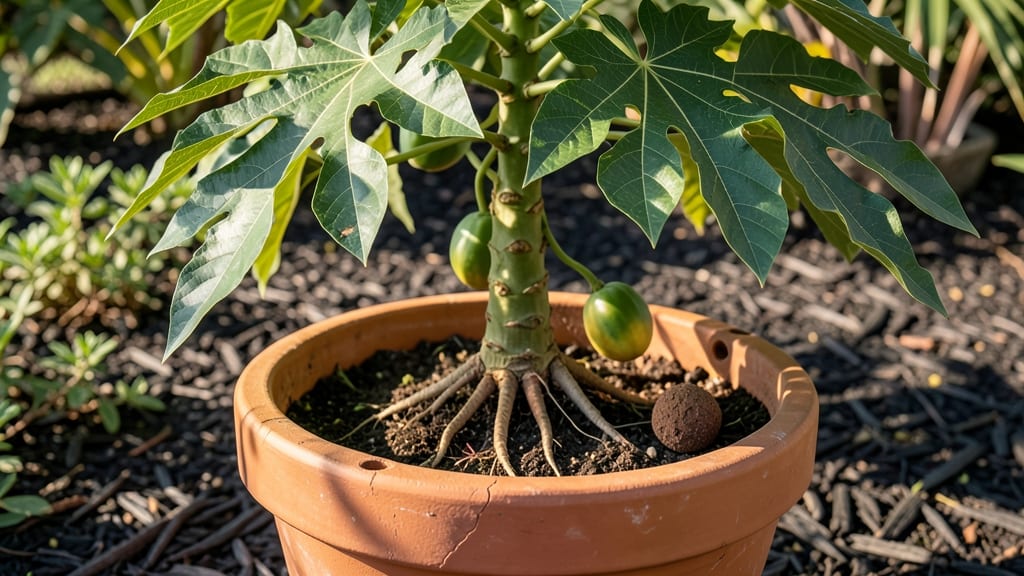
Growing papaya trees in pots lets you enjoy tropical fruit without a backyard—just a sunny spot and the right container. 🌿 I’ve grown papayas in 5-gallon pots on my balcony, and with proper care, they produce sweet, buttery fruit just like their jungle cousins.
The key is mimicking their natural environment: warm temperatures, bright light, and well-draining soil that keeps roots happy without drowning them.
You’ll need a pot at least 18 inches deep (bigger for mature trees), a fast-draining mix of potting soil and perlite, and a location that gets 6+ hours of sunlight daily. Water when the top inch of soil feels dry, but avoid soggy roots—papayas hate wet feet.
Fertilize lightly every 4-6 weeks with a balanced tropical plant food, and watch for those telltale yellow flowers that mean fruit is on the way.
By summer’s end, you could be harvesting 1-2 pound papayas with vibrant orange flesh and black seeds—perfect for smoothies or fresh eating. The trees grow surprisingly fast in pots, reaching 6-10 feet tall, so prune regularly to shape them and encourage fruit production.
Even in cooler climates, a sunny windowsill or greenhouse keeps them thriving year-round.
Here’s the secret: papayas love heat and humidity, so mist leaves occasionally in dry air or place a tray of water nearby. With these adjustments, your potted papaya will outperform expectations—no tropical paradise required. Let’s get those seeds sprouting!
📚 In This Guide
- What you need
- Instructions
- Tips and common mistakes
- Wrapping up and next steps
What you need
- ● Papaya seeds or seedlings: 1-3 seeds (or 1 young plant) – choose a variety suited for containers (e.g., 'Solo' or 'SunUp').
- ● Large pots: 2-3 containers (15–20 gallons each) with drainage holes. Pro tip: 💡 Use fabric grow bags for flexibility!
- ● High-quality potting mix: 10–15 gallons of well-draining, peat-based mix (or blend with perlite/vermiculite for aeration).
- ● Drainage layer: Small pebbles, broken pottery, or gravel (2–3 inches per pot).
- ● Slow-release fertilizer: 1–2 cups of balanced (10-10-10) or organic fertilizer (e.g., compost or worm castings).
- ● Watering can or hose with gentle nozzle: For deep, even hydration.
- ● Trowel or small shovel: For planting and soil adjustments.
- ● Pruning shears: To trim excess foliage or shape the tree.
- ○ Support stakes or trellis: Optional for heavy fruit-bearing varieties.
- ● Mulch (straw or coconut coir): Helps retain moisture (1–2 inches around the base).
- ● Grow lights (LED, full-spectrum): If indoors, 12–16 hours of light daily.
- ● pH test kit: To monitor soil acidity (ideal: 6.0–6.5).
Step-by-step guide to cultivating papaya trees in containers
Here’s how to grow these sun-loving tropical trees successfully in limited space.
🌱 Step 1: Select the Right Container and Prepare the Growing Medium
Choose a 5-gallon or larger container with drainage holes—papaya roots need room to spread and hate soggy conditions. I use fabric grow bags for my trees because they allow excess water to evaporate while preventing compaction. The container must be at least 12 inches deep to accommodate the taproot.
Fill the bottom 2 inches with perlite or coarse sand for drainage, then add a high-quality potting mix blended with 20% coconut coir for moisture retention. Papayas thrive in slightly acidic soil (pH 6.0-6.5), so test your mix before planting. Avoid garden soil—it compacts too easily in containers and suffocates roots.
☀️ Step 2: Plant the Seedling and Position for Maximum Sunlight
If starting from seed, plant one seed per container at a depth of ½ inch, pressing lightly but not compacting. For seedlings, transplant carefully, ensuring the root ball sits 1 inch below the rim of the container. Papayas need full sun (6+ hours daily)—place your pot where it receives direct morning sunlight and afternoon shade if temperatures exceed 90°F.
Real talk: If your space lacks bright light, supplement with a grow light positioned 6-12 inches above the plant for 12-14 hours daily. Without enough light, stems stretch weakly, and fruit production stalls. Watch for yellowing leaves—this is your first sign of insufficient light or overwatering.
💧 Step 3: Water Deeply and Maintain Consistent Moisture
Water deeply but infrequently—papayas despise soggy roots. Stick your finger 2 inches into the soil; if it feels dry, water until 10% runs out the drainage holes. I water mine every 3-4 days in summer, adjusting for humidity and temperature. Overwatering leads to root rot, while underwatering causes fruit drop—both are common pitfalls.
Use lukewarm water to avoid shocking the roots, and always water at the base, never the leaves. This prevents fungal diseases like powdery mildew, which thrives in humid conditions. A mulch layer (1-2 inches of shredded bark) helps retain moisture and keeps roots cool.
✂️ Step 4: Prune for Shape and Encourage Fruit Production
Papayas grow best with minimal pruning, but you’ll want to remove dead or yellowing leaves regularly to redirect energy to fruit development. When the plant reaches 3-4 feet tall, trim back overly leggy growth to encourage bushier branching. This step is crucial for female flower production, which leads to fruit.
Here’s the thing—papaya trees produce male and female flowers on separate plants (or sometimes the same plant). If you’re growing one tree, it may take longer to fruit. To boost productivity, I hand-pollinate flowers by gently transferring pollen from male to female blooms using a small paintbrush in the morning when flowers are open.
🍈 Step 5: Harvest and Care for Ongoing Growth
Papayas ripen 4-6 months after flowering, depending on variety. Harvest when the fruit turns fully yellow (or orange/red for some types) and feels slightly soft when gently squeezed. Twist gently to avoid damaging the stem. A single container-grown tree yields 4-8 fruits per season—not bad for a small space!
After harvest, feed your tree with a balanced liquid fertilizer (10-10-10) every 4-6 weeks during growing season. Reduce watering slightly in winter, but keep the soil lightly moist. With proper care, your papaya tree can live 5-10 years in a container, producing fruit annually if given the right conditions.
Tips & tricks for perfect container-grown papaya trees
Here's what nobody tells you about keeping your tropical fruit thriving in limited space.
Container Size Matters: That 5-gallon minimum isn't just a suggestion—papaya roots grow aggressively. If you're growing multiple trees, space them at least 3 feet apart in separate containers. I've seen roots break through fabric grow bags when crowded, and once that happens, you've got a tangled mess. For dwarf varieties, you can get away with slightly smaller containers (3-4 gallons), but expect reduced fruit production. The 12-inch depth requirement is non-negotiable for taproot development.
Soil Science Secret: That pH 6.0-6.5 range is critical for nutrient uptake, but don't stress if your mix isn't perfect at planting. Papayas are forgiving. I test my soil annually and adjust with lime or sulfur as needed. The coconut coir blend is your moisture retention secret weapon—it mimics tropical rainfall patterns while preventing waterlogging. Pro tip: Mix in 1 cup of worm castings at planting for an instant nutrient boost that container-grown trees desperately need.
Lighting Strategy: Those 6+ hours of direct sunlight are non-negotiable, but here's the thing about grow lights: position them closer than you think. I start with 6 inches above the plant and adjust as it grows. Watch for leaves reaching toward the light—this is your plant's way of saying "I need more." LED grow lights are most efficient, but even a basic fluorescent bulb will work if you're patient. The key is maintaining that 12-14 hour photoperiod consistently, especially during winter months when daylight shrinks.
Pruning Insight: When you're trimming that leggy growth at 3-4 feet, you're actually shaping your tree's future. Each cut redirects energy toward fruit production rather than vertical growth. I make my pruning cuts just above a leaf node where new growth can emerge. For container-grown trees, aggressive pruning isn't recommended—you're already working with limited space. Focus on removing only what's absolutely necessary to maintain airflow and direct energy to fruit development.
Pro Tips for Growing Papaya Trees In Pots
- Here's what nobody tells you about keeping your tropical fruit thriving in limited space.
- Container Size Matters: That 5-gallon minimum isn't just a suggestion—papaya roots grow aggressively. If you're growi...
- Soil Science Secret: That pH 6.0-6.5 range is critical for nutrient uptake, but don't stress if your mix isn't perfec...
Frequently asked questions
Got questions about growing papaya trees in pots? You’re not alone—this tropical fruit is full of surprises! Here are answers to the most common queries to help you grow like a pro.
What’s the best temperature range for potted papaya trees?
Papayas thrive in warmth—ideal temperatures are between 70–90°F (21–32°C). They’re tropical, so they hate frost (below 50°F/10°C) and cold drafts. If you’re in a cooler climate, grow them indoors near a sunny window or under grow lights. Move pots outside only when nighttime temps stay above 60°F (15°C).
How long does it take for a papaya tree to bear fruit in a pot?
Patience is key! Under ideal conditions, a potted papaya tree may take 12–18 months to flower and fruit. Dwarf varieties (like ‘SunUp’) can fruit slightly faster (9–12 months), but size matters—smaller pots delay growth. Ensure your tree gets full sun (6+ hours/day), rich soil, and consistent watering to speed up the process.
Can I grow a papaya tree in a small pot, or do I need a large container?
Papayas need space to stretch their roots—aim for a pot at least 12–18 inches in diameter (larger for full-sized trees). Small pots (under 10 inches) will stunt growth and reduce fruit yield. Use fabric grow bags or self-watering containers for better drainage, and upgrade pot size as your tree grows. Pro tip: Add a 5–10 gallon pot when the tree hits 2–3 feet tall!
What pests or diseases should I watch for in potted papayas?
Common issues include:
- Spider mites & aphids: Yellowing leaves or sticky residue? Spray with neem oil or insecticidal soap.
- Root rot: Overwatering causes mushy roots. Ensure pots have drainage holes and let soil dry slightly between waterings.
- Powdery mildew: White fungus on leaves? Improve airflow and avoid wetting foliage when watering.
Prevent problems by sterilizing tools, using well-draining soil, and inspecting leaves weekly.
Can I grow more than one papaya tree in a single pot?
It’s possible but tricky. Papayas are self-pollinating, but crowded roots compete for nutrients, slowing growth and reducing fruit quality. If you try it, use a very large pot (20+ gallons) and plant trees 12+ inches apart. For best results, stick to one tree per pot—your harvest will thank you!
Wrapping up and next steps
Growing papaya trees in pots is a rewarding adventure—perfect for urban gardeners or those with limited space! 🌱 With the right container, soil, and care, you’ll enjoy lush foliage and sweet, tropical fruit right on your balcony or patio.
Whether you’re a beginner or a seasoned plant parent, this guide makes it simple to cultivate your own mini orchard.
Now that you’re armed with tips and tricks, take the first step—pick your pot, gather your supplies, and plant that seedling! Before you know it, you’ll be savoring homegrown papayas straight from your very own container garden. Happy growing! 🌟