
Pruning
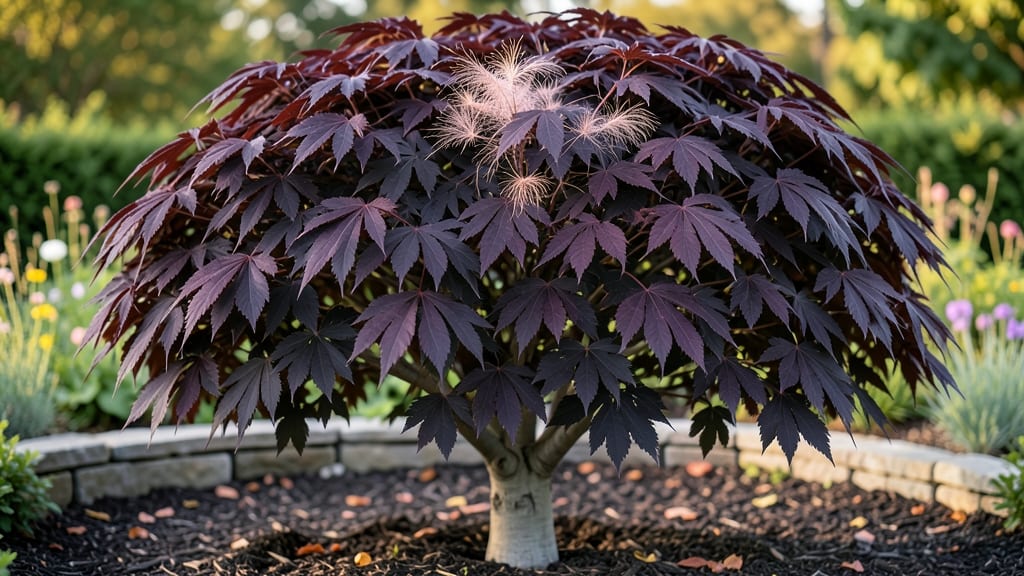
A full grown Royal Purple Smoke Tree reaches 15 feet tall with arms that seem to stretch for the sky—its deep purple foliage shimmering like velvet in the sunlight. 🌿 I’ve watched mine transform from a delicate sapling into a dramatic centerpiece, its smoke-like seed clusters drifting on summer breezes.
The secret to keeping it that way? Pruning with purpose, not just shears.
This tree thrives in full sun with well-draining soil, but its true magic happens when you shape it in late winter or early spring. Cut back overgrown branches by a third to encourage bushier growth and maintain that vibrant purple hue—the color fades when branches get too crowded.
The foliage turns fiery orange-red in fall, making it a year-round stunner.
With proper pruning, you’ll end up with a towering, fragrant canopy that smells like warm cinnamon when brushed. The smoke-like seed clusters add texture, and the tree’s natural shape makes it low-maintenance once established. Just avoid heavy pruning in fall, or you’ll risk winter damage.
Whether you’re shaping it as a standalone specimen or integrating it into a mixed border, this tree delivers drama with minimal effort. Here’s how to keep it looking its best for decades.
📚 In This Guide
- What you need
- Instructions
- Tips and common mistakes
- Wrapping up and next steps
What you need
- ● Pruning shears: Sharp, bypass-style shears (for clean cuts on smaller branches). Recommended: Felco F-2 or similar.
- ● Loppers: 8–12" loppers for thicker branches (up to 2" diameter). Look for: Ratchet-style for ease.
- ● Pruning saw: Curved-tooth saw for branches over 2" in diameter. Pro tip: 💡 Oil the blade to prevent gumming from sap.
- ● Gloves: Heavy-duty, cut-resistant gloves (e.g., Mechanix or similar) to protect against thorns and sap.
- ● Disinfectant: 70% isopropyl alcohol or pruning sealant (to prevent disease spread between cuts).
- ● Ladder or step stool: Sturdy, extension ladder (12–16' tall) or a foldable step stool (for smaller trees). Safety first: 🔥 Use stabilizers!
- ● Trash bags or bucket: For collecting pruned branches (10–20 gallon capacity).
- ○ Marking twine or flags: Optional but helpful for identifying branches to remove before cutting.
- ● Hand pruners: Compact shears for fine-tuning smaller stems.
- ● Pole pruner: Extendable tool (10–14') for high branches without a ladder.
- ● Tree wound dressing: Controversial but useful if your tree has large wounds (e.g., Tanglefoot Tree Wound Pruning Seal).
- ● Safety goggles: Protect your eyes from debris or sap splashes.
- ● Notebook & pen: To track pruning notes (e.g., branch locations, growth patterns).
- ● Best time to prune: Late winter or early spring (just before new growth). Why? 🌡️ Avoids stressing the tree during active growth.
- ● Weather check: Choose a dry, calm day (no rain forecast for 24 hours).
- ● Tree health: Inspect for diseases or pests (e.g., powdery mildew, spider mites) before pruning.
- ● Safety prep: Clear the area of tools, pets, or bystanders within a 10-foot radius.
Step-by-Step instructions for pruning a mature Royal Purple smoke tree
Here's how to shape your smoke tree into a fragrant, towering centerpiece—no guesswork involved.
✂️ Step 1: Time Your Pruning for Peak Growth
Prune your smoke tree in late winter or early spring, just as new growth begins but before buds swell. This timing ensures you remove last year's growth while encouraging fresh, vibrant foliage. Avoid pruning in fall or winter—you'll cut off next year's blooms and risk dieback.
Look for tight, woody buds along the branches as your cue. These indicate the tree is preparing to grow, but don't wait until leaves appear. Pruning too late risks removing flower buds, which form on new wood. I like to prune on a warm, dry day—this helps wounds heal faster and prevents fungal infections.
🌿 Step 2: Remove Dead or Crossing Branches First
Start by eliminating any dead, diseased, or crossing branches—these are the easiest cuts and make the rest of the job cleaner. Dead branches snap easily when bent; diseased ones have discolored or peeling bark. Crossing branches rub against each other, creating wounds that invite pests.
Use clean, sharp pruning shears to make cuts at a 45-degree angle, about ¼ inch above an outward-facing bud or branch collar. Never leave stubs—they invite rot. If a branch is thicker than your shears can handle, use a pruning saw for a smooth cut. Work from the bottom up to avoid standing on ladders unnecessarily.
☀️ Step 3: Thin the Canopy for Light and Airflow
Step back and study your tree's shape. Royal Purple smoke trees thrive with an open, airy canopy—this prevents fungal issues and lets sunlight penetrate to the lower branches. Remove 15-20% of the total foliage by selectively cutting back branches that are too dense or growing inward.
Focus on branches that grow toward the center of the tree or block sunlight from reaching the interior. Cut just above a healthy bud that faces outward. Avoid "heading back" (cutting back to a bud on the same branch)—this creates bushier growth but can make the tree look unnatural. Instead, remove entire branches at their origin if they're weak or misplaced.
⏰ Step 4: Shape for Height and Structure
Now it's time to refine the tree's height and silhouette. Smoke trees respond well to selective pruning—cut back the tallest branches by ⅓ to ⅕ of their length to encourage bushier growth. If you want a more formal look, prune the top branches slightly more than the lower ones to create a tapered shape.
Watch for water sprouts—those fast-growing, upright shoots that appear after pruning. These steal energy from the rest of the tree, so remove them as soon as they appear. Use your fingers to snap off smaller sprouts or prune them back to the main branch. The goal is a balanced, layered canopy that showcases the tree's stunning purple foliage.
💧 Step 5: Clean Up and Care for the Tree Post-Pruning
After pruning, sterilize your tools with rubbing alcohol to prevent spreading disease between cuts. Rake up and dispose of all clippings—never leave them under the tree, as they can harbor pests or fungi. Water the tree deeply to help it recover, especially if the weather is dry.
Apply a balanced, slow-release fertilizer around the base (but not touching the trunk) to support new growth. Mulch with 2-3 inches of organic mulch to retain moisture and protect roots. Avoid heavy pruning in the same spots year after year—rotate cuts to different branches to maintain the tree's health and encourage even growth.
Tips & tricks for pruning a mature Royal Purple smoke tree
Real talk: Pruning this stunning tree is all about balance—too much and you stunt growth, too little and you lose that dramatic silhouette. Here's what nobody tells you about keeping your smoke tree thriving.
Timing is Everything: The late winter to early spring window is non-negotiable for Royal Purple smoke trees. I learned this the hard way after accidentally pruning in late winter when buds were already swelling—my tree lost its spring blooms entirely. Watch for those tight, woody buds forming but before they begin to swell. A warm, dry day isn't just ideal—it's critical for faster wound healing and reduced fungal risk. If you miss this window, you'll either cut off next year's flowers or encourage weak growth.
The 45-Degree Angle Secret: When making cuts in Step 2, that 45-degree angle isn't just decorative—it's essential. Cutting at this angle creates a larger wound surface that heals more effectively than straight cuts. Always make your cut about ¼ inch above an outward-facing bud. Pro tip: Use a sharp pruning saw for thicker branches—dull tools crush the wood, making it more susceptible to disease. I've seen trees develop rot simply because the cuts weren't made cleanly.
Canopy Thinning Strategy: That 15-20% foliage reduction in Step 3 might seem drastic, but trust me on this. The goal is to create an open, airy structure that lets sunlight reach all branches. Focus on removing branches that grow toward the center or block light from lower branches. What I've noticed is that people often hesitate to remove too much foliage, but your tree will reward you with stronger growth and better flower production in spring. Think of it as giving your tree a breath of fresh air.
Water Sprout Watch: After shaping in Step 4, keep an eye out for those fast-growing water sprouts. These vertical shoots might look like new growth, but they're actually energy vampires that drain nutrients from your tree. Remove them as soon as they appear—either snap them off with your fingers or prune them back to the main branch. I make it a habit to do a quick check every couple of weeks after pruning to prevent these from taking over.
Pro Tips for Full Grown Royal Purple Smoke Tree
- Real talk: Pruning this stunning tree is all about balance—too much and you stunt growth, too little and you lose that dramatic silhouette.
- Timing is Everything: The late winter to early spring window is non-negotiable for Royal Purple smoke trees.
- The 45-Degree Angle Secret: When making cuts in Step 2, that 45-degree angle isn't just decorative—it's essential.
Frequently asked questions
Got questions about your full-grown Royal Purple Smoke Tree? You’re not alone! Here are answers to the most common queries—from pruning tips to care concerns—to keep your tree thriving and stunning.
How tall does a full-grown Royal Purple Smoke Tree get?
A mature Cotinus coggygria ‘Royal Purple’ typically reaches 15–25 feet tall with a spread of 15–20 feet. In ideal conditions (full sun, well-drained soil), it can even hit 30 feet! Pruning in late winter or early spring helps control its size while maintaining that dramatic, smoky purple canopy.
When is the best time to prune for maximum fragrance?
Prune your Royal Purple Smoke Tree right after flowering (late spring) or in early spring before new growth. Avoid heavy pruning in fall—it can stimulate tender growth vulnerable to frost. For extra fragrance, trim back 1/3 of the oldest stems annually to encourage fresh, aromatic foliage and airy branches.
Why are the leaves turning brown or yellow?
Brown/yellow leaves usually signal overwatering, poor drainage, or fungal issues. Check soil moisture—Royal Purple Smoke Trees prefer well-draining soil and hate soggy roots. If fungal disease (like powdery mildew) is the culprit, prune affected branches 1 inch below the damage and apply neem oil for prevention.
Can I grow a Royal Purple Smoke Tree in a pot?
Yes, but expect slower growth and smaller size (8–12 feet max). Use a large container (20+ gallons) with drainage holes and a fast-draining potting mix. Move pots to full sun outdoors in warm months and protect from winter winds if temps drop below 10°F. Dwarf varieties like ‘Velvet Fountain’ are better for containers.
What’s a good alternative if I want a similar look but lower maintenance?
Try these fragrant, purple-hued alternatives:
- Dwarf Fountain Smoke Tree (‘Velvet Fountain’) – Compact (6–8 ft), same smoky foliage, less pruning needed.
- Japanese Smoke Tree (‘Grace’) – Slower-growing (10–15 ft), tolerates shade better.
- Purple Leaf Sand Cherry (Prunus x cistena) – Fragrant spring blooms, smaller size (12–15 ft).
Wrapping up and next steps
The full-grown Royal Purple Smoke Tree is a stunning, low-maintenance centerpiece that rewards patience with its fragrant blooms and striking foliage. With the right pruning techniques—like shaping, thinning, and seasonal trims—you’ll encourage a healthy, towering canopy that steals the show in any landscape.
Now that you’re armed with the knowledge, grab those shears and give your tree the care it deserves!
🌿 Next steps:
- Schedule your first pruning session after flowering (late summer/early fall).
- Monitor for pests or disease—act fast if you spot issues!
- Share your progress with fellow gardeners for tips and inspiration!