
Pruning
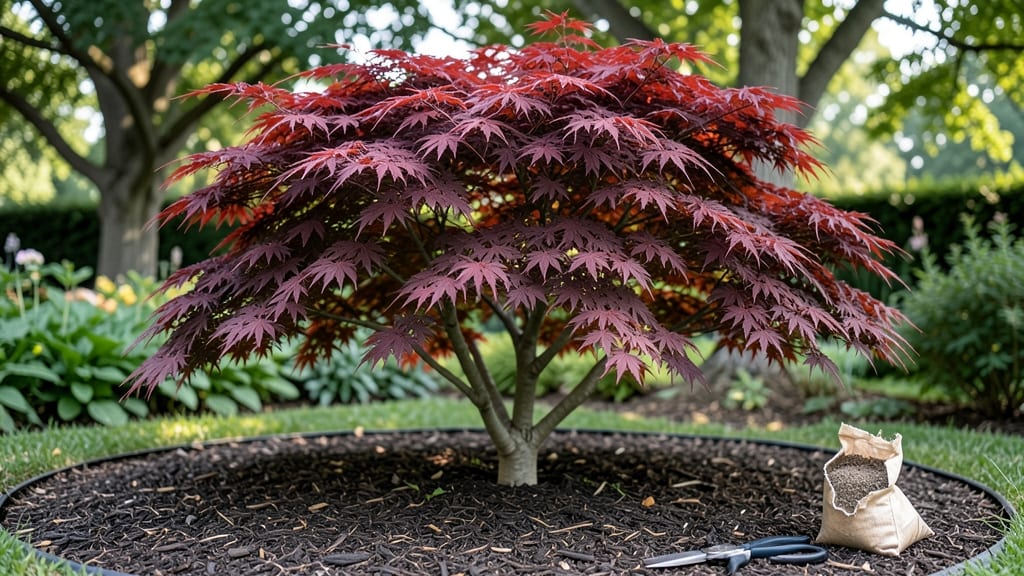
A full grown Red Dragon Japanese maple tree isn’t just a plant—it’s a living sculpture that turns your garden into a masterpiece. 🌿 Its fiery red foliage in spring, deep burgundy hues in summer, and golden-orange tones in fall make it the star of any shade garden, mixed border, or even a dramatic container statement.
The secret to keeping it looking like this? Pruning isn’t about cutting—it’s about sculpting.
This isn’t your average pruning job. You’re shaping a tree that can reach 15-20 feet tall with a spread of 10-15 feet, so every cut matters. The goal? Maintain that graceful, layered canopy while encouraging new growth where you want it.
I’ve pruned mine for years, and the difference between a wild, leggy mess and a refined, showstopping tree comes down to three simple principles: when to prune, what to remove, and how to encourage that signature dragon-scale texture that makes this cultivar so special.
What you’ll end up with is a tree that stays proportionate to its space, with branches that frame your garden like an artist’s brushstroke.
The foliage stays vibrant and dense, the trunk develops character with age, and you’ll have a focal point that steals the show in every season—whether it’s the bright red new growth in spring or the frost-kissed gold of winter. The best part?
You can prune it year-round (with a few key exceptions) to keep it looking intentional, not neglected.
Pair it with hostas for contrast, ferns for texture, or evergreen shrubs to soften its bold presence, and you’ve got a shade garden that feels like a curated gallery. Ready to turn your Red Dragon into the centerpiece it deserves? Let’s get to the pruning.
📚 In This Guide
- What you need
- Instructions
- Tips and common mistakes
- Wrapping up and next steps
What you need
- ● Pruning Shears: Bypass pruners (sharp, 5–8 inch blades) for small branches (1/4–3/4 inch diameter). Example: Felco F-2 or Corona Classic.
- ● Loppers: 8–10 inch bypass loppers for medium branches (3/4–2 inch diameter). Example: Fiskars X27.
- ● Pruning Saw: Curved-tooth pruning saw for thick branches (2+ inches). Example: Bahco Laplander.
- ● Disinfectant: 70% isopropyl alcohol or 10% bleach solution (1 part bleach to 9 parts water) to sterilize tools between cuts.
- ● Gloves: Heavy-duty, cut-resistant gloves (e.g., Mechanix Wear or garden gloves with reinforced palms).
- ○ Extension Pole: 6–10 ft telescoping pole with a saw attachment for high branches (optional but helpful).
- ● Cleanup Supplies: Heavy-duty trash bags (5–10 gallon size).
- ● Rake or leaf blower for debris.
- ● Safety Gear: Safety glasses (ANSI-rated).
- ● Long sleeves/pants (to protect from thorns and sap).
- ● Pruning Sealant: Tree wound sealant (e.g., Tanglefoot Tree Wound Pruning Seal) for large cuts (controversial but some gardeners swear by it).
- ● Ladder: Sturdy, extendable ladder (e.g., 24–32 ft) with non-slip feet for hard-to-reach branches.
- ● Marking Twine: Colored twine to flag branches for removal (useful for complex pruning plans).
- ● Camera: Smartphone or instant camera to document "before" and "after" shots of your masterpiece! 📸
Step-by-Step pruning for a full-grown Red Dragon Japanese Maple
Here's how to shape your tree's stunning foliage while preserving its signature color and structure.
✂️ Step 1: Assess the Canopy for Structural Balance
Start by examining your Red Dragon Japanese Maple from all sides, looking for branches that disrupt its natural vase shape or create dense clusters. Focus on removing any dead, diseased, or crossing branches—these compete for energy and risk damaging the tree's elegant form. I always begin with the lower third of the canopy to maintain an open, airy structure that showcases the vibrant red foliage.
Use sharp, clean pruning shears to make cuts just outside the branch collar—the swollen area where the branch meets the trunk. This prevents unsightly stubs and promotes faster healing. If a branch is thicker than ½ inch, make a three-step cut: first undercut the bottom, then cut from the top, and finally remove the remaining stub. The goal is to create clean wounds that heal efficiently.
✂️ Step 2: Thin Out Interior Branches for Light Penetration
Japanese Maples like the Red Dragon thrive when sunlight reaches all parts of the canopy, which is why thinning is critical. Remove 20-30% of the interior branches to improve airflow and prevent fungal issues. Start at the center and work outward, targeting branches that grow inward or upward. These often create a "bottlebrush" effect, obscuring the tree's natural beauty.
Look for branches that are less than ⅓ the diameter of the trunk—these are easier to remove and won't leave large wounds. If you're unsure whether to cut, hold your hand vertically next to the branch. If it blocks your view of the trunk, it's likely too dense. Prune on a mild, dry day to reduce stress on the tree and minimize the risk of disease entry.
✂️ Step 3: Refine the Silhouette for Seasonal Color Impact
This is where the magic happens—the moment you shape the tree to highlight its stunning red foliage. Step back and visualize the tree's natural silhouette, then make small adjustments to enhance its graceful form. Remove any branches that grow straight up or out—these disrupt the tree's elegant, layered look. Instead, encourage a gradual taper from the base to the top.
For the Red Dragon, which is prized for its vibrant autumn color, avoid heavy pruning in late summer or early fall. Instead, focus on light shaping in late winter or early spring when the tree is dormant. You can do a light touch-up in late summer to remove any overly vigorous new growth that might detract from the foliage's brilliance.
⏰ Step 4: Clean Up and Monitor for New Growth
After pruning, remove all debris from the ground and sterilize your tools with 70% rubbing alcohol or a bleach solution to prevent spreading disease. Dispose of pruned material immediately—never leave it piled under the tree, as it can harbor pests and pathogens. Water the base of the tree deeply to help it recover, especially if you've made significant cuts.
Over the next 4-6 weeks, watch for new growth at the branch tips. Healthy new shoots should emerge with a deep green color and firm texture. If you notice yellowing leaves or slow growth, your tree may need additional nutrients. Apply a balanced, slow-release fertilizer in early spring to support recovery. Avoid fertilizing immediately after pruning, as it can stress the tree further.
Tips & tricks for perfect Red Dragon Japanese Maple pruning
Here's what nobody tells you about keeping your Red Dragon Japanese Maple looking its absolute best year-round—without risking its health.
Timing is Everything: The late winter or early spring timing mentioned in Step 3 is non-negotiable for your Red Dragon. This dormant period lets the tree heal cleanly and prevents stress during its peak color season. If you must prune in summer, limit it to just removing overly vigorous new growth—never more than 20% of the canopy at once. Too much summer pruning can trigger excessive sap flow, leaving your tree vulnerable to sunburn and pests.
Visual Pruning Test: That hand test in Step 2 is your secret weapon. When you hold your hand vertically next to a branch and it blocks your view of the trunk, that's your cue to cut. I also recommend using a small mirror on a pole to check the underside of the canopy—you'll often find hidden branches growing inward that create that dreaded "bottlebrush" effect. This is especially important for the Red Dragon's delicate foliage, which needs maximum light exposure to maintain its vibrant red color.
Tool Preparation Matters: Sterilizing your tools with 70% rubbing alcohol isn't just about disease prevention—it's about giving your tree the cleanest possible start to recovery. I also recommend sharpening your pruning shears before you begin. Dull blades crush rather than cut cleanly, which creates larger wounds that take longer to heal. For branches thicker than ½ inch, I've found that using a small pruning saw for the final cut (after your three-step process) gives you more control and cleaner results.
Color Preservation Strategy: To maintain that stunning red foliage, focus your pruning on creating a gradual taper from base to top as mentioned in Step 3. The outer branches should be shorter than the inner ones, creating that beautiful layered effect. Avoid cutting back into old wood—always prune back to a bud or lateral branch. This technique not only preserves the tree's natural shape but also encourages new growth in the most vibrant areas.
Pro Tips for Full Grown Red Dragon Japanese Maple Tree
- Here's what nobody tells you about keeping your Red Dragon Japanese Maple looking its absolute best year-round—without risking its health.
- Timing is Everything: The late winter or early spring timing mentioned in Step 3 is non-negotiable for your Red Dragon.
- Visual Pruning Test: That hand test in Step 2 is your secret weapon.
Frequently asked questions
Got questions about nurturing your full-grown Red Dragon Japanese maple? You’re not alone—these stunning trees demand care, patience, and the right pruning know-how. Below, we tackle the most common concerns to help you keep your tree thriving and breathtaking year-round.
How often should I prune a mature Red Dragon Japanese maple?
Aim for late winter to early spring (just before buds swell) for major pruning, but light maintenance can happen year-round. Avoid heavy cuts in summer or fall, as it stresses the tree. Focus on removing dead/diseased branches anytime they appear, and shape lightly in spring for a balanced silhouette.
Can I prune a Red Dragon maple in summer?
Summer pruning is not ideal—it can trigger excessive sap flow, weaken the tree, and invite pests. If you must trim (e.g., for safety), do so early morning on a cool day, and keep cuts minimal. Prioritize disease prevention by sterilizing tools with rubbing alcohol.
Why are my Red Dragon maple leaves turning brown or yellow?
Brown/yellow leaves often signal overwatering, underwatering, or nutrient deficiency. Check soil moisture (it should be damp but not soggy) and adjust watering. Yellowing edges may mean iron deficiency—try a chelated iron supplement. If leaves crisp in summer, it’s likely heat stress; provide afternoon shade.
How do I encourage more vibrant red foliage?
For deeper reds, ensure full sun (6+ hours/day) and well-draining, acidic soil (pH 5.0–6.5). Avoid high-nitrogen fertilizers (they dull color)—opt for a balanced 10-10-10 or low-phosphorus formula. Prune to open the canopy for better light penetration.
What’s a good alternative if I can’t grow a Red Dragon?
If your climate lacks the Red Dragon’s cold hardiness (Zones 5–8), consider these stunning maple alternatives:
- Bloodgood Japanese Maple – Deep red, compact, Zone 5–8.
- Emperor I Japanese Maple – Purple-red, heat-tolerant, Zone 5–8.
- Dwarf Red Japanese Maple – Smaller size, vibrant foliage, Zone 5–9.
Wrapping up and next steps
Growing a full-grown Red Dragon Japanese Maple with a stunning, year-round canopy is a rewarding journey that combines patience, care, and a little pruning magic! 🌿 By mastering the right techniques—like selective pruning in late winter or early spring, shaping with precision, and protecting it from harsh elements—you’ll nurture a tree that becomes the centerpiece of your garden.
Remember, consistency is key, and every trim brings your vision closer to reality.
Now that you’re armed with the know-how, roll up your sleeves and get pruning! Start small, observe your tree’s response, and soon, you’ll be the proud caretaker of a breathtaking Red Dragon that steals the show in every season. Happy gardening! ✨