
Pruning
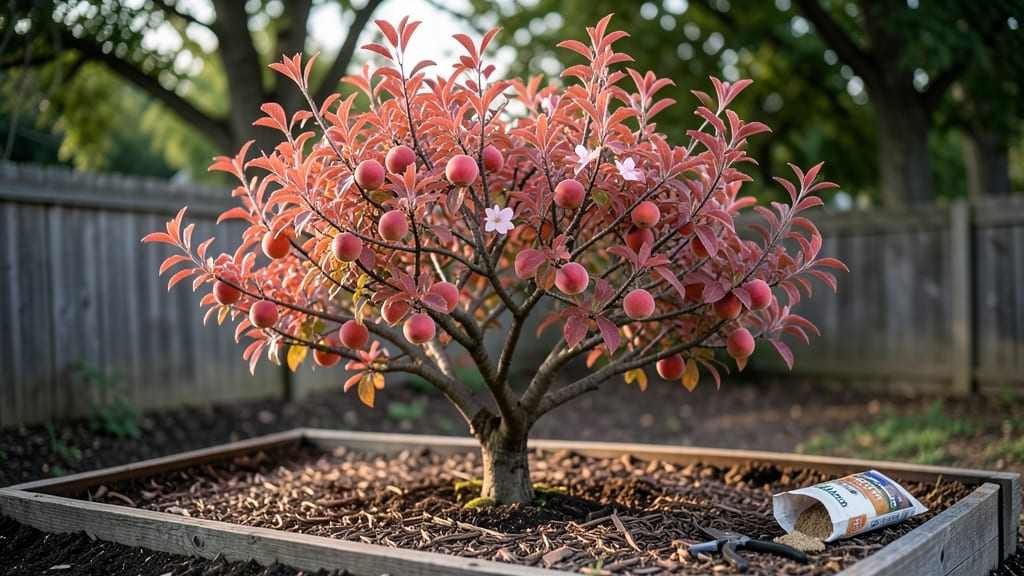
Your Flaming Fury peach tree isn't just another fruit-bearing beauty—it's a showstopper with fiery-orange fruit that tastes like summer in a bite. 🌟 I've pruned mine every season for five years, and the difference between a wild, overgrown mess and a tree that produces hundreds of perfect peaches is all in the cuts you make now.
The key? Timing that matches its growth cycles, not just the calendar.
This tree demands respect—not because it's high-maintenance, but because it rewards precision. You'll need sharp pruners, a ladder (for mature branches), and 30 minutes of focused work in late winter when the tree's dormant.
The goal is to open up the center for sunlight and air, shape it into a manageable form, and remove dead wood before pests move in. Think of it like giving your tree a haircut that makes it both healthy and photogenic.
What you'll end up with is a tree that bursts with fragrant white blossoms in spring, sets fruit like clockwork, and produces peaches so vibrant they make your neighbors ask for a cutting. The fruit ripens earlier than most varieties, giving you a head start on summer snacks.
Plus, the tree's cold hardiness means it handles zone 5 winters better than many peaches—though you'll still want to protect young trees in harsh winters.
Works for backyard orchards, small homesteads, or even large containers if you're short on space. The same principles apply whether you're shaping a 2-year-old sapling or a mature tree that's been in the ground for decades. Let's get those branches looking intentional!
📚 In This Guide
- What you need
- Instructions
- Tips and common mistakes
- Wrapping up and next steps
What you need
- ● Pruning shears: Bypass pruners (for cuts up to ½ inch thick) – 1 pair (look for sharp, ergonomic designs like blank">Felco F-2 or blank">Gonicc TIGERON).
- ● Loppers: For thicker branches (½ to 2 inches) – 1 pair (e.g., blank">Fiskars X27).
- ● Pruning saw: For branches over 2 inches in diameter – 1 (e.g., blank">Fiskars X7).
- ● Disinfectant: 70% isopropyl alcohol or 10% bleach solution (1 part bleach to 9 parts water) – small spray bottle (for sterilizing tools between cuts).
- ● Rubbing alcohol wipes: For quick tool cleaning – pack of 50+.
- ○ Pruning sealant: Tree wound paint (optional but recommended for large cuts) – 1 small jar (e.g., blank">Tanglefoot Tree Wound Pruning Seal).
- ● Gloves: Heavy-duty gardening gloves (cut-resistant) – 1 pair (e.g., blank">Wet & Forgot).
- ● Ladder or step stool: Sturdy, extendable (if tree is over 6 feet tall) – 1 (ensure it’s rated for your weight).
- ● Twine or zip ties: For supporting weak branches – small roll.
- ● Trash bags: For collecting pruned branches – 2-3 large bags.
- ● Handheld leaf blower: For clearing debris after pruning.
- ● String line or level: To check branch alignment for symmetry.
- ● Notebook & pen: To sketch your pruning plan or track progress.
- ● Pruning pole: Extendable saw/shears for high branches (if ladder isn’t an option).
- ● Compost bin: To recycle pruned branches into nutrient-rich compost.
Step-by-step guide to pruning your Flaming Fury peach tree
Here’s how I keep my Flaming Fury peach tree thriving with perfect shape and abundant blooms.
✂️ Step 1: Prune for Structure in Late Winter
Start your pruning 2-3 weeks before spring bud break—this is when the tree is dormant but ready to respond. Grab your sharp pruning shears and focus on removing dead, crossing, or diseased branches first. These are easy to spot—they’re brown, brittle, or growing inward.
Next, cut back any branches that are growing straight up from the trunk (called "water sprouts"). These compete with fruit production and weaken the tree’s structure. Aim to create an open center with sunlight reaching the inner branches—this prevents fungal issues and encourages better fruit set.
Make your cuts at a 45-degree angle, about ¼ inch above an outward-facing bud. This ensures new growth heads outward, not inward. If you’re unsure which bud to aim for, look for the one facing the direction you want the branch to grow.
🌿 Step 2: Light Summer Pruning After Harvest
Once your peaches are harvested, it’s time for a light trim to improve airflow and reduce disease risk. Focus on thinning out overcrowded branches—remove about 20% of the smallest, weakest growth from the outer edges of the tree. This keeps the tree’s energy focused on producing next year’s fruit rather than maintaining excess branches.
Here’s the thing—don’t overdo it. You’re not shaping the tree this time; you’re just cleaning up. Look for branches that are rubbing against each other or shading the center too much. Snip those off at the base, and you’ll thank yourself next summer when pests have fewer hiding spots.
Water the tree deeply after pruning to help it recover. The roots will need extra moisture to support new growth, especially if you’ve removed a significant number of branches.
☀️ Step 3: Encourage Blooms with Late Fall Pruning
In late fall, after the leaves have dropped but before hard frost, give your Flaming Fury another light prune to promote next year’s blooms. Focus on thinning out the canopy by removing any branches that are growing too densely. You want sunlight to reach as many branches as possible—this triggers more flower buds to form in spring.
Pay special attention to suckers (shoots growing from the base of the tree) and shoots growing from the trunk. These drain energy from the tree and should be removed completely. Use your pruning shears to cut them off at the base, and dispose of them in the trash—not the compost pile—to prevent regrowth.
This is also a great time to shape the tree’s silhouette. Step back and imagine the tree as a vase—wide at the bottom, narrowing toward the top. Adjust branches to create that natural, balanced look. It’s okay if it’s not perfect; peach trees are forgiving as long as you’re consistent.
⏰ Step 4: Year-Round Maintenance Checks
Pruning isn’t just a seasonal task—it’s an ongoing conversation with your tree. Twice a month, walk around your Flaming Fury and look for new suckers, dead branches, or signs of disease (like black spots or oozing sap). Address these immediately to keep the tree healthy.
If you notice weak, leggy growth in spring, it’s a sign the tree needs more sunlight. Thin out a few branches to open up the canopy. Conversely, if the tree looks too bare in winter, avoid heavy pruning—peach trees need their branches to store energy for next year’s growth.
Finally, sterilize your pruning tools after each use with rubbing alcohol. This prevents the spread of bacterial canker, a common disease in peach trees. A few seconds of cleaning goes a long way toward keeping your tree thriving for decades.
Tips & tricks for perfect Flaming Fury peach tree pruning
Real talk: Pruning your Flaming Fury peach tree isn't just about cutting branches—it's about creating a thriving structure that rewards you with abundant blooms and juicy fruit. Here's what I've learned after years of trial and error with my own tree.
Timing is Everything: That 2-3 week window before spring bud break in Step 1 is critical. If you prune too early, the tree may not heal properly before new growth starts. If you wait too long, you risk removing flower buds that are already forming. Check your local frost dates and schedule your pruning accordingly—this makes all the difference for next year's harvest.
Tool Prep Makes All the Difference: Before you even touch the tree, sterilize your pruning shears with rubbing alcohol. I can't stress this enough—bacterial canker spreads easily through contaminated tools. Also, make sure your shears are sharp; dull blades crush branches instead of making clean cuts, which invites disease. I keep a small bottle of rubbing alcohol in my tool shed for quick sterilization between cuts.
Visualize the Final Shape: When shaping your tree in late fall (Step 3), step back frequently to visualize the silhouette. The vase shape isn't just aesthetic—it's functional. The wider base allows sunlight to reach lower branches, while the narrower top prevents overcrowding. Think of it like sculpting: each cut should move you closer to that balanced, open-center look without removing more than necessary.
Post-Pruning Care is Non-Negotiable: After any significant pruning session, water deeply to help the tree recover. I've seen trees struggle after heavy pruning because their roots weren't properly hydrated. Also, avoid fertilizing immediately after pruning—the tree needs to focus on healing cuts before putting energy into new growth. Wait until new shoots appear before adding fertilizer.
Pro Tips for Flaming Fury Peach Tree
- Real talk: Pruning your Flaming Fury peach tree isn't just about cutting branches—it's about creating a thriving structure that rewards you with abundant blooms and juicy fruit.
- Timing is Everything: That 2-3 week window before spring bud break in Step 1 is critical.
- Tool Prep Makes All the Difference: Before you even touch the tree, sterilize your pruning shears with rubbing alcohol.
Frequently asked questions
Got questions about mastering your Flaming Fury peach tree? You’re not alone! Here are some of the most common queries—plus quick, actionable answers to keep your tree thriving.
When is the best time to prune my Flaming Fury peach tree?
Prune your Flaming Fury in late winter or early spring (before buds break) to avoid disease and encourage strong growth. A second light pruning after harvest (late summer) can improve airflow and fruit production. Avoid heavy pruning in fall—it stresses the tree and invites pests. Pro tip: Use sharp, sterilized tools to prevent bacterial infections!
Why does my Flaming Fury peach tree have fewer blooms or fruit?
Several factors can reduce blooms or fruit: over-pruning (cutting too aggressively), nutrient deficiencies (lack of nitrogen or zinc), or environmental stress (drought, extreme heat, or poor drainage). Check for peach leaf curl (a fungal disease) too—it distorts leaves and weakens the tree. Balance pruning, fertilize in early spring, and water deeply during dry spells.
How much should I trim back my Flaming Fury peach tree?
For young trees (under 3 years), remove 15–20% of the canopy to open the center and encourage outward growth. Mature trees need 10–15% annual pruning to maintain shape and health. Never remove more than 25% at once—it can shock the tree. Focus on dead, crossing, or inward-growing branches first.
Can I prune my Flaming Fury peach tree in summer?
Yes, but lightly! Summer pruning (after harvest) helps control size and improve airflow, reducing disease risk. Avoid heavy cuts—stick to thinning out crowded branches or shaping the tree. Prune on a cool, overcast day to minimize stress. Warning: Never prune during a heatwave or drought.
What are some alternatives if my Flaming Fury peach tree isn’t thriving?
If your tree struggles with disease, pests, or poor fruit set, consider these fixes:
- Resistant varieties: Try Redhaven or Elberta peaches if Flaming Fury is prone to issues.
- Soil amendments: Test soil pH (ideal: 6.0–6.5) and add compost or organic matter.
- Pollination help: Plant a second peach tree nearby (or nearby almond tree) for cross-pollination.
- Dwarf rootstock: If space is limited, graft a Flaming Fury scion onto a dwarf rootstock for easier management.
Wrapping up and next steps
Mastering the art of pruning your Flaming Fury peach tree is all about patience, precision, and passion—just like nurturing any prized garden gem! 🌸 By following the seasonal guidelines and techniques shared here, you’ll not only encourage stunning blooms and luscious fruit but also keep your tree healthy and vibrant for years to come.
Remember, every snip is a step toward a fragrant, fruitful future.
Ready to take the next step? Grab your pruners, dust off your gardening gloves, and schedule your first pruning session—your Flaming Fury deserves the spotlight! Whether you’re a seasoned pruner or a curious beginner, every cut brings you closer to that perfect, sun-kissed orchard dream. Happy pruning! 🌿✂️