
Pruning
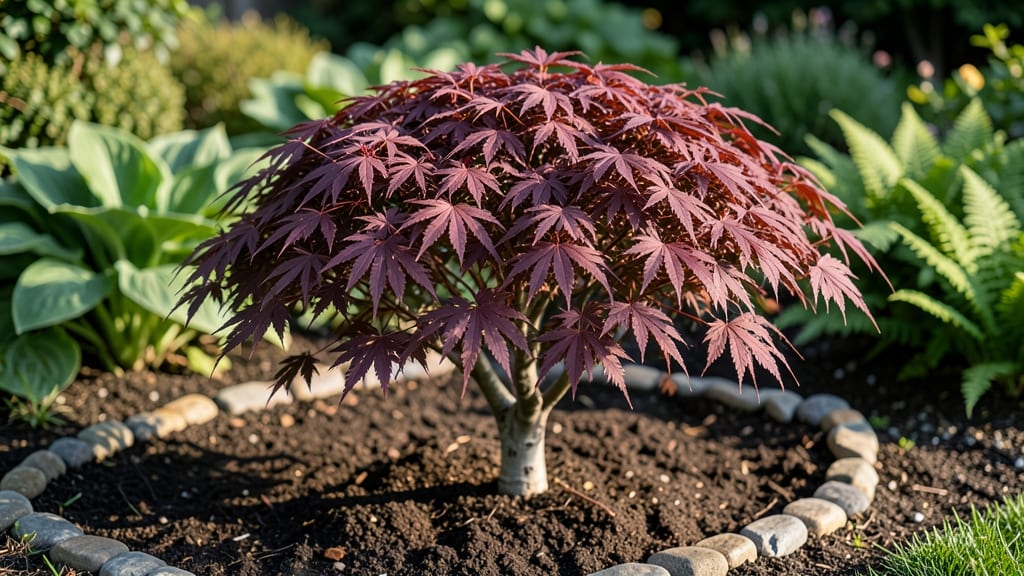
The Emperor 1 Maple Tree grows like a living sculpture—its delicate, burgundy foliage unfurling into a graceful arch that demands respect. 🌿 I learned the hard way that pruning this cultivar isn’t just about shaping; it’s about understanding its rhythm.
One aggressive cut in spring can send it into shock, while gentle guidance year-round unlocks its full potential—think 12-foot canopies that sway with autumn winds.
This maple thrives in partial shade where summer sun wouldn’t scorch its leaves, and well-draining soil that keeps roots from sitting in soggy winter puddles.
Plant it 15-20 feet from structures (roots spread wider than you’d think), and you’ll see those signature palmate leaves emerge brighter and faster than any nursery specimen. The key? Pruning in late winter when the tree’s dormant—just before buds swell—lets you sculpt without stressing the plant.
By summer’s end, you’ll have a tree that’s both a statement piece and a low-maintenance workhorse. Its fall colors—deep crimson and gold—outshine most maples, and with proper care, it lives for decades.
The real magic? How it transforms a plain yard corner into a serene focal point that feels like a secret garden. Ready to shape your own?
Whether you’re growing it as a bonsai in a pot or letting it stretch toward the sky, the same principles apply. We’ll cover how to adapt pruning for containers, urban spaces, and even those tricky microclimates where winters are harsh or summers brutal. Let’s get growing.
📚 In This Guide
- What you need
- Instructions
- Tips and common mistakes
- Wrapping up and next steps
What you need
- ● Pruning shears: Bypass pruners (sharp, clean, and disinfected—think blank">Felco F-2 or blank">Gonicc TGP-121 for precision).
- ● Loppers: 1 pair (8–10" blades) for thicker branches (e.g., blank">Fiskars X7).
- ● Pruning saw: 1 curved-tooth saw (for branches >1" diameter, like blank">Corona CS9900).
- ● Gloves: 1 pair of cut-resistant gloves (e.g., blank">Wrights & Prince for durability).
- ● Disinfectant: 1 bottle (70% isopropyl alcohol or blank">copper-based spray to prevent disease).
- ● Sealing wax: 1 tube (e.g., blank">Tanglefoot Tree Wound Pruning Sealer for large cuts).
- ● Ladder or extension pole: Adjustable (20–30 ft) for tall branches (e.g., blank">Lopperz Telescoping Pole Saw).
- ● Marking twine or paint: 1 roll (for tagging branches to remove later).
- ● Trash bags: 2–3 heavy-duty bags (13-gallon) for debris.
- ● Water spray bottle: 1 (to rinse tools and cool cuts).
- ● Safety gear: Goggles, ear protection (if using a chainsaw), and long sleeves.
- ● Chainsaw: Only for very thick branches (>3" diameter)—pair with a blank">chainsaw bar oil.
- ● Tree growth regulator: 1 bottle (e.g., blank">Bonide Fungicide 3-in-1 for fungal prevention).
- ● Camera or sketchbook: To document your pruning progress!
- ● Hot cocoa or snacks: For post-pruning morale boosts. ☕🍪
Step-by-Step guide to pruning an Emperor 1 Maple tree
Here’s how to shape this majestic tree while keeping it healthy and thriving year-round.
✂️ Step 1: Assess the Tree’s Structure in Late Winter
Start your pruning in late winter or early spring, just as buds begin to swell but before new growth emerges. This timing gives the tree time to heal before summer stress. Look for dead, diseased, or crossing branches—these are your first targets. A crossing branch often rubs against another, creating wounds where pests or disease can enter.
I always use a sharp bypass pruner to make clean cuts just outside the branch collar (the swollen area where the branch meets the trunk). Avoid leaving stubs—this invites decay. If a branch is thicker than ½ inch, use a pruning saw instead. Mark branches to remove with a piece of tape or flagging ribbon for clarity before climbing or reaching.
🌿 Step 2: Thin the Canopy for Airflow in Early Summer
Mid-to-late summer is the best time to thin the canopy by removing 20-25% of the foliage to improve airflow and sunlight penetration. Focus on branches growing inward or downward—these compete with stronger, upward-growing branches. Remove entire branches rather than just cutting back to a lateral branch, unless you’re training the tree for a specific shape.
Step back and visualize the tree’s silhouette. The goal is an open, vase-like shape that allows light to reach the lower branches. If you see water sprouts (fast-growing, vertical shoots), cut them off at the base—they drain energy from the tree. Always sterilize your tools with rubbing alcohol between cuts to prevent spreading disease.
☀️ Step 3: Light Prune for Shape in Early Fall
In early fall, do a light pruning session to refine the tree’s shape and remove any sucker growth (shoots growing from the base or roots). Suckers steal nutrients from the main trunk, so cut them off at ground level. This is also the time to deadhead any seed pods if you’re growing the tree for ornamental purposes—it keeps the tree’s energy focused on growth rather than reproduction.
Use a hand pruner for small branches and a pole pruner for higher branches. Work slowly and methodically, making cuts at a 45-degree angle just outside the branch collar. Avoid over-pruning—never remove more than ¼ of the tree’s foliage in a single season. The Emperor 1 Maple is fast-growing, but it still needs time to recover.
⏰ Step 4: Clean Up and Monitor Year-Round
After each pruning session, remove all debris from the ground and sterilize your tools to prevent fungal or bacterial spread. Store pruned branches in a compost bin or mulch pile—never leave them piled under the tree, as they can harbor pests. Throughout the year, monitor the tree for signs of stress, like yellowing leaves or oozing sap, which can indicate disease or pest issues.
Real talk: If you see sawdust-like frass (insect droppings) on the ground beneath the tree, check for maple borers or aphids. Treat infestations early with neem oil or insecticidal soap before they cause serious damage. Water the tree deeply once a week during dry spells to support its recovery after pruning.
Tips & tricks for pruning an Emperor 1 Maple tree
Let me share the hard-won lessons that’ll keep your Emperor 1 Maple thriving for decades. These aren’t just suggestions—they’re the difference between a healthy, towering tree and one that struggles to grow.
Timing is Everything: That late winter/early spring window in Step 1 is non-negotiable. I learned this the hard way when I pruned too early and saw new growth get damaged by unexpected frost. Look for those swollen buds—they’re nature’s perfect signal. And if you miss this window, wait until after the tree has fully leafed out in spring, but don’t delay past early summer.
Precision Cuts Matter: In Step 1 and Step 3, when you’re making those 45-degree cuts just outside the branch collar, take your time. A clean cut heals 50% faster than a jagged one. I use a pencil to mark where I’ll cut before making the actual incision—this helps me visualize the angle better. For branches thicker than ½ inch, make the cut in three stages: first undercut, then top cut, and finally the final cut just outside the collar.
Canopy Thinning Strategy: When you’re removing 20-25% of foliage in Step 2, focus on creating that open vase shape by prioritizing branches that cross or rub against others. Here’s a pro move: after removing a branch, step back and look at the tree from all angles. You’ll often spot other branches that need removal that you missed from up close. This step is where most people over-prune—don’t be tempted to remove more than that 25% just because you see "problem" branches.
Tool Maintenance Secret: The rubbing alcohol sterilization between cuts in Steps 1-3 isn’t just about disease prevention—it’s about tool longevity too. I keep a small spray bottle of 70% isopropyl alcohol with me and give my tools a quick spray after every 3-4 cuts. This prevents resin buildup from the maple tree that can dull blades over time. And always store your pruners with a drop of oil on the blade when not in use—this prevents rust and keeps them sharp longer.
Pro Tips for Emperor 1 Maple Tree
- Let me share the hard-won lessons that’ll keep your Emperor 1 Maple thriving for decades.
- Timing is Everything: That late winter/early spring window in Step 1 is non-negotiable.
- Precision Cuts Matter: In Step 1 and Step 3, when you’re making those 45-degree cuts just outside the branch collar, take your time.
Frequently asked questions
Got questions about mastering the Emperor 1 Maple Tree? You’re not alone—this majestic giant demands precision! Here are the most common queries from pruning pros and curious growers alike:
When is the best time to prune an Emperor 1 Maple Tree?
The ideal window is late winter to early spring (before buds swell) when the tree is dormant. Avoid heavy pruning in fall—it stresses the tree and invites disease. Light shaping in summer is fine, but never prune during frost or extreme heat.
How much can I trim without harming the tree?
Stick to the 10% rule: Never remove more than 10% of the canopy in a single session. For young trees, focus on structural shaping (removing dead or crossing branches). Mature trees tolerate selective pruning better—think quality over quantity!
Why is my Emperor 1 Maple bleeding sap after pruning?
This is normal! Maple trees ooze sap when cut, but severe bleeding can weaken the tree. To minimize it:
- Prune on cooler days (below 60°F).
- Use sharp tools to make clean cuts.
- Avoid pruning in late winter (Feb–March) when sap flow peaks.
Can I prune an Emperor 1 Maple Tree in summer?
Yes, but go light! Summer pruning is best for:
- Removing sucker growth or water sprouts.
- Thinning the canopy for airflow.
- Avoiding heavy cuts—wait for fall/winter for major work.
What’s the best tool for pruning thick branches on an Emperor 1?
For branches 1"–3" thick, use bypass pruners (sharp, clean cuts). For larger limbs (3"+), a pruning saw is a must—avoid loppers (they crush wood). Always sterilize tools with rubbing alcohol between cuts to prevent disease!
Bonus Tip: How do I encourage upward growth?
To train your Emperor 1 to grow taller and straighter:
- Remove lower branches to open the canopy.
- Prune side branches to reduce competition for height.
- Use tipping (lightly cutting new growth) to promote vertical shoots.
Wrapping up and next steps
The Emperor 1 Maple Tree is a majestic investment in both beauty and long-term care—but with the right pruning blueprint, you’ll unlock its full potential year-round. 🌳 From shaping its towering growth to ensuring vibrant health, consistency is key.
Don’t let overwhelm hold you back; start small, stay patient, and watch your tree thrive.
Ready to take action? Grab your tools, review your seasonal checklist, and schedule your first pruning session this weekend. Your future canopy—and your neighborhood—will thank you!