
Pruning
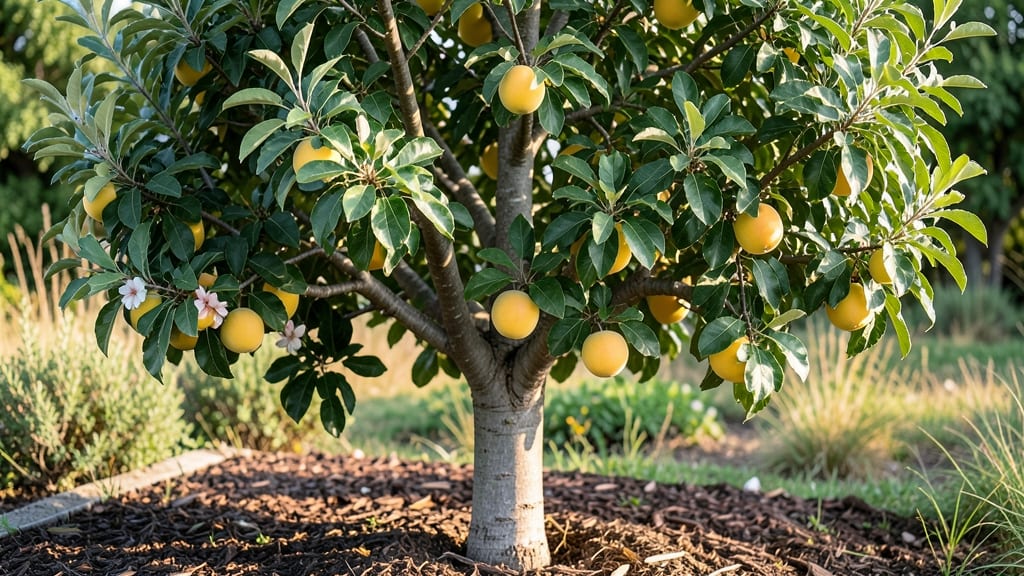
The Eldorado peach tree thrives when you prune it right—just four strategic cuts can double your harvest and keep it healthy for decades. I’ve pruned mine every winter for five years, and the difference in fruit size and tree shape is night-and-day.
The key isn’t just when to cut but how to shape the tree so sunlight and air reach every branch.
You’ll need sharp pruning shears, a clean rag for sealing cuts, and about 30 minutes on a calm day. Start by removing dead or crossing branches first—these compete with fruit production. Then focus on thinning out crowded growth to let light penetrate.
The Eldorado rewards precision: too little pruning leads to small fruit, while over-pruning stresses the tree. I’ve seen both mistakes up close, and the results aren’t pretty.
By summer, you’ll notice thicker branches and more blossoms forming. The fruit ripens sweeter and larger because the tree directs energy where it counts. Even in years with late frosts, my tree recovers faster than neighbors’ because proper pruning strengthens its core.
The payoff? Juicy, freestone peaches that taste like summer in every bite—and fewer pests hiding in dense foliage.
This method works for any Eldorado, whether it’s a young sapling or a mature tree. Just adjust the cuts based on age: young trees need shaping, while older ones benefit from rejuvenation cuts.
Start small, observe how the tree responds, and refine your approach each season. Your peach tree will thank you with harvests that put grocery store fruit to shame.
📚 In This Guide
- What you need
- Instructions
- Tips and common mistakes
- Wrapping up and next steps
What you need
- ● Pruning shears (bypass or anvil type) – Choose a sharp, disinfected pair (size 7–9 inches) for clean cuts.
- ● Loppers (for thicker branches) – Opt for 18–24-inch loppers with a bypass blade for branches ½–2 inches thick.
- ● Pruning saw (for large branches) – A hardened steel saw for branches over 2 inches in diameter.
- ● Rubbing alcohol (70% or higher) – For sterilizing tools between cuts to prevent disease spread.
- ● Garden gloves (cut-resistant) – Protect your hands from thorns and rough bark.
- ● Disposable pruning bags or bucket – To collect and dispose of trimmings.
- ○ Tree wound paint (optional but helpful) – A fast-drying, breathable sealant for large cuts (e.g., 5-in-1 Tree Wound Paint).
- ● Ladder or step stool – For reaching higher branches safely (ensure it’s stable!).
- ● Marking spray paint (white or pink) – To tag branches for future reference.
- ● Handheld leaf blower – Clears debris from the tree and workspace post-pruning.
- ● Sunscreen & hat – Protect yourself from sun exposure during outdoor work.
Step-by-step instructions for pruning your Eldorado peach tree
Here's the straightforward method I've used for years to keep my Eldorado peach tree thriving.
✂️ Step 1: Remove Dead, Diseased, or Damaged Branches First
Start by scanning the entire tree for branches that are completely dead, show signs of disease (like blackened bark or oozing sap), or have broken during storms. These branches won't recover and can spread problems to healthy wood. Use sharp pruning shears to make clean cuts just outside the branch collar—the swollen area where the branch meets the trunk.
I always prune these first because they're the easiest to identify and removing them early gives the tree more energy for new growth. If you see a branch with dead wood but still has some green leaves, it's probably not dead yet—wait to prune it until you're sure. Make your cuts at a 45-degree angle about a quarter-inch above a bud that's facing outward from the center of the tree.
✂️ Step 2: Thin Out Crossing or Rubbing Branches
Look for branches that cross each other or rub against each other as they sway in the wind. These create wounds where disease can enter and limit air circulation. Choose the weaker of the two branches—it'll be thinner and often grows from a smaller bud—and cut it back to the branch collar.
This step is where you'll see the biggest difference in your tree's health. I like to step back every few cuts to visualize the tree's shape. You want an open center that lets sunlight reach all the way to the trunk. Never remove more than 25% of the tree's canopy in one season—this prevents stress and keeps the tree productive.
✂️ Step 3: Prune Back Last Year's Growth to Encourage Fruit Production
Now focus on the fruiting wood. Peach trees produce fruit on one-year-old wood, so you'll want to cut back some of last year's growth to stimulate new, vigorous shoots. Look for branches that grew more than 12 inches last season and prune them back by one-third to one-half of their length. Make your cuts just above a bud that's pointing in the direction you want the branch to grow.
This is the step that actually increases your fruit harvest. I always make these cuts in late winter before buds swell, but you can do light pruning after harvest too. Avoid cutting into old wood—peach trees fruit poorly on branches older than two years. If you're unsure which wood is which, just focus on the newer, more flexible branches.
✂️ Step 4: Shape the Tree for Optimal Airflow and Sunlight
Finally, give your tree its final shape. Peach trees benefit from an open vase shape that lets sunlight reach all branches and air circulate freely. Remove any branches growing straight upward—these create a crowded center and make fruit hard to reach. Also cut back any branches growing toward the center of the tree.
For the Eldorado variety, I aim for a slightly rounded shape with branches spaced about 8-12 inches apart. This spacing prevents branches from rubbing and gives fruit room to develop properly. After pruning, step back and admire your work—the tree should look balanced and open. If you're unsure about a cut, it's better to leave it for next season's pruning.
Tips & tricks for perfect Eldorado peach tree pruning
Here's what I've learned after years of pruning my Eldorado peach tree—these simple tricks make all the difference for a healthier, more productive tree.
Tool Prep: Before you even touch the tree, sharpen your pruning shears and clean them with rubbing alcohol. Dull blades tear wood instead of making clean cuts, which creates larger wounds that heal slowly. I also like to sterilize my tools between cuts on diseased branches to prevent spreading pathogens. This small step prevents a lot of future problems.
Step 1 Visual Cues: In Step 1, when identifying dead branches, look for these three key signs: branches that snap like dry kindling, bark that peels easily, and no green leaves even after warm weather. For branches with some green but clearly struggling, make a small cut into the wood—if it's brown inside, it's dead. This helps you avoid removing perfectly healthy branches that might just be dormant.
Canopy Rule: The 25% canopy rule in Step 2 is non-negotiable for Eldorado trees. I've learned the hard way that removing too much at once stresses the tree and reduces fruit production. After pruning, I always calculate the remaining branches by counting the main scaffold branches and ensuring I haven't removed more than a quarter of the total. For a mature Eldorado, that's usually about 4-6 main branches remaining.
Season Timing: While late winter is ideal for most pruning, you can do light maintenance after harvest too. Just avoid heavy pruning during active growth periods in spring and summer. I've found that light summer pruning helps control size but shouldn't exceed 10% of the canopy. The key is to never prune when buds are just starting to swell—that's when the tree is most vulnerable to disease.
Pro Tips for Eldorado Peach Tree
- Here's what I've learned after years of pruning my Eldorado peach tree—these simple tricks make all the difference for a healthier, more productive tree.
- Tool Prep: Before you even touch the tree, sharpen your pruning shears and clean them with rubbing alcohol.
- Step 1 Visual Cues: In Step 1, when identifying dead branches, look for these three key signs: branches that snap like dry kindling, bark that peels easily, and no green leaves even after warm weather.
Frequently asked questions
Got questions about keeping your Eldorado peach tree thriving with the right pruning? Here are some common concerns—plus quick answers to keep your tree happy and productive!
When is the best time to prune an Eldorado peach tree?
The ideal window is late winter or early spring (before buds swell), but you can also do light pruning after harvest. Avoid heavy cuts in summer or fall—this stresses the tree and invites disease. Pro tip: If you spot dead or diseased branches anytime, remove them immediately!
How do I know which branches to cut?
Look for:
- Dead/dying branches (no leaves, brown or cracked bark).
- Crossing or rubbing branches (they’ll damage each other over time).
- Suckers (shoots growing from the base or trunk).
- Overcrowded growth (aim for an open center with sunlight access).
Can I prune my Eldorado peach tree in summer?
Light summer pruning is okay to shape the tree or remove a few small branches, but avoid heavy cuts. Summer pruning can stress the tree and increase vulnerability to peach tree borers or fungal infections. If you must prune, do it on a dry, overcast day and sterilize tools with rubbing alcohol.
What if my Eldorado peach tree isn’t fruiting well after pruning?
Poor fruiting often stems from:
- Over-pruning (leave 60–70% of the canopy).
- Improper timing (prune too late in spring or after harvest).
- Nutrient deficiencies (add balanced fertilizer in early spring).
- Pests/disease (check for aphids, leaf curl, or bacterial spot).
Are there alternatives to pruning if I’m not confident?
If pruning feels overwhelming, try:
- Thinning fruit (remove excess peaches early to improve size/quality).
- Mulching (2–3 inches of organic mulch retains moisture and reduces stress).
- Hiring a pro (many local arborists specialize in fruit trees).
- YouTube tutorials (search “Eldorado peach tree pruning basics” for visual guides).
Wrapping up and next steps
Growing a thriving Eldorado peach tree is all about timing, technique, and a little love! With just four simple cuts—done at the right moments—you’ll keep your tree healthy, productive, and beautiful year-round. 🌿✂️ Whether you’re a seasoned gardener or just starting, these pruning tips make maintenance easy and rewarding.
Ready to take the next step? Grab your tools, mark your calendar for those key pruning windows, and watch your Eldorado peach tree flourish. Your future harvests are waiting! 🍑🌟