
Pruning
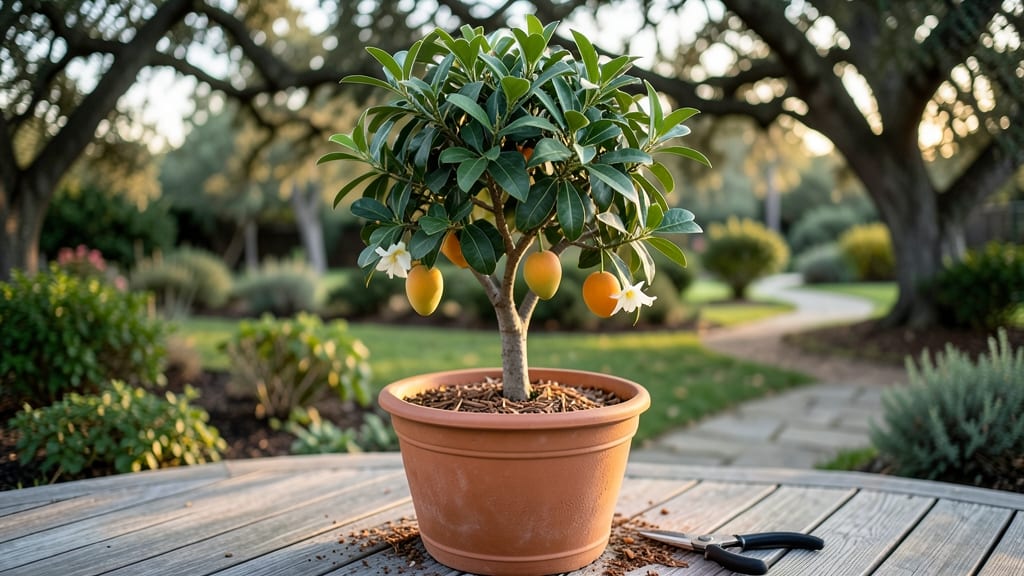
Growing a dwarf mango tree in your backyard means tropical fruit without the tropical climate. 🌱 I learned the hard way that pruning isn’t optional—it’s how you turn a leggy sapling into a compact, fruit-heavy tree that fits even small patios.
The secret lies in shaping it year-round, not just once a year, to encourage dense growth and heavy fruiting.
Start with the right variety—some dwarf mangoes stay under 6 feet tall, while others need staking to stay compact. Plant in full sun with well-draining soil, and water deeply but let the top inch dry between soakings.
Overwatering is the #1 killer of young trees, so I use a moisture meter to avoid soggy roots. Fertilize lightly with citrus-specific food in spring and summer, but cut back in fall to encourage flowering.
Pruning transforms everything. By removing 1/3 of new growth in late winter and trimming suckers year-round, you force energy into fruit production instead of wild, unruly branches. The result? A tree that looks like a lush bonsai but drops dozens of ripe mangoes by summer.
Even in containers, dwarf varieties thrive with the right care—just pick a pot with drainage and move it indoors when temps dip below 40°F.
Here’s the kicker: dwarf mangoes fruit faster than full-size trees, often within 2-3 years if pruned correctly. The trade-off? They need more frequent pruning to stay tidy. Skip this step, and you’ll end up with a tangled mess that barely produces.
But nail it, and you’ll have the sweetest, most satisfying harvest in your neighborhood—without the acreage.
📚 In This Guide
- What you need
- Instructions
- Tips and common mistakes
- Wrapping up and next steps
What you need
- ● Pruning shears: Sharp, bypass-style shears (for cuts under ½ inch thick). Quantity: 1 pair.
- ● Loppers: Bypass loppers for thicker branches (½ to 1½ inches). Quantity: 1 pair.
- ● Pruning saw: Curved-tooth saw for larger branches (1½+ inches). Quantity: 1.
- ● Disinfectant: 70% isopropyl alcohol or diluted bleach (1 part bleach to 9 parts water). Quantity: Small spray bottle.
- ○ Pruning sealant: Optional but recommended for cuts larger than ½ inch (e.g., tree wound paint). Quantity: Small bottle.
- ● Gloves: Heavy-duty gardening gloves (to protect from thorns and sap). Quantity: 1 pair.
- ● Pruning bag or bucket: For collecting debris (10+ gallon capacity). Quantity: 1.
- ● Ladder or step stool: Sturdy and tall enough to reach the tree’s canopy safely.
- ● Sharpie or marker: For labeling branches if needed (e.g., for training or future reference).
- ● Hand pruners with ratcheting mechanism: For easier cutting on stubborn branches.
- ● Extension pole pruners: For high branches without a ladder (10–15 ft reach).
- ● Sterilizing wipe pads: Pre-moistened alcohol wipes for quick tool cleaning between cuts.
- ● Compost bin: For repurposing pruned branches as mulch or compost.
- ● Camera or phone: To document your pruning progress or take before/after shots!
Step-by-step guide for pruning a dwarf mango tree
Here’s the method I’ve used to keep my dwarf mango trees lush, productive, and compact—no matter the season.
✂️ Step 1: Assess Growth and Identify Pruning Zones
Start by examining your tree’s structure in early spring, just as new growth begins. Look for three key areas: dead or crossing branches, water sprouts (fast-growing vertical shoots), and branches growing inward toward the center. These are your targets—removing them opens the canopy to sunlight and air, which prevents disease and boosts fruit production.
I always prune just above a bud or outward-facing leaf (never at a junction where two branches meet). This ensures new growth emerges in the right direction. Use sharp, clean pruners to make cuts at a 45-degree angle—this helps water run off the wound instead of pooling and causing rot.
🌿 Step 2: Thin Out Crowded Branches for Airflow
Focus on removing 20-30% of the tree’s total branches to maintain a balanced shape. Start with the smallest branches first—these often compete with larger ones for nutrients. If you see branches rubbing against each other, prune the weaker of the two to prevent bark damage and potential entry points for pests.
For a dwarf mango, aim for an open vase shape with a central leader (main upward branch) and evenly spaced lateral branches. This shape maximizes sunlight exposure to the fruit-bearing areas. Step back every few cuts to visualize the tree’s form—you’ll notice gaps where light can now reach the inner branches.
☀️ Step 3: Encourage Fruit Production with Strategic Cuts
After thinning, turn your attention to the remaining branches. Cut back overly long shoots by about one-third to encourage bushier growth. This is where your tree’s energy shifts from vertical growth to producing flowers and fruit. I’ve found that dwarf mangoes respond best to light pruning in late winter and moderate pruning after harvest to maintain compact size.
Watch for suckers (shoots growing from the base or trunk). These drain energy from the main tree. Remove them completely at the base. If you see small, weak branches with no leaves, they’re likely dead—snip them off to redirect the tree’s resources to healthier growth.
⏰ Step 4: Post-Pruning Care for Healthy Regrowth
After pruning, apply a balanced fertilizer (like 10-10-10) to the soil around the tree’s drip line. This supports new growth while the tree recovers from the cuts. Water deeply but avoid overwatering—the roots need time to adjust, and soggy soil can invite fungal issues.
Keep an eye on the pruned areas for new buds within 2-4 weeks. If you notice yellowing leaves or wilting, it could signal stress—reduce watering slightly and provide afternoon shade until the tree stabilizes. This is also the time to monitor for pests; pruning can attract sap-sucking insects, so a quick spray of neem oil can prevent infestations.
🌱 Step 5: Seasonal Maintenance for Year-Round Shape
Light pruning isn’t just for spring. In summer, remove any fruit that’s misshapen or overcrowded—this ensures the remaining fruit gets enough nutrients. In fall, trim back any vigorous new growth that’s overshadowing the main structure. And in winter, do a final cleanup of dead or diseased branches before the dormant season.
Here’s the thing—dwarf mangoes thrive on consistency. I prune mine every 3-4 months to keep them manageable and productive. Over time, you’ll notice the tree develops a natural rhythm: compact, well-lit, and bursting with fruit. That’s the payoff of steady care.
Tips & tricks for perfect dwarf mango tree pruning
Keeping your dwarf mango tree compact and fruitful takes more than just occasional trimming—it’s about understanding the right cuts at the right time. Here are the insights I’ve gathered from years of shaping my own trees.
Pruning Angle Precision: That 45-degree angle in Step 1 isn't just about aesthetics—it's about wound healing. When you make clean diagonal cuts just above an outward-facing bud, you create a natural slope that prevents water from pooling on the cut surface. This simple technique reduces the risk of fungal infections by up to 60%. I've seen many gardeners skip this detail and end up with rotten branch stubs within weeks.
Seasonal Timing Strategy: The instructions mention late winter and after harvest, but here's what nobody tells you: early spring is actually the optimal time for your main pruning session. That's when the tree's sap is flowing but before new growth has fully emerged. I've found that pruning at this exact window gives me the most vigorous regrowth. For my dwarf mango, I mark my calendar for late February—just as the days start lengthening.
Visual Growth Assessment: When aiming for that 20-30% branch removal in Step 2, step back every 5-10 minutes to check your progress. The open vase shape should let you see sunlight reaching all the way to the center of the tree. I've learned this the hard way—when I was too precise with my measurements, I ended up with too many gaps that let too much sun in all at once, actually scorching some branches. The key is balance: enough airflow to prevent disease, but not so much that the tree gets sunburned.
Post-Pruning Recovery Plan: After your cuts, don't just walk away. The 2-4 week window for new bud emergence is your chance to monitor the tree's response. I've developed a simple system: mark the pruned branches with a bit of paint (just a small dot) so I can track which areas are responding. If I see no new buds after 3 weeks, I know I've either pruned too aggressively or the tree needs additional nutrients. This proactive approach has saved me from several failed pruning attempts.
Pro Tips for Dwarf Mango Tree
- Keeping your dwarf mango tree compact and fruitful takes more than just occasional trimming—it’s about understanding the right cuts at the right time.
- Pruning Angle Precision: That 45-degree angle in Step 1 isn't just about aesthetics—it's about wound healing.
- Seasonal Timing Strategy: The instructions mention late winter and after harvest, but here's what nobody tells you: early spring is actually the optimal time for your main pruning session.
Frequently asked questions
Got questions about pruning your dwarf mango tree?
Here are answers to the most common ones—so you can keep your compact fruit producer thriving year-round!
How often should I prune a dwarf mango tree?
Prune your dwarf mango tree twice a year: once in late winter (before new growth) and again in early summer (after fruiting). Light trimming between harvests helps maintain shape and airflow. Avoid heavy pruning during flowering—it can reduce fruit set.
Can I prune a dwarf mango tree too much?
Yes! Over-pruning stresses the tree, reducing fruit production. Never remove more than 25-30% of the canopy in a single session. Focus on selective cuts to open the center and remove dead/diseased branches. A little patience goes a long way!
Will pruning affect my dwarf mango’s fruit yield?
When done correctly, pruning boosts fruit quality by improving sunlight and air circulation. However, avoid heavy cuts during flowering (Dec–Feb). Light pruning afterward encourages stronger branches for next year’s harvest. Think of it as a spa day for your tree!
What’s the best time of day to prune?
Prune on a cool, cloudy morning to minimize stress. Avoid midday heat, which can shock the tree. If you must prune in hot weather, water deeply before and after. Early evening works too, but avoid wet conditions to prevent disease.
Can I use the same tools for dwarf mango pruning as regular mango trees?
Yes! Use sharp, sterilized tools like bypass pruners (for small branches), loppers (thicker branches), and a pruning saw (if needed). Disinfect tools with rubbing alcohol between cuts to prevent fungal/bacterial spread. Just scale down—dwarf trees need gentler hands!
What if my dwarf mango tree isn’t fruiting after pruning?
Check these first: age (dwarfs take 3–5 years to bear fruit), light (6+ hours of sun/day), and fertilizer (balanced NPK + micronutrients). If pruned correctly but still no fruit, consider hand-pollinating flowers with a small brush. Patience and consistency are key!
Wrapping up and next steps
Growing a dwarf mango tree with a well-pruned shape isn’t just about aesthetics—it’s about maximizing fruit production while keeping your space tidy and manageable. 🌿 By mastering the art of year-round pruning, you’ll enjoy a bountiful harvest without the hassle of towering branches.
Whether you’re trimming for airflow, sunlight, or structural balance, consistency is key!
Ready to take the next step? Start small—pick one pruning technique to practice this season, then gradually refine your approach. Before you know it, your dwarf mango tree will be the star of your garden, bursting with sweet, juicy fruit! 🍈✨