
Blooming
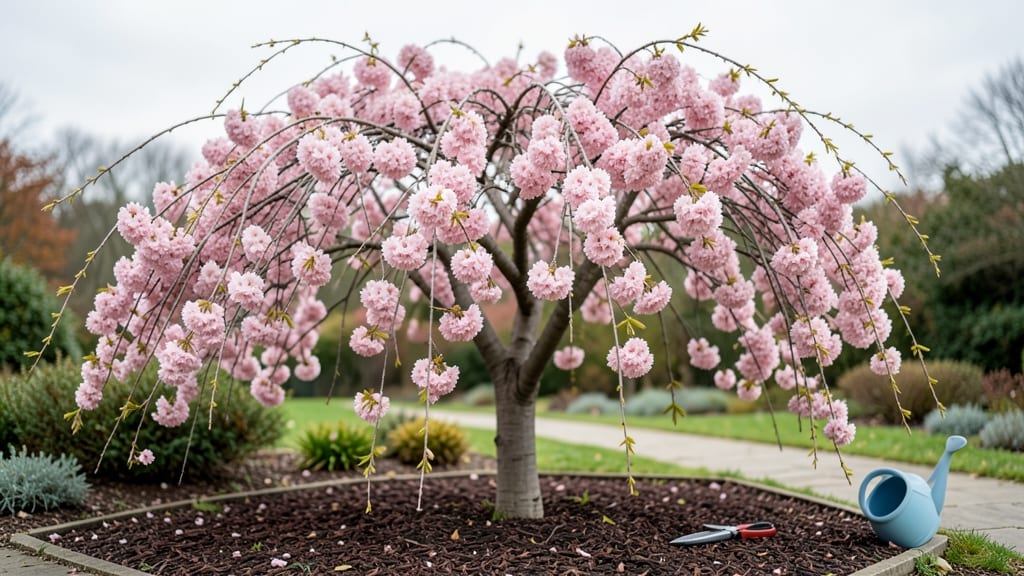
Planting a double blossom weeping cherry tree means transforming your yard into a springtime masterpiece with cascading pink and white flowers that last for weeks. 🌸 I’ve learned the hard way that proper stratification—mimicking winter’s chilling effect—is the secret to reliable blooms every year, not just sporadically.
The right soil, sunlight, and timing turn this delicate tree into a showstopper that neighbors will envy.
The tree thrives in well-draining soil with 6 hours of sunlight daily, and its graceful weeping form needs 15-20 feet of space to spread beautifully. Start with a 5-gallon container for young trees, and plant in early spring or fall when roots establish faster.
Mulch helps retain moisture while protecting shallow roots from summer heat—critical for keeping those blossoms coming back year after year.
By early May, you’ll be rewarded with 3-4 weeks of nonstop blooms, their fragrance filling the air and attracting bees. The weeping branches create a natural canopy, perfect for patios or as a focal point near walkways.
Just remember: prune in late winter to shape the tree and remove dead wood, and avoid heavy fertilization, which can reduce flowering.
Pair it with dwarf rhododendrons or boxwoods for contrast, or let it spill over a retaining wall for a dramatic effect. With the right care, this tree becomes the centerpiece of your spring landscape—reliable, stunning, and worth every effort.
📚 In This Guide
- What you need
- Instructions
- Tips and common mistakes
- Wrapping up and next steps
What you need
- ● Double Blossom Weeping Cherry Tree: 1 mature tree (for propagation via layering) or
- ● 1 bare-root or container-grown sapling (for direct planting)
- ● Soil: Well-draining, slightly acidic soil (pH 5.0–6.5)
- ● Compost or organic matter (2–3 gallons for amending soil)
- ● Fertilizer: Balanced, slow-release fertilizer (10-10-10 or similar, 1 lb per tree)
- ● Mulch: 2–3 inches of organic mulch (wood chips or bark)
- ● Hand Trowel or Spade (for digging)
- ● Pruning Shears (sharp, sterilized)
- ● Grafting Tape or Plastic Wrap (for layering)
- ● Watering Can or Hose (with gentle spray nozzle)
- ● Garden Gloves (for protection)
- ● Measuring Tape (to track growth)
- ● Rooting hormone (to boost success rate for layering)
- ● Tree stakes and ties (for young saplings in windy areas)
- ● Soil moisture meter (to monitor hydration)
- ● Pest control spray (neem oil or horticultural oil for prevention)
Step-by-step instructions for cultivating a double blossom weeping cherry tree
Here's how to establish your tree for decades of reliable spring blooms.
🌱 Step 1: Select and Prepare the Planting Site
Choose a location with full sun exposure (6-8 hours daily) and well-draining soil. Weeping cherries thrive in slightly acidic to neutral soil with a pH between 6.0 and 7.0. Test your soil's pH before planting—amending with sulfur or lime may be necessary if your soil runs too alkaline or acidic.
Dig a hole that's twice as wide as the tree's root ball but only as deep. The top of the root ball should sit 2-3 inches above ground level to prevent waterlogging. Loosen the sides of the hole with a shovel to encourage root expansion into the surrounding soil.
🪴 Step 2: Plant and Stake for Stability
Gently remove the tree from its container and loosen any circling roots with your fingers. Place the tree in the hole so the graft union (the swollen area near the base) is 2-3 inches above soil level
Backfill the hole with native soil, tamping lightly every 2 inches to remove air pockets. Install two stakes on opposite sides of the tree, then secure it with flexible tree ties. Water deeply immediately after planting to settle the soil and eliminate air gaps around the roots. Water your weeping cherry deeply 2-3 times per week for the first growing season, providing about 1-1.5 gallons per watering. The goal is to encourage deep root growth—water should penetrate 12-18 inches below the soil surface. You'll know you're doing it right when the soil feels moist 6 inches down after watering. Apply 3-4 inches of organic mulch (like shredded bark) around the base, keeping it 3 inches away from the trunk. This conserves moisture, regulates soil temperature, and prevents weed competition. Replenish mulch annually as it breaks down—never let it pile against the trunk where it can cause rot. Prune your weeping cherry in late winter or early spring before buds swell, using clean, sharp pruners. Remove any dead, diseased, or crossing branches first. Then selectively thin out about 20-25% of the canopy to improve airflow and light penetration—this reduces disease risk and promotes better blooms. Never remove more than ¼ of the tree's canopy in one season. Weeping cherries have a natural growth habit, but you can encourage a more open form by heading back some of the longer branches. Watch for water sprouts (vigorous vertical shoots) and remove them immediately—they drain the tree's energy from flower production.☀️ Step 3: Establish Proper Watering and Mulching Routine
✂️ Step 4: Prune for Structure and Bloom Health
Tips & tricks for perfect double blossom weeping cherry tree cultivation
Real talk: The difference between a thriving weeping cherry and one that struggles comes down to these foundational details. I've seen too many beautiful trees fail because of small oversights—don't let that be you.
Soil Preparation is Non-Negotiable: That 6.0-7.0 pH range isn't arbitrary—it's where weeping cherries perform best. If your soil test shows 7.5 or higher, amend with elemental sulfur (about 2 pounds per 100 square feet) 2-3 months before planting. For acidic soil below 6.0, use pelletized lime (5 pounds per 100 square feet). The key is patience—don't rush soil amendments, or you'll risk root burn.
Root Ball Position Matters: The 2-3 inch elevation above ground level for the root ball isn't just a suggestion—it's critical for preventing waterlogging. I've seen trees drown in their own planting holes because people buried them too deep. Think of it like a foundation: you wouldn't build a house with its basement flooded, would you? Use a level to ensure proper positioning before backfilling.
Watering Technique is Everything: Those 1-1.5 gallons per watering aren't just random numbers—they're designed to penetrate 12-18 inches deep. Use a soil probe or long screwdriver to check moisture levels after watering. If it comes out dry at 6 inches, you're not watering deeply enough. Consider installing a soaker hose for consistent moisture during the establishment phase—it's worth the investment.
Pruning Timing is Critical: That late winter/early spring window before buds swell isn't just a suggestion—it's when the tree's energy reserves are at their lowest, making it the perfect time for pruning. If you prune too early, you risk encouraging new growth that won't harden off before winter. And never prune in fall—you'll stimulate tender new growth that can't survive winter freezes.
Pro Tips for Double Blossom Weeping Cherry Tree
- Real talk: The difference between a thriving weeping cherry and one that struggles comes down to these foundational details.
- Soil Preparation is Non-Negotiable: That 6.0-7.0 pH range isn't arbitrary—it's where weeping cherries perform best.
- Root Ball Position Matters: The 2-3 inch elevation above ground level for the root ball isn't just a suggestion—it's critical for preventing waterlogging.
Frequently asked questions
Got questions about nurturing your double blossom weeping cherry tree? You’re not alone! Here are answers to the most common curiosities—from planting to pruning—so you can enjoy those dreamy cascades of blossoms year after year.
How long does it take for a double blossom weeping cherry tree to bloom after planting?
Patience is key! While young trees may produce a few blossoms within 3–5 years, full, dramatic blooms typically take 5–7 years—especially in cooler climates. Choose a well-established nursery tree (3–5 years old) to skip the wait and enjoy earlier spring spectacles.
Can I prune my weeping cherry tree after it blooms?
Yes, but timing matters! Prune right after flowering (late spring/early summer) to avoid cutting off next year’s buds. Focus on shaping the weeping branches and removing dead wood. Avoid heavy pruning in fall/winter—it stresses the tree and risks disease.
Why aren’t my double blossom cherry tree’s flowers as vibrant as they should be?
Several factors could dull the show: poor sunlight (they need 6+ hours/day), over-fertilizing (too much nitrogen = fewer blooms), or late frosts damaging buds. Try moving to sunnier spot, use a low-nitrogen, high-phosphorus fertilizer in late winter, and protect buds with frost cloth if needed.
Are there dwarf varieties of double blossom weeping cherry trees for small yards?
Look for cultivars like ‘Kanzan’ (dwarf form) or ‘Shidare Yoshino’, which top out at 10–15 feet. These retain the weeping habit and double blossoms but fit patios or containers (with proper care). Just ensure they get adequate airflow to prevent fungal issues.
Do double blossom weeping cherry trees attract bees or other pests?
Yes, their fragrant blooms love pollinators—bees, butterflies, and hummingbirds! However, they’re low-maintenance for pests. Watch for cherry leaf spot (fungus) or aphids; treat with neem oil or horticultural soap if needed. Their natural weeping shape also discourages heavy pest buildup compared to upright varieties.
Pro Tip:
For extra-long blooms, plant near a late-blooming companion like a crabapple or magnolia. The staggered colors create a stunning seasonal display and extend your tree’s “wow factor”!
Wrapping up and next steps
The double blossom weeping cherry tree isn’t just a stunning addition to your garden—it’s a promise of reliable spring beauty with minimal fuss. 🌸 By understanding its needs, from well-draining soil to strategic pruning, you’re setting the stage for years of breathtaking blooms.
Now that you’re equipped with the know-how, why not take the next step?
🌱 Ready to Plant?
Start small—research local nurseries, sketch a planting plan, or even share your excitement with fellow gardening enthusiasts! Every expert began where you are now. Happy planting! 🌿