
Pruning
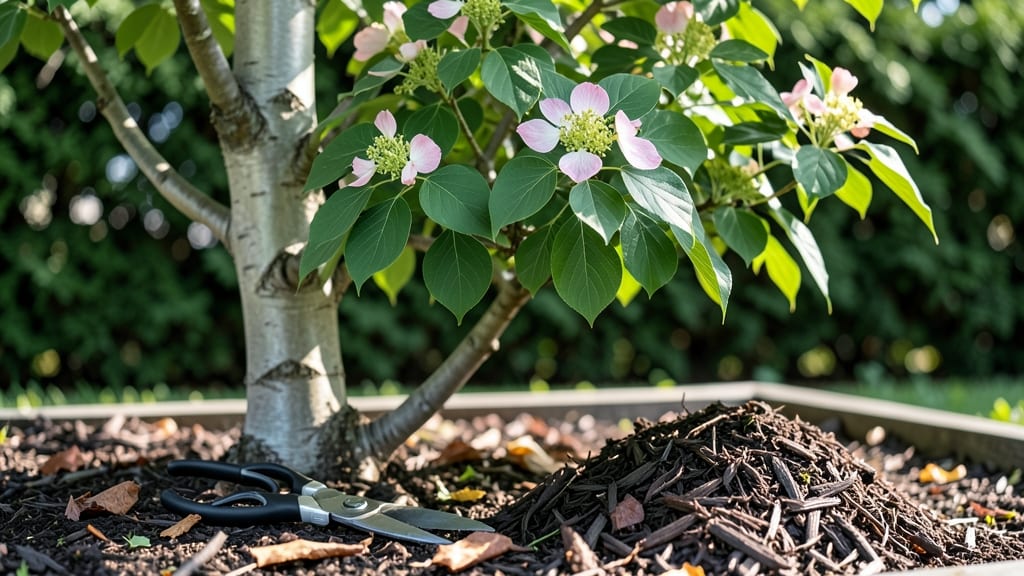
Proper dogwood tree maintenance starts with pruning at the right time—late winter or early spring, before buds swell. ✨ I’ve watched my own dogwood go from struggling to showstopping after adopting this simple calendar, and the difference in bloom quality is stunning. is night and day.
The key is timing: prune too early and you risk winter dieback; too late and you cut off next year’s flowers.
You’ll need basic tools—a sharp pair of pruners, gloves, and a bucket for clippings. Focus on removing dead, diseased, or crossing branches first, then thin out crowded areas to improve airflow.
Dogwoods reward precision over aggression—just a few strategic cuts can transform a tangled mess into an elegant, open canopy that lets sunlight reach the ground below.
By summer, you’ll see the payoff: vibrant pink or white blooms that last weeks, followed by glossy red berries that birds adore. The tree’s overall health improves too—less stress means fewer pests and diseases creeping in.
Even in hot climates, dogwoods stay resilient when given proper care, making them a low-maintenance star for any landscape.
This approach works for both young trees and mature specimens, though larger dogwoods may need occasional structural pruning. The best part? Once you establish the routine, it takes less than an hour a year to keep your dogwood looking its best. Let’s get started with the full calendar.
📚 In This Guide
- What you need
- Instructions
- Tips and common mistakes
- Wrapping up and next steps
What you need
- ● Pruning shears – Bypass pruners (sharp, 6-8" blades) for clean cuts on small branches.
- ● Loppers – 18-24" bypass or anvil type for thicker branches (up to 2" diameter).
- ● Pruning saw – Curved-tooth, 8-10" blade for branches over 2" thick.
- ● Gloves – Heavy-duty, cut-resistant to protect hands from thorns and rough bark.
- ● Ladder or step stool – Sturdy, extendable (12-16' height) for high branches.
- ● Disinfectant (70% isopropyl alcohol or bleach solution) – To sterilize tools between cuts and prevent disease spread.
- ○ Tree wound dressing (optional but helpful) – Pruning sealant or beeswax wrap for large cuts (controversial but useful for some growers).
- ● Extension pole saw – For hard-to-reach branches without climbing.
- ● Fertilizer – Slow-release, acid-loving plant fertilizer (e.g., 10-10-10 or compost) for spring feeding.
- ● Mulch (2-4" layer of shredded bark or pine straw) – To retain moisture and regulate soil temperature.
- ● Pest control – Neem oil or horticultural oil for treating aphids, scale, or borers.
- ● Watering can or hose with nozzle – For post-pruning hydration (especially in dry climates).
- ● Check local pruning regulations—some areas restrict tree work without permits.
- ● Review your dogwood’s growth habits (e.g., flowering branches vs. structural limbs).
- ● Schedule pruning on a dry, overcast day to minimize stress on the tree.
Step-by-Step dogwood tree pruning for year-round health
Here's how I keep my dogwoods blooming beautifully while preventing disease—no fancy tools needed.
✂️ Step 1: Late Winter Cleanup (Before Bud Break)
Start in late February or early March when the tree is still dormant but buds are swelling. This is your chance to remove dead, diseased, or crossing branches that could rob energy from spring blooms. I grab my pruning shears and look for branches that are brown inside when cut or have mushroom-like growths at the base—these are red flags for disease.
Make clean cuts just outside the branch collar (that swollen area where the branch meets the trunk). Avoid leaving stubs—those invite rot. If a branch is thicker than ½ inch, use your pruning saw instead. You'll know you're doing it right when the cut looks smooth and the branch falls away cleanly without tearing.
Here's the thing—dogwoods are sensitive to over-pruning. Remove no more than 20-25% of the canopy in one session. I mark branches with white correction tape first to visualize the cuts before making them. This prevents me from overdoing it and keeps the tree's natural shape intact.
☀️ Step 2: Summer Light Pruning (After Flowering)
After your dogwood finishes blooming—usually late May or June—it's time for a quick maintenance trim. Focus on thinning out the center to improve airflow, which prevents fungal diseases like anthracnose. I target branches that are growing inward or rubbing against others, as these create wounds where pathogens can enter.
Use your pruning shears to make cuts just above an outward-facing bud. This encourages new growth in the right direction. If you notice any yellowing leaves or black spots, remove those branches immediately and dispose of them in the trash—not the compost bin. Dogwoods are particularly susceptible to fungal spores, so cleanliness is key.
This isn't about heavy shaping—just light cleanup. I spend about 15-20 minutes per tree, mostly scanning for problem branches rather than making aggressive cuts. The goal is to keep the tree healthy enough to produce next year's blooms without stressing it.
⏰ Step 3: Fall Disease Prevention (Before Leaf Drop)
In October, when leaves start turning but haven't fallen yet, do a final check for any wilted or discolored branches. These are often hiding spots for pests or fungal spores that will overwinter. Remove them immediately with sterilized pruning shears—wipe them down with rubbing alcohol between cuts to prevent spreading disease.
This is also the time to thin out dense growth at the base of the tree. Dogwoods can get leggy, and crowded branches trap moisture. I look for areas where sunlight doesn't reach the lower trunk—those are prime spots for fungal growth. A little strategic pruning here ensures better air circulation and a stronger structure for next spring.
Real talk: If your dogwood has cankers (those sunken, dead areas on the bark), don't prune around them. Instead, make your cuts at least 6 inches below the canker to remove the infected tissue entirely. It's better to lose a small branch than risk spreading the disease deeper into the tree.
🌿 Step 4: Winter Protection (If Needed)
If you're in a Zone 5 or colder, wrap the trunk of young dogwoods (under 5 years old) with tree guard or burlap in late November to protect against winter sunscald and rodent damage. I avoid heavy mulching around the base—just a 2-3 inch layer of wood chips is enough to insulate roots without suffocating them.
Skip the pruning entirely in winter unless you spot dead branches from frost damage. These are easy to identify—they'll be completely dry and brittle. Cut them out as soon as you notice them, but avoid pruning healthy branches in freezing temperatures. The tree is dormant, and cold stress can make it more vulnerable to disease.
Here's the moment that matters: After winter, check for sap oozing from any pruning cuts you made. If you see this, the cut was too deep or too close to the trunk. Next time, aim for the branch collar—that's your guide to clean, healthy healing.
Tips & tricks for perfect dogwood tree maintenance
Common pitfalls—and how to sidestep every one when keeping your dogwoods thriving.
Timing is Everything: In Step 1, when you're pruning in late February or early March, check the weather forecast. Avoid pruning if rain is expected within 24 hours—wet conditions can introduce fungal spores to fresh cuts. I always wait for a dry, sunny day to minimize disease risk. The goal is to remove dead branches before buds swell, so timing matters more than you'd think.
The Branch Collar Technique: This is the secret to clean cuts that heal properly. In Step 1 and Step 3, when making cuts, look for that swollen area where the branch meets the trunk—the branch collar. Make your cut just outside this collar, never inside it. I've ruined cuts by slicing too close to the trunk, which creates wounds that never heal. This simple technique prevents decay and keeps your tree strong for years.
Cleanliness Prevents Disease: Dogwoods are particularly vulnerable to fungal infections, so cleanliness is non-negotiable. After Step 2's summer pruning, I wipe my pruning shears with rubbing alcohol between each cut. In Step 3, I use a separate pair of shears for diseased branches and dispose of infected material in sealed trash bags. This might seem excessive, but it's the difference between a healthy tree and one struggling with anthracnose.
Visualizing Your Cuts: Before making any pruning cuts, especially in Step 1 where you're removing up to 25% of the canopy, use white correction tape to mark branches you plan to remove. This helps you visualize the final shape and prevents over-pruning. I've learned this the hard way—after removing too much in one session, my dogwood took two years to recover its bloom production.
Pro Tips for Dogwood Tree Maintenance
- Common pitfalls—and how to sidestep every one when keeping your dogwoods thriving.
- Timing is Everything: In Step 1, when you're pruning in late February or early March, check the weather forecast.
- The Branch Collar Technique: This is the secret to clean cuts that heal properly.
Frequently asked questions
When is the best time to prune a dogwood tree for maximum blooms?
The ideal time to prune dogwood trees is right after they finish blooming (late spring to early summer). This ensures you don’t remove next year’s flower buds, which form after blooming. Avoid heavy pruning in fall or winter, as it can stress the tree and reduce spring blooms.
Can I prune a dogwood tree in winter? If so, how?
Light pruning in late winter or early spring (before buds swell) is safe to remove dead or damaged branches. However, avoid heavy pruning—dogwoods bloom on old wood, so cutting too much can reduce flowers. Focus on shaping and removing crossing branches for airflow.
Why are my dogwood tree leaves turning brown? Is it from poor pruning?
Brown leaves can stem from over-pruning, disease (like powdery mildew), or pests (e.g., borers). If pruning was recent, check for proper cuts (clean, angled, and not too close to the trunk). For other issues, inspect for fungal spots, wilting, or holes in leaves—these may need targeted treatments.
How often should I fertilize my dogwood tree after pruning?
Fertilize once a year in early spring (after pruning) with a balanced, slow-release fertilizer (e.g., 10-10-10). Avoid over-fertilizing, which can harm roots. Dogwoods thrive in well-draining soil—test soil pH (ideal: 5.0–6.5) and amend if needed.
What if my dogwood tree isn’t blooming? Could it be pruning-related?
Poor blooming often signals over-pruning, stress, or age. If you’ve pruned heavily in past years, give the tree 1–2 seasons to recover. Ensure it gets full sun (6+ hours/day) and consistent water. Mature trees may bloom less—consider renovating older growth by selectively pruning to stimulate new shoots.
Wrapping up and next steps
Maintaining your dogwood tree doesn’t have to be overwhelming—just a little consistent care goes a long way! By following this year-round pruning calendar, you’ll enjoy vibrant blooms, robust health, and a stunning landscape. Start small, stay observant, and soon your dogwood will thrive like the star of your yard!
Next step: Grab your tools, mark your calendar, and schedule your first pruning session—your dogwood’s future beauty starts today! 🌿✨