
Pruning
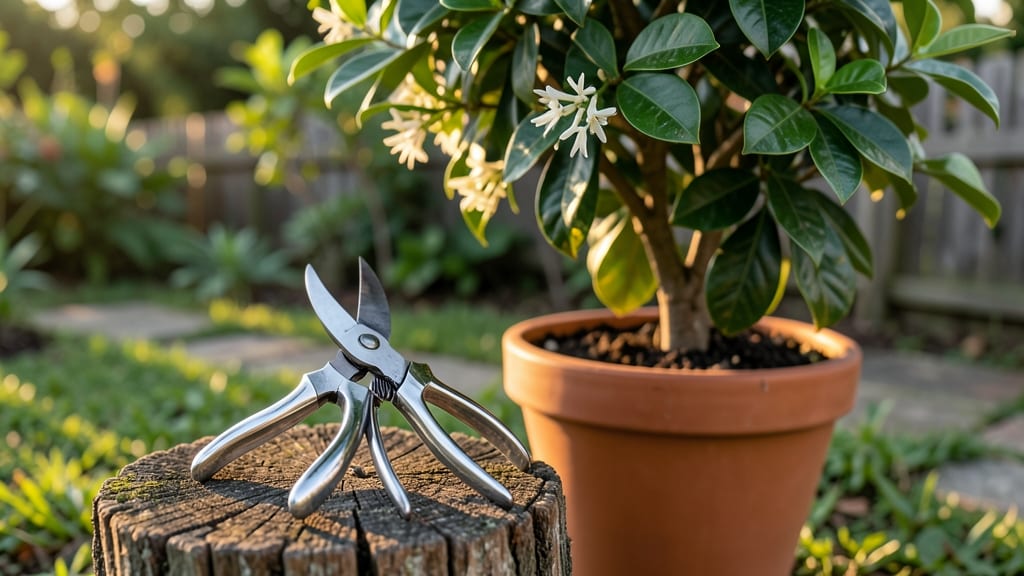
Pruning your curry leaf tree (Murraya koenigii) isn’t just about shaping—it’s about unlocking a harvest that tastes richer and grows thicker. I’ve learned the hard way that skipping this step means leggy branches and fewer leaves for your favorite curries, but the right cuts make all the difference.
The key is timing: prune right after harvest or in early spring when new growth is eager to burst out.
You’ll only need three things: sharp bypass pruners, rubbing alcohol for sterilizing cuts, and a clear day to avoid damp wood. Start by removing dead or crossing branches first—these are the easy wins that instantly improve airflow.
Then, thin out crowded areas by cutting back about a third of the branch length, always just above a leaf node where new growth will sprout. Every cut should feel intentional, not random.
What you’ll end up with is a tree that looks fuller, produces more leaves, and resists pests better. The branches will thicken over time, and those fragrant, lime-sized leaves will appear in clusters instead of sparse patches.
Plus, the tree stays compact enough to fit in small yards or containers while still yielding enough leaves for a year’s worth of cooking.
This method works year-round in warm climates, but if you’re in a cooler zone, hold off until after the last frost. The goal is to prune when the tree is actively growing—never when it’s stressed.
With each season, your curry leaf tree will thank you with lush, vibrant foliage that’s ready to harvest whenever you need it.
📚 In This Guide
- What you need
- Instructions
- Tips and common mistakes
- Wrapping up and next steps
What you need
- ● Pruning shears: Bypass pruners (for clean cuts on small branches, 4–6 inches long). Avoid anvil shears—they crush stems.
- ● Loppers: Bypass or ratcheting (for branches ½–2 inches thick; 18–24 inches long). Choose ergonomic handles for comfort.
- ● Pruning saw: Curved-tooth or bow saw (for branches >2 inches thick; 16–20 inches blade length). Sharpness is critical!
- ● Gloves: Heavy-duty, cut-resistant (e.g., mechanics’ gloves or gardening gloves with Kevlar® for thorn protection).
- ● Disinfectant: 70% isopropyl alcohol or rubbing alcohol (in a spray bottle) to sterilize tools between cuts.
- ○ Sealing wax or pruning paste: Optional but recommended for cuts >½ inch thick (e.g., Tanglefoot Tree Wound Pruning Sealer).
- ● Ladder or step stool: Sturdy, non-slip (extendable ladder if tree exceeds 10 feet). Never stand on wobbly surfaces!
- ● Sharpener: Pruner file or stone sharpener to maintain tool edges.
- ● Twine or zip ties: For temporary support if removing large branches.
- ● Trash bags or bucket: To collect pruned leaves/branches (curry leaves can be composted!).
- ● Safety glasses: Protect your eyes from debris (especially when using a saw).
- ● Pruning guide: Measuring tape or pruning ruler to ensure consistent cuts.
- ● Timing: Prune during the dry season (avoid monsoon/rainy season to prevent fungal infections).
- ● Weather: Choose a cloudy day or early morning to avoid stressing the tree with midday sun.
- ● Tree health: Avoid pruning if the tree is stressed, diseased, or flowering (harvest leaves post-pruning).
- ● First aid kit: Keep a bandage and antiseptic wipes handy for minor cuts.
Instructions for pruning curry leaf trees the right way
Your curry leaf tree thrives with careful pruning—here’s how to keep it lush and productive all year.
Identify the Best Pruning Season
Curry leaf trees respond best to pruning after their spring growth flush, typically in late March or early April when new leaves appear. This timing ensures you’re trimming spent growth while leaving enough foliage for photosynthesis. Avoid heavy pruning in summer—it stresses the tree when it’s already working hard to produce leaves and flavorful foliage.
If you need to shape the tree outside this window, do light maintenance pruning in early fall (October) to remove only dead or crossing branches. Never prune in winter—dormant trees heal poorly, and you risk losing branches entirely. Look for healthy green leaves as your signal that it’s safe to prune.
Assess the Tree’s Structure and Health
Start by examining the tree for dead, diseased, or crossing branches—these are your top priorities. Dead branches snap easily when bent; diseased ones may have black spots or fungal growth. Remove these first, cutting back to the main trunk or a healthy lateral branch. Use clean, sharp pruning shears to avoid tearing the bark, which invites infection.
Next, check for overcrowded areas where branches rub against each other. These create weak points and can damage the leaves you’re trying to preserve. Thin out competing branches by selecting the strongest, most upright shoot in each cluster. Leave at least 6 inches of space between branches to improve airflow and sunlight penetration—critical for flavor development.
Shape the Tree for Airflow and Light
Curry leaf trees grow best with an open, airy canopy that lets sunlight reach the lower leaves. Step back and visualize the tree’s natural shape—aim for a rounded, slightly bushy form rather than a dense, flat top. Start by trimming the outermost branches that are growing inward or downward, as these block light from reaching the center.
Use your shears to make clean cuts at a 45-degree angle, just above a leaf node or outward-facing bud. Avoid leaving stubs—these attract pests and rot. For larger branches (over ½ inch thick), use a pruning saw and seal the cut with pruning sealant to prevent sap loss. Focus on reducing height by no more than 25% in one session to avoid shocking the tree.
Encourage New Growth and Flavor
After pruning, the tree will send out fresh growth from the leaf nodes you’ve left exposed. To maximize flavor, avoid cutting back into old wood—always prune just above a bud or leaf junction. Water the tree deeply after pruning to help it recover, and apply a balanced fertilizer (10-10-10) to support new leaf production.
Watch for new shoots emerging within 4-6 weeks. These will develop into your next harvest of aromatic leaves. If you notice yellowing leaves after pruning, it’s usually a sign of stress—reduce watering slightly and move the tree to a sunnier spot if possible. The goal is to maintain 6-8 hours of direct sunlight daily to keep the leaves robust and flavorful.
Maintain Year-Round with Light Trims
Between major pruning sessions, do monthly checks to remove any dead leaves, damaged branches, or suckers growing from the base. Suckers drain energy from the main tree, so snap them off at the base with your fingers or shears. Keep the tree’s outer shape consistent by trimming just the tips of branches that grow too long or leggy.
In late summer, give the tree a light haircut by trimming the outermost leaves to encourage bushier growth before winter. This also prevents the tree from becoming top-heavy with heavy foliage. Avoid heavy pruning in fall—let the tree enter dormancy with enough energy stored in its roots for next year’s growth.
Tips & tricks for pruning curry leaf trees
Real talk: Pruning curry leaf trees feels like gardening by feel—there’s no room for guesswork. These small adjustments make all the difference between a stressed tree and one that thrives with abundant, flavorful leaves.
Timing is Everything: The spring flush in late March or early April isn’t just a suggestion—it’s when your tree is primed for growth. If you miss this window, stick to light maintenance in early October. I’ve seen trees recover poorly from winter pruning, so always wait for those fresh green leaves as your go-ahead signal. Never prune when the tree is dormant, as it won’t have the energy to heal properly.
Precision Over Speed: When shaping the tree in Step 3, focus on clean cuts at a 45-degree angle just above a leaf node or outward-facing bud. I learned this the hard way—leaving stubs invites pests and rot, and cutting too close to the trunk can damage the tree’s structure. For branches over ½ inch thick, use a pruning saw and seal the cut immediately to prevent sap loss. The goal is to encourage new growth, not create weak points.
Seasonal Adjustments: After pruning, the tree needs consistent care to bounce back. Water deeply right after trimming to help it recover, and apply a balanced 10-10-10 fertilizer to support new leaf production. Watch for new shoots emerging in 4-6 weeks—these are your future harvest. If you notice yellowing leaves, it’s a sign of stress, so reduce watering slightly and ensure the tree gets at least 6-8 hours of direct sunlight daily. This keeps the leaves robust and flavorful, which is the whole point of pruning!
Pro Tips for Curry Leaf Tree Pruning
- Real talk: Pruning curry leaf trees feels like gardening by feel—there’s no room for guesswork.
- Timing is Everything: The spring flush in late March or early April isn’t just a suggestion—it’s when your tree is primed for growth.
- Precision Over Speed: When shaping the tree in Step 3, focus on clean cuts at a 45-degree angle just above a leaf node or outward-facing bud.
Frequently asked questions
When is the best time to prune a curry leaf tree?
The ideal time is late winter or early spring (just before new growth starts). This minimizes stress and promotes healthy regrowth. However, light pruning can be done year-round to shape the tree—just avoid heavy cuts during extreme heat or cold.
Can I prune a curry leaf tree too much?
Yes! Prune no more than 25-30% of the foliage at once to avoid shocking the tree. Heavy pruning can reduce leaf production (and curry leaves!) and stress the plant. If you need drastic shaping, spread it over 2-3 sessions with a few months between.
Will pruning kill my curry leaf tree?
Not if done correctly! Pruning healthy, mature branches (not the main trunk) won’t kill the tree. Always use sterilized tools and cut at a 45° angle just above a leaf node. If you see yellowing leaves post-prune, it’s likely stress—water well and avoid fertilizing for a few weeks.
How do I encourage more leaf growth after pruning?
Focus on balanced pruning—trim inward-facing branches to improve airflow and sunlight exposure. After pruning, apply a light, organic fertilizer (like compost or fish emulsion) to support regrowth. Avoid overwatering; curry leaf trees prefer slightly dry soil.
What should I do if my curry leaf tree isn’t recovering after pruning?
Check for signs of disease or pests (like leaf spots or webbing). If the tree looks healthy but slow to recover, it may need more sunlight or better drainage. Trim only dead or diseased branches in this case, and avoid further pruning until new growth appears.
Can I propagate new curry leaf trees from pruned cuttings?
Use 4-6 inch healthy cuttings from non-flowering branches. Dip in rooting hormone, plant in moist sand/perlite mix, and keep in partial shade. Roots should form in 4-6 weeks. This is a great way to expand your curry leaf collection!
Wrapping up and next steps
Pruning your curry leaf tree isn’t just about aesthetics—it’s a year-round ritual that boosts health, flavor, and growth! 🌿 By following the right techniques (like timing, tool care, and seasonal adjustments), you’ll keep your tree thriving while shaping it to your heart’s desire.
Remember: confidence comes with practice, so don’t hesitate to start small and refine your skills over time.
Now that you’re armed with knowledge, grab those shears and get pruning! 🌟 Check out our next guide on curry leaf propagation to turn your trimmings into new trees—or share your progress with fellow gardeners. Happy pruning!