
Pruning
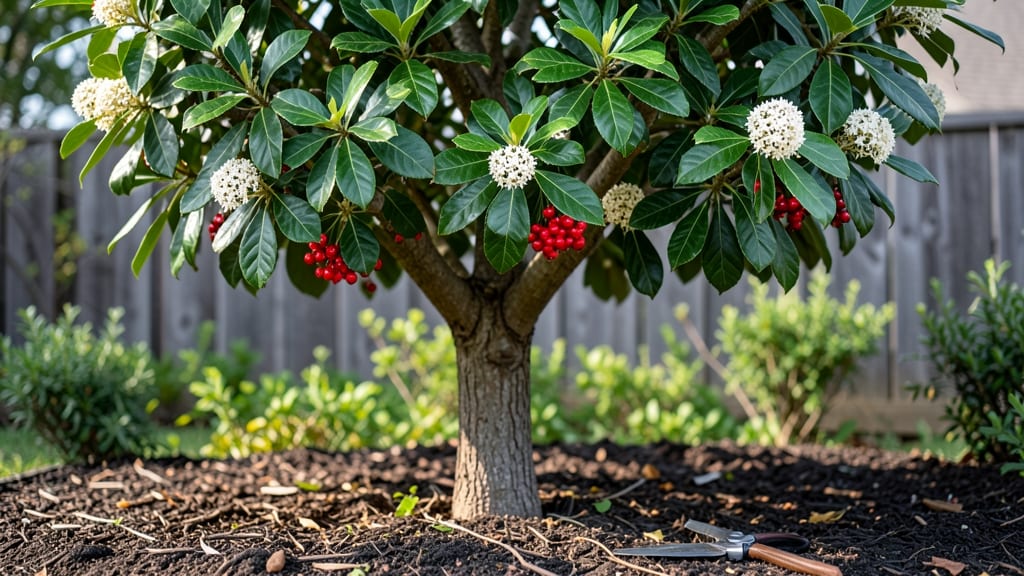
Those tiny white Brazilian pepper tree flowers might look delicate, but they’re the secret to your tree’s fragrant summer show—and pruning them right keeps the blooms coming. 🌿 I’ve learned the hard way that skipping this step means fewer flowers and more leggy branches.
The key is timing: prune after blooms fade but before new growth hardens, and you’ll trigger a second flush of flowers by fall.
You only need hand pruners, a ladder, and 30 minutes of focused work. Start by removing dead or crossing branches first—they steal energy from flower production.
Then cut back up to 1/3 of the tree’s height if it’s getting too tall, but never take more than 25% in one season. The goal is to open up the canopy so sunlight hits all those flower buds.
What you’ll end up with is a tree covered in fragrant white clusters that attract pollinators and smell like citrus when crushed. The flowers also develop into those bright red berries (if you’re growing a fruiting variety), but even non-fruiting types reward you with year-round interest.
Just watch for scale insects during spring blooms—they love new growth.
This method works for trees in USDA zones 9-11, but container-grown trees in cooler climates can also bloom if you bring them indoors before frost. The same pruning rules apply, just adjust timing for your local growing season. Ready to transform that scraggly tree into a fragrant showstopper?
📚 In This Guide
- What you need
- Instructions
- Tips and common mistakes
- Wrapping up and next steps
What you need
- ● Pruning shears – Bypass pruners (sharp, 6–8" blades) for clean cuts on small branches.
- ● Loppers – Long-handled (24–36") for thicker branches (1–2" diameter).
- ● Pruning saw – Curved-tooth for branches >2" thick (avoid jagged cuts!).
- ● Gloves – Heavy-duty, chemical-resistant (this tree has spiky seed pods!).
- ● Ladder – Extension ladder (12–20') with non-slip feet for tall trees.
- ● Disinfectant – 70% isopropyl alcohol or bleach solution (1:9 ratio) to sterilize tools.
- ● Heavy-duty trash bags – 30+ gallon for debris (this tree sheds a lot!).
- ● Rake or leaf blower – To clear fallen branches and pods post-prune.
- ● Hand pruners – For precision trimming on delicate new growth.
- ● Pole saw – If your tree is very tall (30+ feet).
- ● Tree wound dressing – Controversial but useful for large cuts (follow up with pruning paste if needed).
- ● Work gloves with cut-resistant palms – For extra protection against thorns.
- ● Safety goggles – To shield eyes from debris.
Step-by-step guide to pruning Brazilian pepper tree flowers
Here's how to keep your tree thriving with simple, seasonal trimming techniques.
✂️ Step 1: Prune for Shape and Airflow in Late Winter
When new growth appears in late winter (around February), remove any dead, crossing, or inward-growing branches first. These are your priority—they crowd the tree and invite pests. Use sharp bypass pruners to make clean cuts just above a leaf node or outward-facing bud.
Here's the thing—Brazilian pepper trees bloom on new wood, so don't over-prune now. Aim to remove no more than 25% of the tree's total growth in this first cut. You'll see fresh green shoots emerging from the branches you just trimmed—that's your signal you're doing it right.
🌿 Step 2: Encourage Flowering with Light Trimming in Early Spring
As flowers begin to form in early spring (around March-April), focus on thinning out dense clusters. Brazilian pepper flowers love sunlight, so open up the canopy to let light reach the inner branches. Cut back any overcrowded stems to half their length—this stimulates bushier growth and more abundant blooms.
Watch for clusters of flowers that appear weak or leggy. These won't produce strong fragrance. Snip them off at the base with clean cuts. You'll notice the remaining flowers grow sturdier and more fragrant within a few weeks—that's the tree redirecting energy to the healthiest blooms.
☀️ Step 3: Maintain Through Summer with Minimal Trimming
During summer, pruning should be minimal—just remove any dead flowers or branches that look stressed. The tree is putting all its energy into blooming and producing those fragrant flowers now. If you see branches growing too long or leggy, you can trim them back by 10-15% to encourage compact growth.
I always check for any branches rubbing against each other—that's a sign of future damage. Remove one of the branches at the base if they're crossing. The goal here is maintenance, not heavy pruning. You'll see the tree's natural shape emerge as the flowers mature.
✂️ Step 4: Prepare for Next Year's Growth in Fall
After the flowers fade in fall (around October-November), do a light cleanup. Remove any dead or diseased branches completely. Then, trim back any branches that grew too long during the summer by about one-third. This prevents them from becoming too heavy and breaking in winter storms.
This is also the time to shape the tree if needed. Step back and look at the overall form—fill in any gaps or uneven areas. You'll notice the tree's natural structure becomes more defined as winter approaches, setting it up for strong new growth in spring.
Tips & tricks for pruning Brazilian pepper tree flowers
Here's what nobody tells you about keeping your tree blooming beautifully year after year.
Timing is Everything: The February late-winter trim is your foundation—this is when you set up the entire season's growth. I've seen gardeners over-prune in this step and end up with sparse blooms later. That 25% rule isn't arbitrary: it maintains the tree's energy balance while still improving airflow. Mark your calendar now for February 15th as your target date.
The Flowering Secret: In Step 2, when you're thinning those dense clusters to half their length, focus on creating a "sunburst" effect. The inner branches should get at least 4-6 hours of direct sunlight daily. I test this by holding a small mirror under the canopy at midday—if light doesn't reflect off inner branches, you need to trim more. This sunlight access is what turns weak flowers into fragrant powerhouses.
Summer Maintenance Matters: Those 10-15% trims in summer might seem minor, but they're crucial for preventing winter damage. I've watched trees where summer maintenance was neglected develop branches so heavy they snapped in the first winter storm. The key is to trim while branches are still flexible—not when they've hardened off. Run your finger along the branch before cutting: if it feels like a small tree limb, it's too late.
Fall Preparation: The one-third trim in fall isn't just about shaping—it's about creating a balanced structure. Think of your tree like a sculpture: you want to remove the excess so the natural form can shine. I always step back 10 feet after trimming to check the silhouette. If one side looks heavier or denser, that's where I'll focus my next cuts. This final shaping prevents "lopsided" growth patterns that develop over winter.
Pro Tips for Brazilian Pepper Tree Flower
- Here's what nobody tells you about keeping your tree blooming beautifully year after year.
- Timing is Everything: The February late-winter trim is your foundation—this is when you set up the entire season's growth.
- The Flowering Secret: In Step 2, when you're thinning those dense clusters to half their length, focus on creating a "sunburst" effect.
Frequently asked questions
Got questions about pruning Brazilian pepper tree flowers? You’re not alone! Here are some of the most common queries—and their answers—to help you keep your tree thriving year-round.
When is the best time to prune Brazilian pepper tree flowers?
The ideal time to prune is late winter or early spring (before new growth starts) or right after flowering (late summer/early fall). Avoid heavy pruning during peak bloom to preserve those fragrant white flowers. Light trimming can happen anytime, but major cuts stress the tree if done at the wrong time.
How do I prune without killing the tree?
Never remove more than 25-30% of the foliage in one session. Use clean, sharp pruners to make cuts just above a leaf node or bud. Avoid "topping" (cutting flat across branches)—this invites disease. Thin out dense areas instead of shearing. Patience is key!
Why aren’t my Brazilian pepper tree flowers blooming after pruning?
Blooms thrive on balanced pruning. Over-pruning (especially in fall/winter) can delay flowers. Ensure your tree gets full sun (6+ hours/day) and well-draining soil. If flowers still refuse to appear, check for pests (like scale) or nutrient deficiencies (add citrus fertilizer in spring).
Are there non-invasive alternatives to Brazilian pepper trees?
Yes! If you love the look but hate the invasiveness, try native Florida alternatives like Firebush (Hamelia patens) (bright orange flowers) or Coontie Palm (Zamia integrifolia). Both attract pollinators and are eco-friendly. Pro tip: Remove seeds from Brazilian pepper trees to prevent spread!
How often should I prune for continuous flowering?
Aim for 2-3 light pruning sessions per year:
- Spring: Shape and remove dead wood.
- Summer (post-bloom): Trim spent flowers and crowded branches.
- Fall (light): Clean up debris to prep for winter.
Wrapping up and next steps
The Brazilian pepper tree flower thrives with consistent, thoughtful pruning—whether you’re shaping its growth, controlling invasiveness, or simply enjoying its fragrant blooms. 🌿 By following seasonal best practices and using the right tools, you’ll keep this resilient plant lush, healthy, and full of life year-round. Ready to transform your yard? Grab your shears and start small—prune a few branches today, and watch your tree reward you with vibrant blooms and a fragrant canopy!
🌱 Next Step:
- Pick a sunny day and begin with light trimming—focus on dead or overgrown branches first.
- Monitor your tree’s response and adjust your approach as needed.
- Share your progress (and blooms!) with fellow gardening enthusiasts for tips and inspiration.