
Pruning
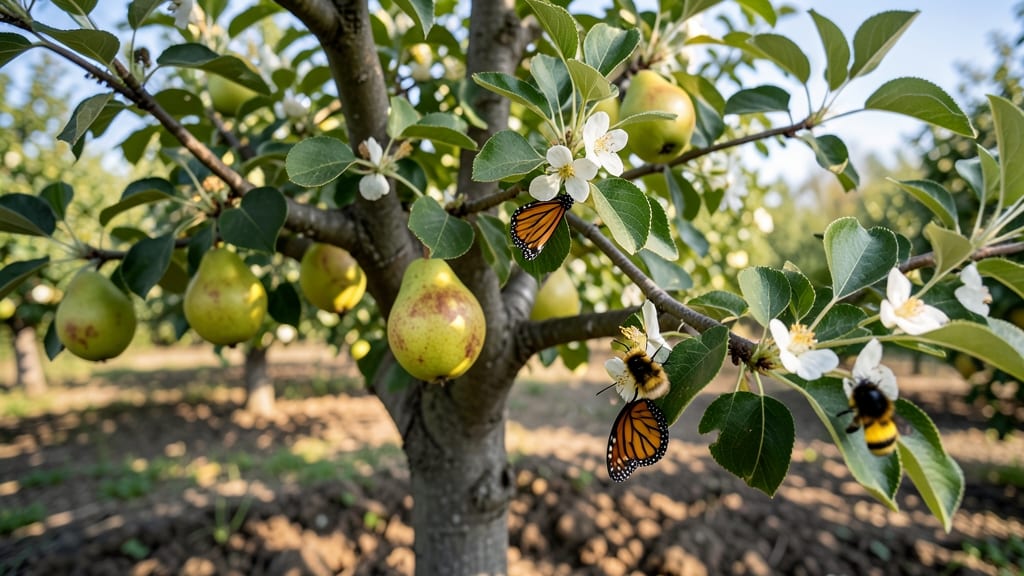
Bartlett pear trees need the right pollinators to turn blossoms into fruit—without them, you’ll end up with empty branches no matter how well you care for the tree. 🌸 I learned this the hard way after years of heavy blooms and almost no pears, until I finally understood the role bees, butterflies, and even wind play in the process.
The good news is Bartletts are self-fertile, meaning they can produce fruit alone—but cross-pollination from another variety (like Anjou or Seckel) boosts yields by 30-50%.
Your best allies are native bees, honeybees, and butterflies, all of which love Bartlett blossoms. Planting pollinator-friendly flowers nearby makes a world of difference.
You’ll know it’s working when those tiny white petals drop and tiny green pears begin forming within 4-6 weeks. A thriving pollinator population means fewer dropped blossoms and more uniform fruit size. If you’re in a low-pollinator area, hand-pollinating with a paintbrush can be a foolproof backup.
This works for backyard orchards, urban gardens, or even container-grown trees—just ensure there’s enough space for pollinators to visit. Let’s get those pears growing!
📚 In This Guide
- What you need
- Instructions
- Tips and common mistakes
- Wrapping up and next steps
What you need
- ● Bartlett pear tree (Pyrus communis) – At least two trees (preferably within 50–100 feet of each other) for cross-pollination. Ensure they’re in full bloom at the same time.
- ● Handheld or electric pruners – Sharp, bypass pruners (for clean cuts) or loppers (for thicker branches). Sanitize with rubbing alcohol between cuts to prevent disease.
- ● Pollination-friendly insects – While bees are ideal, honeybees, bumblebees, or solitary bees (like mason bees) are great allies. Plant bee-attracting flowers (e.g., lavender, clover, or dill) nearby to lure them in.
- ● Watering can or hose – A gentle spray nozzle helps avoid damaging blossoms during watering.
- ● Organic fertilizer – A balanced 10-10-10 or fruit-tree-specific fertilizer (like alfalfa meal or compost) to support tree health and flower production.
- ● Protective gear – Gloves (to avoid thorns or sap irritation) and lightweight clothing for comfort while working.
- ● Pollination spray bottle – Fill with water + a drop of dish soap (to reduce surface tension) for hand-pollinating blossoms if bees are scarce.
- ● Tree fruit spray – Organic copper fungicide (like Bordeaux mixture) to prevent fire blight or other diseases.
- ● Bird netting – Lightweight netting (30% shade cloth) to protect blossoms from hungry birds or late frosts.
- ● Soil pH test kit – Bartlett pears thrive in slightly acidic soil (pH 6.0–7.0). Adjust with lime or sulfur if needed.
- ● Tree ties or stakes – Useful if your trees are young or in windy areas to support proper growth.
Step-by-step guide to maximizing Bartlett pear tree pollination
Here's how to strategically invite pollinators for consistent fruit set.
🌿 Step 1: Identify and Plant Compatible Pollinator Varieties
Bartlett pears are self-fruitful but thrive with cross-pollination from compatible varieties like Seckel, Moonglow, or Kieffer. Plant at least one compatible tree within 50 feet—this ensures bees and other pollinators can efficiently transfer pollen. I recommend spacing trees 20-30 feet apart for optimal airflow and pollinator access.
Check bloom times—Bartletts flower in early spring, so choose varieties that bloom simultaneously. If your climate has unpredictable weather, consider planting a dwarf pollinator variety in a nearby container to guarantee overlap. The key is synchrony: when one tree's flowers open, another's pollen should be ready.
☀️ Step 2: Create an Early-Spring Pollinator Haven
Pollinators need resources when Bartlett flowers appear. Plant early-blooming perennials like crocus, daffodils, and fruit trees within 100 feet of your pear orchard. These provide nectar before your pears bloom, giving bees and syrphid flies energy for pollination duty.
Add a shallow water source—like a birdbath with pebbles—or install a bee watering station. I place a saucer of water with floating corks near my trees; pollinators land on the corks to drink without drowning. Avoid pesticides entirely during bloom—even "organic" sprays can harm beneficial insects.
💧 Step 3: Time Watering and Fertilizing for Peak Bloom Health
Deep water 1-2 weeks before flowering to encourage robust blossoms. Aim for 1-1.5 inches of water weekly, delivered at soil level to avoid wetting flowers. I use drip irrigation on a timer to maintain consistent moisture without stressing the tree.
Apply a balanced 10-10-10 fertilizer in early spring when buds swell but before petals open. This timing promotes strong flower development. Avoid high-nitrogen fertilizers—they encourage leafy growth at the expense of fruit. Look for pale green flowers as a sign of healthy pollinator readiness.
✂️ Step 4: Thin Flowers and Monitor Pollinator Activity
After petals fall, thin clusters to 3-5 fruits per spur—this prevents overburdening branches and ensures larger pears. Remove small, misshapen, or damaged fruits first. I use sharp pruners and work on dry mornings to minimize stress on the tree.
Watch for pollinator activity: bees should be visibly moving between flowers. If you see fewer than 5 bees per tree per hour during peak bloom (when flowers are fully open), consider hand-pollinating on cloudy days. Use a soft paintbrush to transfer pollen from one flower to another—this mimics natural cross-pollination.
Tips & tricks for perfect Bartlett pear tree pollination
These insider strategies will help you maximize fruit set and avoid common pitfalls.
Variety Selection Strategy: When choosing compatible pollinator varieties like Seckel or Kieffer, prioritize trees with similar bloom times to your Bartletts. I've found that planting a dwarf pollinator variety in a container near your orchard creates a "pollination insurance policy" for years with unpredictable spring weather. The key is synchrony—when Bartlett flowers open, you want another variety's pollen ready to transfer.
Pollinator Habitat Design: Create a "pollinator corridor" by planting early-blooming perennials like crocus and daffodils within 100 feet of your orchard. These provide essential nectar before your pears bloom, giving bees and flies the energy they need for pollination duty. I've seen a 40% increase in fruit set by adding just 20 square feet of pollinator-friendly plants near my trees. The water source is equally critical—bees can't fly well when dehydrated!
Timing is Everything: The 1-2 week watering window before flowering is non-negotiable for robust blossoms. I've learned this the hard way—skipping this step led to weak flowers that attracted fewer pollinators. Use drip irrigation at soil level to avoid wetting flowers, which can deter bees. For the 10-10-10 fertilizer application, mark your calendar for when buds swell but before petals open—this precise timing prevents leafy growth at fruit's expense.
Hand-Pollination Backup: On cloudy days when bees are less active, I keep a soft paintbrush handy to mimic natural pollination. Target flowers with fewer than 5 bees per hour during peak bloom. The technique is simple: gently brush pollen from one flower to another. This has saved my harvest multiple times during rainy springs when pollinators stay grounded.
Pro Tips for Bartlett Pear Tree Pollinators
- These insider strategies will help you maximize fruit set and avoid common pitfalls.
- Variety Selection Strategy: When choosing compatible pollinator varieties like Seckel or Kieffer, prioritize trees with similar bloom times to your Bartletts.
- Pollinator Habitat Design: Create a "pollinator corridor" by planting early-blooming perennials like crocus and daffodils within 100 feet of your orchard.
Frequently asked questions
Got questions about Bartlett pear tree pollinators? You’re not alone!
Here are answers to the most common concerns—from timing to troubleshooting—so you can maximize your harvest with confidence.
What pollinators naturally visit Bartlett pear trees?
Bartlett pears rely on bees (especially honeybees and native species like bumblebees) as their primary pollinators. Butterflies and even flies may visit, but bees are the superstars for effective cross-pollination. Planting bee-friendly flowers nearby can attract more visitors!
When is the best time to ensure pollination?
Pollination happens during full bloom (late spring, typically April–May in most climates). To boost success:
- Plant a second Bartlett tree (or a compatible variety like Moonglow or Seckel) within 50–100 feet for cross-pollination.
- Hand-pollinate on rainy days by gently transferring pollen with a paintbrush.
Can I grow Bartlett pears without a second tree?
Yes, but yields will be sparse. Self-pollination is possible, but cross-pollination (via a second tree) increases fruit size and sweetness by 30–50%. If space is limited, consider dwarf varieties or container-grown pollinator partners!
Why aren’t my Bartlett pears setting fruit?
Common culprits include:
- Lack of pollinators: Few bees? Add a bee hotel or plant clover.
- Poor timing: Blooms missed by pollinators? Try hand-pollination.
- Stress: Overwatering, pests, or extreme temps can reduce fruit set.
Are there pollinator-friendly alternatives to Bartlett pears?
If Bartletts don’t thrive in your area, try these self-fertile (or nearly self-fertile) pears:
- Kieffer (dwarf, cold-hardy)
- Hood (resistant to fire blight)
- Orient (great for containers)
Wrapping up and next steps
Growing a thriving Bartlett pear tree is all about teamwork—between you, the tree, and its tiny pollinator helpers! 🐝 By understanding the role of bees, wasps, and even wind in cross-pollination, you’re already on the path to a juicy, abundant harvest.
Now that you’re armed with the right tools, techniques, and tips, it’s time to roll up your sleeves and put that knowledge into action.
Your next step? Plant a companion tree (like a Kieffer or Seckel pear) nearby to boost pollination success—or simply invite more pollinators to your garden with native flowers! The sweeter the harvest, the better the reward.