
Pruning
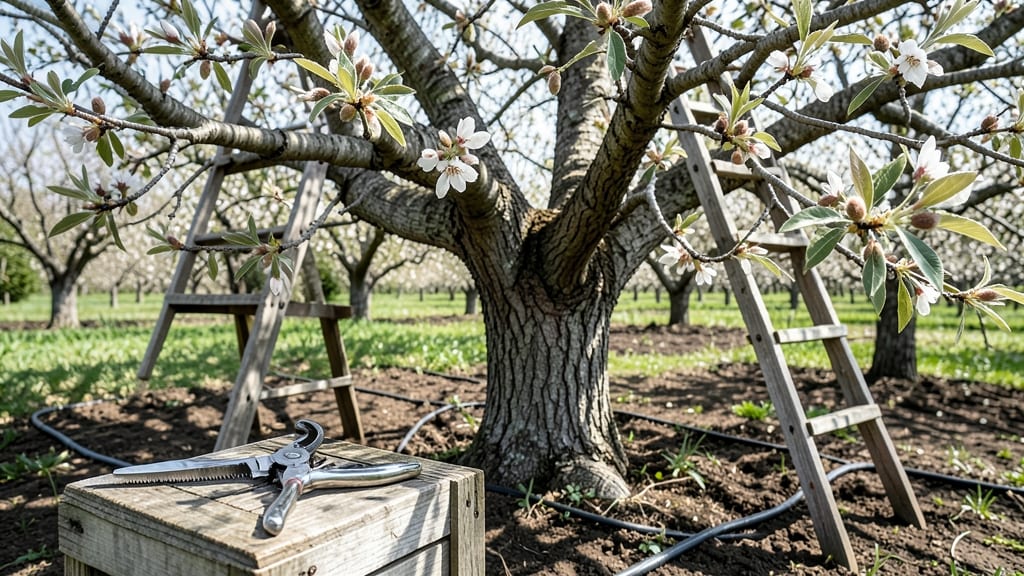
Growing almond tree fruit in your backyard means crunchy, buttery nuts straight from your own tree—but only if you prune right. I learned this the hard way after my first tree produced a handful of nuts while neighbors' trees groaned under branches.
The secret isn’t fancy tools; it’s four strategic cuts that shape the tree to focus energy on fruit production instead of wild growth.
Almond trees need full sun, well-draining soil, and a warm climate (USDA zones 7-10) to thrive. Most varieties aren’t self-pollinating, so planting two compatible trees ensures a real harvest.
My tree, a ‘Nonpareil’, now produces pounds of nuts because I prune in late winter to open the canopy for sunlight and air circulation—key for nut development. The first cut removes dead or crossing branches, while the next three thin the canopy to let light reach the center.
By summer, you’ll see plump, green hulls forming. Harvest time comes in late August to September when the shells turn brown and split open naturally. The nuts inside? Rich, sweet, and worth every pruning session.
Even in small yards, a dwarf variety can deliver a year-round reward: fresh nuts in fall, beautiful blossoms in spring, and evergreen foliage in between.
Here’s the game-changer: those same four cuts work whether you’re shaping a young tree or maintaining an established one. The difference between a handful of nuts and a bushel comes down to when and where you make those cuts. Let’s get your tree producing like a pro.
📚 In This Guide
- What you need
- Instructions
- Tips and common mistakes
- Wrapping up and next steps
What you need
- ● Pruning shears: Bypass pruners (for small branches, 3–6 inches long) – sharp, clean, and disinfected.
- ● Loppers: 8–12 inches long (for medium branches, ½–1½ inches thick).
- ● Pruning saw: Curved-tooth saw (for thick branches, 1½+ inches).
- ● Gloves: Heavy-duty, cut-resistant (to protect from thorns and debris).
- ● Disinfectant: 70% isopropyl alcohol or bleach solution (1 part bleach to 9 parts water) – for sterilizing tools between cuts.
- ○ Pruning sealant: Optional (for wounds larger than ½ inch to prevent disease).
- ● Ladder or step stool: Sturdy and tall enough to reach the tree’s canopy safely.
- ● Hand pruners: For precision cuts on tiny branches (if you’re a perfectionist!).
- ● Tarp or drop cloth: To collect debris and protect the ground.
- ● Marking spray: For tagging branches to prune later (great for planning!).
- ● Safety glasses: To shield eyes from flying debris.
- ● Know your almond tree’s age and variety (young trees vs. mature bearers need different cuts!).
- ● Check the best pruning time for your climate (late winter/early spring is ideal for most regions).
- ● Ensure the tree is dormant (no leaves or blooms) for easier, cleaner cuts.
- ● Have a clear day planned—avoid pruning if rain or wind is forecasted.
How to prune an almond tree for year-round fruit production
Four strategic cuts keep your tree healthy and productive—no complicated techniques required.
Identify and Remove Dead or Diseased Wood
Start by examining the tree for any branches that are completely leafless, cracked, or oozing sap. These are clear signs of dead or diseased wood that must be removed immediately. Use sharp pruning shears to make clean cuts just outside the branch collar—the swollen area where the branch meets the trunk. This prevents unsightly stubs and promotes faster healing.
I always begin with the obvious—anything that looks like it belongs in a compost pile rather than on the tree. Almond trees are particularly susceptible to bacterial canker, so removing infected branches early prevents the disease from spreading. After cutting, sterilize your tools with rubbing alcohol to avoid cross-contamination between branches.
Thin Out Crowded Branches for Better Airflow
Next, focus on the tree’s canopy structure. Remove branches that cross or rub against each other, as these create wounds that invite pests and disease. You’ll want to maintain an open center—aim for a vase-like shape where sunlight can penetrate to the inner branches. This is where most of your fruit develops, so good airflow is critical.
Look for branches growing straight upward from the main scaffold. These "water sprouts" compete with fruiting wood for energy and should be cut back to a lateral branch or bud. I make these cuts at a slight angle, just above an outward-facing bud to encourage new growth in the right direction. Never leave a stub—always cut back to a bud or branch collar.
Shorten Last Year’s Fruit Spurs
Almond trees produce fruit on short, woody spurs that develop along the branches. After harvest, these spurs need to be pruned back by about one-third to encourage new fruit bud formation. Use hand pruners to cut just above a healthy bud, making the cut at a 45-degree angle to allow water to run off. This simple reduction prevents overcrowding and promotes larger, more abundant fruit next season.
Here’s the thing—this step is often overlooked, but it’s one of the most effective ways to improve fruit quality. When you prune these spurs, you’re essentially giving the tree a chance to redirect its energy toward developing stronger, more productive buds. Watch for the tiny, rounded buds that will swell in late winter—these are your future fruit.
Shape the Tree for Balanced Growth
The final cut focuses on maintaining the tree’s overall shape. Almond trees benefit from a slightly open center with a dominant central leader. If side branches are growing too vigorously and competing with the main trunk, prune them back to encourage upward growth. For horizontal branches, make your cuts just outside the branch collar to maintain structural integrity.
I like to step back and visually assess the tree’s balance after each cut. The goal is symmetry without over-pruning—you want to preserve as much leaf surface as possible to maintain photosynthesis. A well-shaped almond tree will have a strong central trunk with evenly spaced scaffold branches radiating outward. This structure not only improves fruit production but also makes harvesting easier.
Tips & tricks for perfect almond tree pruning
Here's what nobody tells you about keeping your almond tree thriving year after year—these are the details that separate good harvests from exceptional ones.
Timing is Everything: The best time to prune is during late winter or early spring, just before buds begin to swell. This timing prevents stress on the tree and allows fresh growth to begin with the new season. Avoid pruning during fall or winter when the tree is dormant—this can leave it vulnerable to disease. I've seen trees stressed by late-season pruning develop fungal issues, so don't make my mistake: plan ahead and mark your calendar for late February or early March.
The Tool Factor: Invest in quality pruning tools—sharp bypass pruners for branches under ½-inch thick and a pruning saw for thicker branches. Dull tools crush branches rather than making clean cuts, which creates entry points for disease. After each cut, wipe your tools with rubbing alcohol to prevent cross-contamination between branches. I keep a small bottle of alcohol in my tool kit and sterilize between every 3-4 cuts as a precaution against bacterial spread.
Visual Assessment: Before making any cuts, step back and examine the tree's overall structure. Look for branches that create a dense canopy with little light penetration—they're the first candidates for removal. Aim for a vase shape where sunlight reaches the inner branches. This isn't just about aesthetics; proper light exposure is what turns small buds into large, flavorful almonds. The difference between a mediocre harvest and an abundant one often comes down to this single, seemingly insignificant step.
Seasonal Follow-Up: After your initial pruning, monitor the tree throughout the growing season. Remove any suckers or water sprouts that appear during spring and summer—these compete with fruit production. I make a habit of doing a quick "maintenance prune" in late summer to keep the tree's shape and ensure good airflow. This ongoing attention pays dividends when harvest time comes around.
Pro Tips for Almond Tree Fruit
- Here's what nobody tells you about keeping your almond tree thriving year after year—these are the details that separate good harvests from exceptional ones.
- Timing is Everything: The best time to prune is during late winter or early spring, just before buds begin to swell.
- The Tool Factor: Invest in quality pruning tools—sharp bypass pruners for branches under ½-inch thick and a pruning saw for thicker branches.
Frequently asked questions
Got questions about almond tree fruit and pruning?
Here are answers to the most common ones to help you grow a thriving tree and maximize your harvest year after year.
When do almond trees produce fruit?
Almond trees typically bear fruit 3 to 5 years after planting, though some varieties may take longer. Once established, they produce heavy crops every 1–2 years (called "on" and "off" years). Early blooming (late winter) is key—ensure no late frosts damage flowers!
How long does it take for almond fruit to ripen?
From bloom to harvest, almond fruit takes about 6–8 months to mature. The hulls split open in late summer (August–September), revealing the edible nuts inside. Patience is key! Harvest too early, and the nuts won’t be fully developed.
Can I prune an almond tree while it’s fruiting?
Yes, but light pruning is best during harvest season (late summer/fall). Avoid heavy cuts—focus on removing dead wood or crossing branches to reduce stress on the tree. Save major pruning for late winter (dormant season) to avoid disease risks.
What if my almond tree isn’t producing fruit?
Common reasons include: young age (wait 3+ years), poor pollination (plant two compatible varieties), drought stress (deep watering helps), or nutrient deficiencies (test soil for nitrogen/phosphorus). Cross-pollination is critical!
Are there easy-to-grow alternatives to almond trees?
If almonds seem tricky, try these low-maintenance nut trees: pecan (drought-tolerant), hazelnut (fast-growing), or walnut (hardy but needs space). For fruit lovers, fig or pomegranate trees are also great for warm climates and produce edible fruit faster!
Wrapping up and next steps
Growing an almond tree fruit-bearing tree is a rewarding journey that combines patience, care, and a few strategic cuts! With just four simple pruning techniques, you can ensure a bountiful harvest year after year.
Whether you're a seasoned gardener or just starting out, these methods make maintaining your tree effortless and effective—so grab those shears and get pruning! 🌿✂️
Ready to take the next step? Start by marking your calendar for your tree’s ideal pruning season, then put these tips into action. Before you know it, you’ll be enjoying fresh, homegrown almonds straight from your own tree!