
Pruning
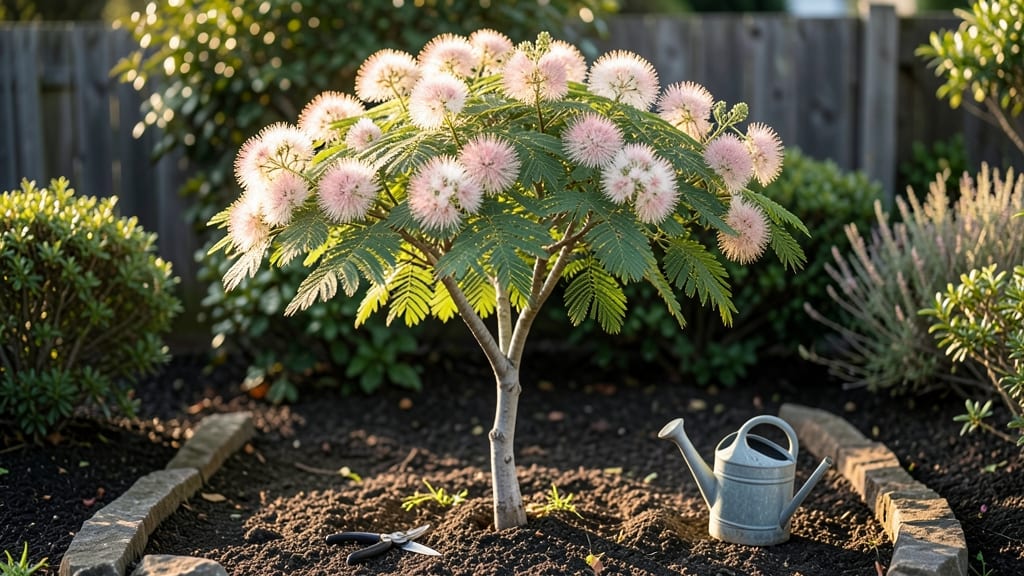
The albizia mimosa tree’s feathery branches and fragrant flowers make it a showstopper—but without proper pruning, its growth can spiral out of control. 🌿 I’ve shaped mine into a graceful focal point by mastering the art of strategic cuts, and the difference in health and bloom production is night-and-day.
This fast-growing tree rewards patience, but it demands attention to avoid becoming a woody mess.
Pruning isn’t just about aesthetics—it’s about health. The albizia mimosa thrives when you remove dead wood in late winter and shape it during early summer, but timing matters. A single session won’t tame its wild growth; think of it as an ongoing conversation with the tree.
You’ll need sharp pruning shears, gloves (those thorns are no joke), and a ladder for taller branches.
What you’ll end up with is a tree that’s disease-resistant, shade-providing, and bursting with flowers from spring to fall. The key is balancing form and function—cutting back too much stunts its nitrogen-fixing superpowers, while neglecting it turns your ornamental tree into a tangled beast.
I’ll show you how to strike that perfect balance.
Works for both young saplings and mature trees, whether you’re pruning for shape, safety, or simply to enjoy those fragrant blooms up close. Let’s get those shears ready—your albizia mimosa will thank you.
📚 In This Guide
- What you need
- Instructions
- Tips and common mistakes
- Wrapping up and next steps
What you need
- ● Pruning shears: Sharp, bypass-style shears (for cuts up to ½ inch thick). Pro tip: 💡 Always sterilize blades with rubbing alcohol to prevent disease spread!
- ● Loppers: Bypass or anvil type (for branches ½ to 1½ inches thick). Look for ratcheting or bypass models for cleaner cuts.
- ● Pruning saw: A curved-tooth saw (for branches 1½+ inches thick). Pro tip: 🔥 Use a saw with a non-serrated blade to avoid tearing bark.
- ● Extension pole: Attachable to loppers/saws (for high branches, 8–12 feet tall). Pro tip: ✨ Opt for a telescoping pole for flexibility.
- ● Work gloves: Heavy-duty, cut-resistant gloves (to protect hands from thorns and rough bark).
- ● Safety glasses: ANSI-rated for debris protection.
- ● Ladder (if needed): Sturdy, non-slip ladder (for trees under 20 feet). Pro tip: 🌡️ Use a 3-point contact rule (two hands/feet on ladder at all times).
- ○ Disinfectant (optional but recommended): 70% isopropyl alcohol or a copper-based pruning sealant (for large cuts).
- ● Heavy-duty trash bags: For collecting pruned branches (2–3 bags, 30-gallon size).
- ● First-aid kit: In case of thorn pricks or minor cuts.
- ● Pole pruner: For branches too high for a ladder (12–20 feet).
- ● Tree wound dressing: Only for large cuts (2+ inches)—skip for small pruning as it can trap moisture.
- ● Marking twine or flags: To tag branches for removal (helpful for complex shaping).
- ● Saw sharpener: Keep your pruning saw in top condition.
- ● Budding hormone paste: For encouraging new growth (use sparingly).
- ● Weather check: Prune on a dry, overcast day (avoid wind or rain).
- ● Tree health: Wait until the tree is dormant (late fall/winter) for major pruning, or after flowering (spring/summer) for light shaping.
- ● Clear workspace: Remove lawn furniture, kids, or pets from a 20-foot radius around the tree.
- ● Know your limits: If the tree is over 20 feet tall or near power lines, hire a professional arborist.
Step-by-Step guide to pruning your albizia mimosa tree for year-round vitality
Here's how I transform even the most unruly albizia mimosa into a balanced, healthy specimen—no guesswork involved.
✂️ Step 1: Identify and Remove Dead or Diseased Wood First
Start by scanning your albizia mimosa for branches that are completely devoid of leaves, show blackened bark, or ooze sap when touched. These are your priorities—they won’t recover and will only drain the tree’s energy. Use sharp, clean pruning shears to make cuts about ¼ inch above a healthy bud or where the branch naturally tapers. The goal is clean, angled cuts that won’t tear the bark.
I always work from the bottom up, removing the lowest dead branches first. This prevents debris from accumulating around the trunk, which can trap moisture and invite rot. If you’re unsure whether a branch is dead, scratch the bark with your fingernail—if it’s green underneath, it’s still alive. If it’s brown and dry, it’s gone.
🌿 Step 2: Thin the Canopy for Better Airflow and Light Penetration
Albizia mimosa trees grow fast and can become dense, which creates a perfect environment for fungal diseases. Aim to remove 20-30% of the total canopy volume during each pruning session. Focus on branches that cross or rub against each other—they’ll eventually tear and leave wounds. Also target branches growing straight upward, as these create weak, top-heavy growth.
When thinning, I make my cuts just outside the branch collar—the swollen area where the branch meets the trunk. This ensures the tree can seal the wound naturally. Avoid leaving stubs, even if it means making slightly longer cuts. Stub cuts slow healing and invite decay. After each cut, step back and visualize the tree’s shape—you’re sculpting, not just hacking.
☀️ Step 3: Shape the Tree for Structural Balance and Sunlight Exposure
Albizia mimosa trees have a natural, airy habit, but they can become lopsided if not guided. Start by identifying the tree’s central leader—the strongest, most vertical branch. If it’s damaged or weak, select the next strongest branch to become the new leader. Remove competing vertical branches that grow upward from the same point, cutting them back to a lateral branch or bud.
For side branches, aim to create a layered look with branches spaced 6-12 inches apart vertically. This encourages sunlight to reach all parts of the canopy, which is critical for albizia mimosa health. Avoid over-pruning the outer edges—you want to maintain a full, rounded silhouette. If you’re unsure about a cut, wait and reassess next season. Better to leave a branch too long than to overdo it.
⏰ Step 4: Time Your Pruning for Optimal Growth Responses
Late winter or early spring, just before new growth begins, is the best time to prune your albizia mimosa. This timing encourages vigorous new growth while the tree is still dormant. Avoid heavy pruning in fall, as new growth won’t have time to harden off before winter. Light shaping pruning can be done in summer, but limit it to removing only dead or diseased branches—no major structural cuts.
If you must prune in summer, do it on an overcast day or in the early morning to reduce stress on the tree. Water deeply before and after pruning to help the tree recover. You’ll notice new shoots emerging within 3-4 weeks if the timing and cuts were right. These shoots are your tree’s way of telling you it’s happy and healthy—listen to that signal.
Tips & tricks for perfect albizia mimosa tree pruning
Transforming your albizia mimosa into a thriving specimen takes more than just cutting branches—it's about strategic precision. Here are the insights I wish I'd known when I first pruned mine.
Branch Health Test: That fingernail scratch test in Step 1 is your secret weapon. I learned this the hard way after removing branches I thought were dead, only to find they were just dormant. Always check for green underneath the bark—if it's there, the branch is alive and should stay put. For branches that are clearly dead, make your cuts at a 45-degree angle just outside the branch collar to prevent water from pooling and causing rot.
Canopy Thinning Strategy: When aiming to remove 20-30% of the canopy volume in Step 2, think of it like editing a photograph—you're removing what doesn't contribute to the overall beauty. I find it helpful to visualize the tree's skeleton first. Start by removing branches that grow inward or downward, as these create dark, humid pockets that invite disease. Remember, you're not just cutting branches—you're sculpting light pathways through the tree.
Central Leader Selection: In Step 3, selecting the right central leader can make all the difference. I've made the mistake of choosing a leader that looked strong but was actually weak. Look for a branch that's slightly thicker than others and grows straight upward. If your tree doesn't have a clear leader, don't panic—you can create one by selecting the strongest branch and removing its competitors. This might take a few seasons, but the result is worth it.
Seasonal Pruning Calendar: The timing in Step 4 is everything. Late winter or early spring pruning gives your albizia mimosa the best chance to recover before summer's heat. I've found that pruning too late in spring can stress the tree, while fall pruning can leave new growth vulnerable to winter damage. Pro tip: If you must prune in summer, do it during cooler months or afternoons when temperatures are below 80°F to reduce stress on the tree.
Pro Tips for Albizia Mimosa Tree
- Transforming your albizia mimosa into a thriving specimen takes more than just cutting branches—it's about strategic ...
- Branch Health Test: That fingernail scratch test in Step 1 is your secret weapon. I learned this the hard way after r...
- Canopy Thinning Strategy: When aiming to remove 20-30% of the canopy volume in Step 2, think of it like editing a pho...
Frequently asked questions
Got questions about pruning your Albizia mimosa tree? You’re not alone! Here are answers to the most common concerns—from timing to troubleshooting—so you can keep your tree thriving year-round.
When is the best time to prune an Albizia mimosa tree?
The ideal time is late winter or early spring (before new growth starts) to avoid stressing the tree. However, light pruning to remove dead or damaged branches can happen anytime. Avoid heavy pruning in summer—it triggers excessive sap flow and attracts pests. For shaping, spread pruning tasks over 2-3 sessions to minimize shock.
How much can I trim without harming the tree?
Never remove more than 25% of the canopy in one session. Albizia mimosa trees are resilient but can suffer from over-pruning. Focus on selective trimming—target dead wood, crossing branches, and water sprouts. For aggressive shaping, space pruning 6–12 months apart to allow recovery. Pro tip: Use sharp tools to make clean cuts just above a bud or branch collar!
Why do my Albizia mimosa leaves turn yellow after pruning?
Yellowing leaves often signal stress from over-pruning, improper cuts, or pest infestations. Check for:
- Fungal issues (e.g., powdery mildew) from wet cuts.
- Sap-sucking insects (like aphids) attracted to fresh wounds.
- Nutrient deficiency from aggressive trimming.
Can I prune an Albizia mimosa tree in fall?
Fall pruning is risky because it stimulates new growth that may not harden off before winter. If you must prune, do so 6–8 weeks before the first frost and avoid heavy cuts. Focus on removing deadwood or diseased branches to prevent winter pests. Alternative: Wait until late winter when the tree is dormant.
What’s the best tool for pruning thick Albizia branches?
For branches 1–3 inches thick, use loppers with bypass blades (cleaner cuts). For larger branches (3+ inches), a pruning saw (like a curved bow saw) works best. Always sterilize tools with rubbing alcohol between cuts to prevent disease spread. Pro tip: Wear gloves—Albizia sap can irritate skin!
Are there alternatives to pruning if my tree is overgrown?
If pruning feels overwhelming, consider:
- Gradual thinning (remove branches from the inside to improve airflow).
- Topping (last resort!)—only if the tree is hazardous. Use a pro for this.
- Hiring an arborist for large-scale work (they’ll assess structural risks).
Wrapping up and next steps
The Albizia mimosa tree is a stunning addition to any landscape, but its health and beauty rely on thoughtful, year-round pruning. From trimming leggy branches to shaping its iconic canopy, these techniques ensure your tree thrives while minimizing risks like disease or pests.
With the right tools, timing, and care, you’ll enjoy a lush, vibrant tree for years to come! 🌿✂️
Ready to give your Albizia mimosa the TLC it deserves? Start small—pick one season to practice, gather your supplies, and observe how your tree responds. Over time, you’ll master the art of pruning and keep your tree looking its absolute best! 🌟