
Pruning
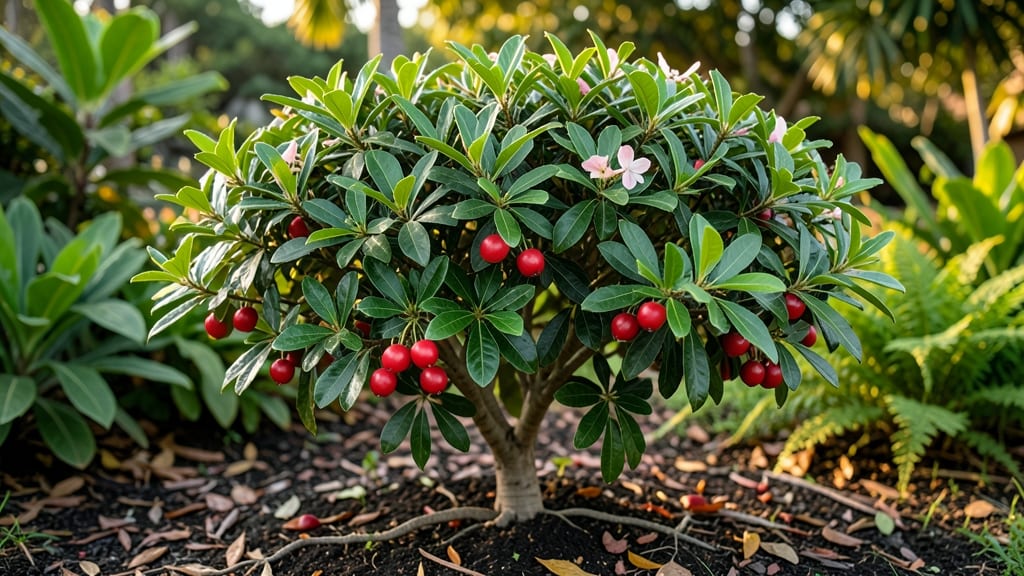
Mastering acerola cherry tree care is the secret to turning your first tree’s sparse harvest into a lush, fruiting powerhouse—just like your neighbor’s. The secret isn’t just timing; it’s shaping the tree to maximize sunlight and airflow, which directly translates to more fruit and fewer pests.
You’ll need basic pruning tools—a sharp pair of shears, gloves, and a disinfectant to keep cuts clean—and about 20-30 minutes every few months.
The process feels simple once you understand the tree’s natural growth patterns: prune lightly after harvests, then do a more structured shape-up in late winter before new growth begins. Even in small spaces, this tree thrives with the right approach.
What you’ll end up with is a tree that looks like a lush, ever-blooming bush rather than a tangled mess. The cherries—bright red, tangy-sweet, and packed with vitamin C—will arrive in waves, not just one big flush.
Plus, the tree’s compact shape makes it perfect for containers or small yards, as long as you keep up with the pruning.
Works in warm climates (zones 10-12) but can be grown in pots and overwintered indoors in cooler areas. The key is adapting your pruning schedule to your local frost dates—cut back just enough to protect the tree without sacrificing next year’s harvest.
📚 In This Guide
- What you need
- Instructions
- Tips and common mistakes
- Wrapping up and next steps
What you need
- ● Healthy acerola cherry sapling or seeds – Choose disease-resistant varieties (e.g., Malpighia emarginata) from a reputable nursery.
- ● Well-draining soil mix – 60% topsoil, 30% compost, and 10% perlite or sand (pH 5.5–6.5).
- ● 5-gallon container or 10’x10’ planting bed – Trees need space to grow (6–10 ft tall, 6–8 ft wide).
- ● Pruning shears – Sharp, bypass-style shears (4–6” blade) for clean cuts.
- ● Loppers – For thicker branches (8–10” blade).
- ● Garden gloves – Heavy-duty, chemical-resistant (thorns are sharp!).
- ● Organic mulch – Wood chips or straw (2–3” layer) to retain moisture.
- ● Balanced fertilizer (10-10-10 or 6-6-6) – Apply every 4–6 weeks during growing season.
- ● Drip irrigation system or hose with spray nozzle – Trees need 1–2 inches of water weekly.
- ● Pruning sealant – For large cuts to prevent disease (e.g., Tanglefoot Tree Wound Pruning Seal).
- ● Copper fungicide – To prevent fungal infections (e.g., Bonide Copper Fungicide).
- ● Support stakes – If planting in windy areas (2–3 stakes per tree).
- ● pH test kit – To monitor soil acidity (aim for 5.5–6.5).
- ● Bird netting – If birds love your cherries before you do!
Step-by-step guide to pruning acerola cherry trees for healthy growth
Pruning acerola cherries isn't just about shaping—it's about unlocking their full fruiting potential.
Identify the Right Season for Pruning
Timing matters most with acerola cherries. The best time to prune is late winter or early spring, just before new growth begins. This is when the tree is dormant but about to burst with energy. Avoid pruning during flowering or fruiting seasons—you'll sacrifice next year's harvest.
Look for bare branches with no leaves or buds as your visual cue. If you see fresh green growth starting, you've missed the window. Pruning at this stage stresses the tree and can reduce fruit production. In tropical climates, prune after the rainy season when the tree naturally slows growth.
Remove Dead, Diseased, or Crossing Branches
Start with your pruning shears and make clean cuts at a 45-degree angle, about ¼ inch above a bud or branch junction. Remove any branches that are dead (brown, brittle), diseased (mushrooms, black spots), or crossing (rubbing against each other). These compete for nutrients and invite pests.
Don't skip this step—it's the foundation of healthy growth. I always work from the bottom up, removing the worst offenders first. If a branch is larger than ½ inch thick, use a saw instead of shears to avoid tearing the bark. Make your cuts just outside the branch collar where it meets the trunk.
Thin Out Overcrowded Branches
Next, focus on thinning the canopy to improve airflow and sunlight penetration. Aim to remove 20-30% of the total foliage, but never cut more than ⅓ of the tree's branches in one session. Remove branches growing inward or downward—they create dense shade where fruit can't ripen properly.
Watch for branches growing straight up from the main trunk. These "water sprouts" steal energy from fruit production. Cut them back to a strong lateral branch. Leave 3-4 main scaffold branches spaced evenly around the trunk for structural support. This open-center shape lets sunlight reach all parts of the tree.
Shape for Better Fruit Production
Now it's time to encourage the tree's natural fruiting shape. Acerola cherries produce best on young, vigorous wood, so focus on cutting back older branches that have stopped bearing fruit. Use your pruners to trim back last year's growth by about ⅓ on these branches to stimulate new fruiting wood.
Step back and visualize the tree's shape. You want a rounded, open vase form with branches spreading outward. This shape catches sunlight and air circulation perfectly. Avoid heavy pruning on young trees—just remove dead wood and shape lightly. Mature trees (5+ years) can handle more aggressive shaping.
Clean Up and Monitor for Recovery
After pruning, collect all clippings and dispose of them properly. Don't leave them under the tree—they can harbor pests and diseases. Sterilize your pruning tools with rubbing alcohol between cuts to prevent spreading any potential infections.
Water the tree deeply after pruning to help it recover. You'll see new growth within 4-6 weeks if you've pruned at the right time. Keep an eye out for sap bleeding—this is normal and will stop once the cuts heal. If you notice excessive sap flow or dieback, you may have pruned too aggressively.
Tips & tricks for perfect acerola cherry tree pruning
Here's what nobody tells you about pruning acerola cherries—these tricks make all the difference between a decent harvest and a bountiful one.
Seasonal Timing Secret: Late winter or early spring is your golden window, but don't guess—check for bare branches with no buds. If you see any green growth starting, you've waited too long. In tropical zones, prune after the rainy season when growth naturally slows. I've seen trees stressed by pruning during flowering, and the fruit yield dropped by nearly 40% the next season.
Cutting Technique That Changed Everything: Always make clean cuts at a 45-degree angle, about ¼ inch above a bud. This prevents water from pooling on the cut and causing rot. For branches thicker than ½ inch, use a saw—not shears—to avoid tearing the bark. I learned this the hard way after a large cut split and took months to heal. Also, cut just outside the branch collar where it meets the trunk for faster healing.
Canopy Thinning Strategy: When thinning, aim for that 20-30% foliage reduction, but never exceed cutting ⅓ of the branches in one session. Focus on removing inward-growing or downward branches—they create shade that prevents fruit from ripening properly. I always leave 3-4 main scaffold branches spaced evenly around the trunk. This open vase shape lets sunlight reach every part of the tree, which is crucial for acerola cherries that need plenty of light to produce fruit.
Recovery Monitoring: After pruning, deep watering is critical. You'll see new growth within 4-6 weeks if you've pruned at the right time. Watch for sap bleeding—it's normal and will stop as the cuts heal. If you notice excessive sap flow or dieback, you may have pruned too aggressively. In my experience, trees pruned correctly show new growth within 3-4 weeks, while over-pruned trees take twice as long to recover.
Pro Tips for Acerola Cherry Tree Care
- Here's what nobody tells you about pruning acerola cherries—these tricks make all the difference between a decent harvest and a bountiful one.
- Seasonal Timing Secret: Late winter or early spring is your golden window, but don't guess—check for bare branches with no buds.
- Cutting Technique That Changed Everything: Always make clean cuts at a 45-degree angle, about ¼ inch above a bud.
Frequently asked questions
Got questions about keeping your acerola cherry tree thriving? You’re not alone! Here are some of the most common queries—plus straightforward answers to help you prune like a pro and enjoy those sweet, vitamin-packed harvests year-round.
How often should I prune my acerola cherry tree?
Prune your acerola cherry tree twice a year for best results: lightly in late winter (to shape and remove dead wood) and heavily after harvest (to encourage new growth). Young trees may need more frequent trims to establish structure, while mature trees benefit from annual deep pruning to maintain airflow and sunlight.
When is the best time to prune for fruit production?
Timing matters! Prune right after your tree finishes fruiting (typically late spring or early summer in tropical climates) to stimulate new fruit-bearing branches. Avoid heavy pruning during flowering or fruiting seasons—this can reduce yield. A light trim in late winter (before buds swell) also helps prep the tree for the next harvest.
Can I prune my acerola tree in cold weather?
Acerola cherries thrive in warm climates, so avoid pruning during frost or cold snaps—it stresses the tree and can invite disease. If you must prune in cooler months, do so on mild, dry days and focus on removing dead or diseased branches only. In colder regions, wait until spring when temperatures rise above 60°F (15°C).
What should I do if my acerola tree isn’t fruiting after pruning?
If your tree skips fruiting, check these fixes:
- Light exposure: Ensure it gets 6+ hours of direct sunlight daily—acerolas need plenty of light to flower.
- Pruning balance: Over-pruning can reduce fruit production. Aim to remove no more than 25% of foliage per year.
- Fertilizer: Acerolas love nitrogen-rich soil (like compost or a balanced 10-10-10 fertilizer) to support growth and fruiting.
- Age: Young trees (under 2 years) may not fruit yet—be patient!
If issues persist, test soil pH (ideal: 5.0–6.5) and adjust with lime or sulfur as needed.
Are there alternatives to pruning for smaller acerola trees?
If your space is limited, try these low-maintenance strategies:
- Topiary shaping: Keep the tree compact with regular light trims to encourage bushier growth.
- Espalier training: Grow the tree against a wall or trellis to control height and shape naturally.
- Dwarf varieties: Some acerola cultivars (like Malpighia emarginata ‘Nana’) stay small—ideal for containers or small gardens.
Just remember: Even small trees need annual pruning to remove dead wood and improve air circulation!
Wrapping up and next steps
Caring for your acerola cherry tree with year-round pruning isn’t just about technique—it’s about patience, observation, and a little love! 🌱 With the right tools, timing, and knowledge, you’ll unlock a bountiful harvest of vibrant, nutrient-packed cherries that’ll make your garden (and taste buds!) sing.
Remember, healthy trees thrive with consistent care, so keep those shears sharp and your eye on the branches.
Ready to level up your pruning game? Start by bookmarking this guide and scheduling a quick monthly check-in for your tree. Need extra inspiration? Explore local gardening forums or connect with fellow acerola enthusiasts—their tips could be your next breakthrough! Happy pruning! ✂️🍒