
Pruning
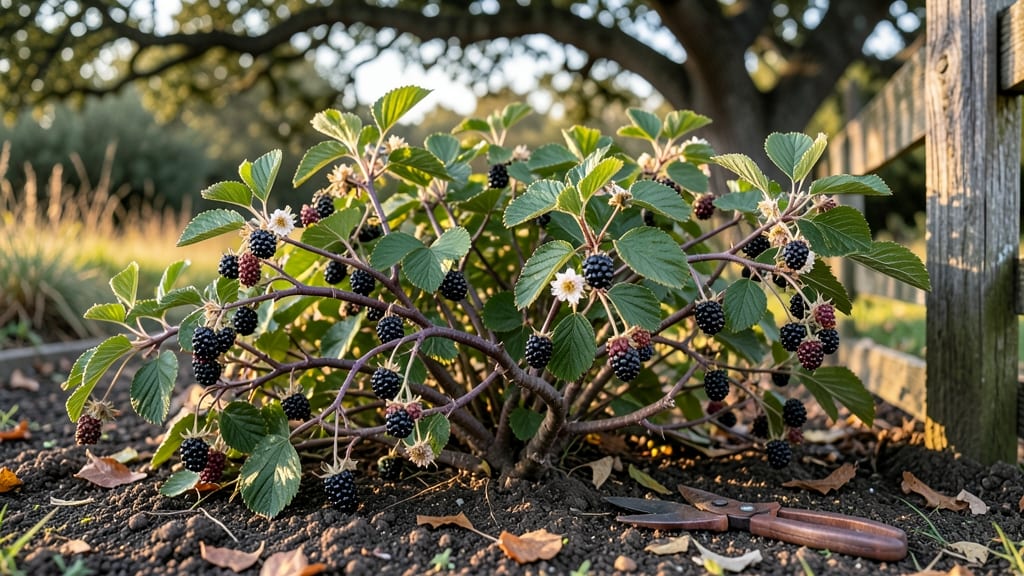
Pruning a wild blackberry tree isn’t just about tidying up—it’s about unlocking next year’s fruit harvest while keeping the plant healthy and manageable.
I’ve spent summers wrestling with tangled canes that produced half as many berries as they could have, and once I learned the right timing and cuts, my wild patch became a thriving, low-maintenance berry goldmine. The key? Working with the plant’s natural growth rhythm instead of against it.
You’ll need just three tools: sharp pruning shears, loppers for thicker canes, and a pair of gloves (trust me, the thorns will thank you later).
The real secret isn’t fancy techniques—it’s understanding that wild blackberries grow on two-year-old canes, so you’re not just pruning for shape, but for future fruit. Start by removing dead or crossing branches first, then step back and let the plant’s structure guide you.
By the time berry season rolls around, you’ll have a neat, sunlit canopy that produces 2-3 times more fruit than before. The berries ripen faster, too, because the plant isn’t fighting for light and air.
Plus, the open shape makes harvesting easier—no more tangled messes or missed berries hiding in the thicket.
This works for wild blackberries in any climate, from coastal fog zones to hot inland valleys. The same principles apply whether you’re pruning a single plant or a whole thicket. Let’s get those canes under control without losing a single berry’s potential.
📚 In This Guide
- What you need
- Instructions
- Tips and common mistakes
- Wrapping up and next steps
What you need
- ● Pruning shears: Bypass pruners (sharp, 6–8" blades) for small branches. Quantity: 1 pair (sterilize with rubbing alcohol between cuts).
- ● Loppers: For thicker branches (up to 2" diameter). Quantity: 1 pair (look for ratcheting or bypass style).
- ● Pruning saw: Heavy-duty bow or folding saw for stubborn, woody stems. Quantity: 1 (8–10" blade).
- ● Gloves: Heavy-duty leather or nitrile-coated for thorn protection. Quantity: 1 pair.
- ● Disinfectant: 70% isopropyl alcohol or 10% bleach solution (1 part bleach to 9 parts water). Quantity: Small spray bottle or rag.
- ● Heavy-duty trash bags: For debris cleanup. Quantity: 2–3 (20-gallon size).
- ○ Marking twine or flags: To tag branches for future reference (optional but helpful). Quantity: 1 roll or 10+ flags.
- ● Pruning sealant: For sealing large cuts (e.g., ½" diameter or thicker) to prevent disease. Quantity: Small tube.
- ● Ladder: Extendable or step ladder (6–10 ft) for tall canes. Quantity: 1 (ensure stability!).
- ● Work gloves with wrist straps: Extra protection if your tree is extra thorny.
- ● Notebook & pen: To sketch a quick map of your tree’s structure before pruning.
- ● Wildlife-friendly cleanup kit: If you plan to compost or repurpose clippings (e.g., for mulch or tea).
Year-round blackberry pruning: how to revive shape and boost fruit
This is the method I use to keep wild blackberry canes productive and tidy—no harsh cuts, just strategic shaping.
✂️ Step 1: Late Winter Cleanup (Dormant Season)
Start in late February to early March when the plant is still dormant but before buds swell. Remove dead or damaged canes first—these are brittle, brown, and won’t produce fruit. Cut them back to the ground completely. You’ll know a cane is dead if it snaps easily when bent; healthy canes bend without breaking.
Next, identify the oldest canes—these are the thickest, woody stems from last year’s growth. Blackberries fruit on second-year canes, so these spent canes should be cut back to the ground. This opens space for new growth while maintaining the plant’s vigor. Never remove more than one-third of the total canes in a single year, or you’ll stress the plant.
☀️ Step 2: Summer Thinning (Active Growth)
During June and July, when new canes are growing rapidly, thin them to 6-8 strong canes per plant. Look for canes that are thin, weak, or growing inward—these compete with healthier canes for sunlight and nutrients. Cut these at the base with clean pruners. You’ll see new shoots emerging from the roots; let only the straightest, most vigorous ones remain.
This step prevents overcrowding, which reduces fruit size and quality. A good rule of thumb: if two canes are growing parallel to each other, one must go. Thin in stages if needed—don’t remove all weak canes at once. The goal is to leave a well-spaced framework for next year’s fruit.
⏰ Step 3: Post-Harvest Renewal (Fall)
After harvesting in late summer or fall, prune any canes that produced fruit this year. These are the thin, browned canes that fruited earlier in the season. Cut them back to the ground to redirect the plant’s energy into next year’s growth. This also improves airflow, reducing the risk of fungal diseases like powdery mildew.
Leave the new green canes untouched—they’ll fruit next year. If any canes are growing in odd directions (like arching too sharply), you can gently bend them into a more manageable shape. Blackberries are flexible when young, so a little manual guidance now saves headaches later. Avoid heavy pruning in fall, as the plant needs to harden off for winter.
🌿 Step 4: Year-Round Maintenance (Ongoing)
Throughout the year, remove any suckers that sprout outside the main plant area. These are the small shoots growing from the roots but not part of the main cane structure. Suckers drain energy from the primary canes, so cut them off at the base as soon as you spot them. This keeps the plant’s energy focused on fruit production.
Finally, watch for wild shoots growing from the base of the plant. These are often from layering (where canes root into the soil). If you want to expand the plant, you can leave a few of these and train them upward. Otherwise, remove them to maintain a tidy, manageable shape. A little attention now means bigger, healthier berries later.
Tips & tricks for perfect wild blackberry tree pruning
Here's what nobody tells you about keeping your wild blackberry bushes thriving without sacrificing next year's harvest.
Timing is Everything: The late February to early March window for Step 1 is critical because it's when the plant is still dormant but about to wake up. If you prune too early, you risk exposing the plant to late winter freezes, and if you wait too long, the buds will start swelling, making pruning more stressful for the plant. I've learned this the hard way after seeing my bushes struggle to recover from early spring pruning.
Visual Cues for Identification: In Step 2, when thinning to 6-8 strong canes, look for canes that are at least pencil-thick with a smooth, green appearance. Thin canes often have a reddish tint and grow in a tangled mess. The key is to create a balanced framework where sunlight can reach all canes equally—this is how you get those plump, juicy berries. Confession: I skipped this step for years and wondered why my berries were always small and tart.
Seasonal Energy Management: The fall pruning in Step 3 is all about redirecting energy. When you cut back the browned fruiting canes, you're telling the plant to focus on root development and next year's growth rather than wasting energy on spent canes. This is why your bushes will often show new green shoots at the base right after fall pruning—it's the plant's way of preparing for spring.
Tool Maintenance Matters: Always use clean, sharp pruners for every cut. Dull blades crush canes instead of making clean cuts, which can introduce disease. I keep a small bottle of rubbing alcohol handy to wipe down my pruners between cuts, especially when dealing with diseased canes. This simple habit has kept my bushes healthier for years.
Pro Tips for Wild Blackberry Tree
- Here's what nobody tells you about keeping your wild blackberry bushes thriving without sacrificing next year's harvest.
- Timing is Everything: The late February to early March window for Step 1 is critical because it's when the plant is still dormant but about to wake up.
- Visual Cues for Identification: In Step 2, when thinning to 6-8 strong canes, look for canes that are at least pencil-thick with a smooth, green appearance.
Frequently asked questions
Got questions about wild blackberry trees? You’re not alone!
Here are answers to the most common ones—whether you’re a first-time pruner or just curious about these thorny powerhouses.
When is the best time to prune a wild blackberry tree?
The ideal window is late winter or early spring (just before buds swell), but you can also prune in summer after harvest. Avoid pruning in fall—it can stimulate new growth that won’t harden off before winter. For floricanes (last year’s canes), cut them to the ground after fruiting to encourage new, productive canes.
Do I need special tools to prune wild blackberries?
Not necessarily! A sharp pair of pruning shears or loppers (for thicker canes) is all you need. For dense thickets, long-handled tools help avoid thorns. Gloves with reinforced palms and sleeves are a game-changer—wild blackberries pack a punch! A pruning saw may be needed for stubborn, woody canes.
Will pruning reduce my blackberry harvest?
Not if done right! Pruning increases fruit production by redirecting energy to healthier, younger canes. Overgrown or diseased canes steal resources—removing them boosts yield. Just never prune more than 1/3 of the plant at once, or you’ll shock it. Think of it like a haircut: less clutter = more growth!
Are wild blackberries safe to eat after pruning?
Pruning doesn’t affect fruit safety—just focus on timing. If you prune after harvest (summer/fall), you’ll still get berries the next season. Pro tip: Wait 24 hours after pruning to pick berries near cuts, as sap flow can make them slightly bitter.
What if my wild blackberry tree isn’t fruiting well?
Check these fixes:
- Light: Wild blackberries thrive in full sun (6+ hours/day). If shaded, thin nearby trees/shrubs.
- Water: Keep soil consistently moist (not soggy) during fruiting.
- Soil: Amend with compost if soil is poor—blackberries love slightly acidic (pH 5.5–6.5) conditions.
- Age: Young plants (1–2 years) may not fruit yet—be patient!
Can I prune wild blackberries the same way as cultivated varieties?
Mostly, but wild types are hardier and often less structured. Cultivated berries (like ‘Triple Crown’) benefit from floricane training (keeping last year’s canes), while wild varieties may spread more aggressively. Key difference: Wild blackberries often self-prune by sending up new canes from the base—focus on removing dead/diseased wood and thinning for airflow.
Wrapping up and next steps
Pruning your wild blackberry tree doesn’t have to be a daunting task—with the right tools, timing, and techniques, you can keep it thriving and bountiful year-round! 🌿 Whether you're trimming for shape, health, or fruit production, remember that patience and consistency are key.
A well-maintained blackberry tree rewards you with sweeter berries, stronger growth, and fewer pests—so grab those pruners and get to work!
Ready to take your blackberry tree to the next level? Start small: pick one season to focus on, then gradually build your skills. Before you know it, you’ll be a pruning pro—and enjoying a harvest that puts store-bought berries to shame! 🍇