
Trees
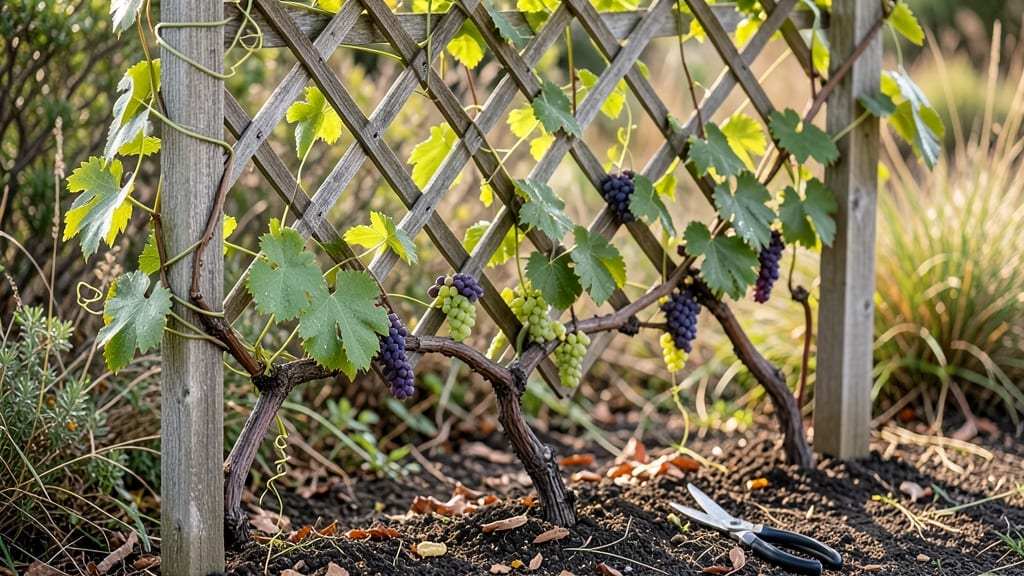
Grape trees look nothing like the bushy vines you might imagine—these deciduous beauties grow as shrub-like trees or sprawling vines, with distinctive lobed leaves that resemble maple foliage but smaller. 🌿 The bark starts smooth and silvery-gray when young, then develops rough, furrowed ridges as it matures, giving them a rugged, almost ancient appearance even in young plants.
What really sets them apart are their grape clusters, which hang like nature’s chandeliers in late summer. Some varieties produce tight, purple-black bunches, while others yield green or red grapes that dangle in loose, elegant sprays.
The leaves turn golden-yellow in fall, creating a stunning contrast against the bark before dropping—leaving behind bare branches that signal winter’s approach.
Mature grape trees can reach 15–25 feet tall if left unpruned, but most gardeners train them along trellises or arbors, where they sprawl horizontally in a controlled, vine-like form.
The growth habit is flexible: some varieties stay compact as shrubs, while others stretch dramatically, making them perfect for vertical gardens or shade structures.
Whether you’re planning a backyard vineyard or just want to spot one in your neighborhood, these visual clues—lobed leaves, textured bark, and grape clusters—will help you recognize them instantly. Their adaptable forms make them a standout choice for both functional and decorative landscapes.
📚 In This Guide
- What you need
- Instructions
- Tips and common mistakes
- Wrapping up and next steps
What you need
- ● Hand lens or magnifying glass – For inspecting leaf details, bark texture, and tiny features like tendrils (5x–10x magnification works great).
- ● Notebook and pen – To jot down observations like leaf shape, bark color, and seasonal changes.
- ● Camera or smartphone – Capture close-ups of leaves, bark, and clusters for later comparison.
- ● Measuring tape or ruler – To note leaf length, width, and vine spacing (standard 12-inch tape is ideal).
- ○ Pruning shears (optional but helpful) – For safely sampling small vine sections if needed (bypass pruners with sharp, stainless steel blades).
- ● Field guide or plant ID app – Like iNaturalist or PictureThis to cross-reference your findings.
- ● Gloves – Protect your hands from thorns or rough bark (nitrile or leather works well).
- ● Small shovel or trowel – If you’re digging deeper to check root structure (for advanced ID).
- ● Reference books – Such as “Trees of North America” or “The Grape Grower’s Guide” for in-depth details.
- ● Weather-resistant bag – To collect fallen leaves or grape clusters for closer study (mesh bags work for air circulation).
How to recognize grape trees by their distinctive features
Grapes aren’t just about the fruit—every part of the tree tells its own story.
🌿 Step 1: Examine the Leaves for Key Characteristics
Grapevine leaves are lobed like a maple’s but with a deeper, more irregular shape. Look for 3-5 pointed lobes with jagged, serrated edges—this is the classic "grape leaf" silhouette. The undersides often have fine hairs, especially on younger leaves, which helps distinguish them from similar vines.
New leaves emerge a vibrant red or bronze, gradually turning deep green as they mature. This color shift is a dead giveaway in spring. Hold a leaf up to light—you’ll often see prominent veins that create a web-like pattern. If the leaf feels waxy or slightly rough to the touch, that’s another clue.
🌱 Step 2: Study the Bark and Branches for Seasonal Clues
Young grapevine bark is smooth and grayish-brown, but as the tree ages, it develops deep furrows and ridges, almost like an elephant’s skin. Scratch a small section—if the inner bark is greenish or yellowish, it’s still alive. Dead wood turns dark brown or black and feels brittle.
Look for buds along the branches. Grapevine buds are plump and pointed, often clustered in groups of 2-3. They’ll swell in early spring, signaling new growth. If you see tendrils (thin, wiry growths) curling around branches, that’s a sure sign—grapevines use these to climb or anchor themselves.
☀️ Step 3: Observe the Fruit and Growth Habits
Grapes grow in loose clusters (called "bunches") along the current year’s growth, not just at the ends of branches. The clusters start green and firm, then soften as they ripen. Wild grapevines often produce small, tart berries, while cultivated varieties have larger, sweeter fruit.
Pay attention to how the vine grows—grapevines are woody perennials that spread aggressively via underground runners. If you see long, arching canes with leaves spaced evenly along them, that’s classic grapevine architecture. Unlike shrubs, grapevines don’t branch densely; they rely on main trunks with fewer, thicker limbs.
⏰ Step 4: Track Seasonal Changes for Confirmation
In fall, grapevine leaves turn yellow or orange before dropping, but the branches may retain a few stubborn leaves well into winter. This delayed leaf drop is a key identifier. By winter, the vine’s dormant buds (those plump clusters) will be the only visible signs of life.
If you spot bird damage—pecked or half-eaten grapes—you’re likely dealing with a grapevine. Birds adore ripe grapes, and their presence is a good sign you’ve found the right plant. Compare your findings to local grape varieties; some have unique leaf shapes or fruit colors that match regional climates.
Tips & tricks for identifying grape trees with confidence
Mastering grape tree identification comes down to a few key tricks that separate these vines from lookalikes. Here's what I've learned from years of fieldwork:
Leaf Texture is Your Best Clue: The undersides of grapevine leaves often have fine, downy hairs—especially on younger leaves. Run your fingers along the veins while holding the leaf up to light. The web-like pattern of prominent veins is another dead giveaway. If the leaf feels waxy or slightly rough to the touch, you're likely dealing with a grapevine rather than a similar vine like Virginia creeper.
Bark Examination Reveals Age Secrets: Young grapevine bark looks deceptively simple—smooth and grayish-brown—but as the vine matures, those deep furrows and ridges develop, resembling elephant skin. Here's my trick: scratch a small section of bark. Living bark reveals greenish or yellowish inner layers, while dead wood turns dark brown and feels brittle. This simple test works even in winter when leaves are absent.
Growth Habits Tell the Whole Story: Pay attention to how the vine spreads—grapevines are aggressive woody perennials that send out underground runners. Look for long, arching canes with leaves spaced evenly along their length rather than clustered at the ends. The presence of tendrils (those thin, wiry growths) is another distinctive feature that helps anchor the vine to supports or other plants.
Seasonal Patterns Confirm Your Findings: In fall, grapevine leaves often turn yellow or orange before dropping, but you might still find stubborn leaves clinging to branches well into winter. This delayed leaf drop is a key identifier. By winter, the vine's dormant buds (those plump clusters) become the only visible signs of life. Compare these seasonal changes to your observations throughout the year for complete confirmation.
Pro Tips for What Do Grape Trees Look Like
- Mastering grape tree identification comes down to a few key tricks that separate these vines from lookalikes.
- Leaf Texture is Your Best Clue: The undersides of grapevine leaves often have fine, downy hairs—especially on younger leaves.
- Bark Examination Reveals Age Secrets: Young grapevine bark looks deceptively simple—smooth and grayish-brown—but as the vine matures, those deep furrows and ridges develop, resembling elephant skin.
Frequently asked questions
Got questions about grape trees? You’re not alone!
Here are some of the most common queries—plus quick, practical answers to help you spot, grow, or troubleshoot these vines with confidence.
How can I tell if a vine is a grape tree vs. another plant (like ivy or Virginia creeper)?
Grapevines have palmately lobed leaves (3–5 pointed sections) with toothed edges, while ivy has smooth, waxy leaves and Virginia creeper has deeply divided, maple-like leaves. Also, grapevines produce small green/red berries in clusters—unlike ivy, which has no fruit.
When do grape trees lose their leaves, and how long do they stay bare?
Grapevines typically drop leaves in late fall (October–November) after frost hits. They stay bare until spring (March–April), when new buds emerge. Cold-hardy varieties may retain a few leaves longer, but expect dormancy for 4–6 months in most climates.
Can grape trees grow in containers, and what size pot do I need?
Yes! Use a 5–10 gallon pot for dwarf varieties (like ‘Thompson Seedless’) and 15+ gallons for standard vines. Ensure drainage holes and prune roots annually. Containers work well in USDA Zones 5–10, but move pots indoors if temps drop below 20°F.
Why are my grapevine leaves turning yellow or spotted?
Yellowing leaves often signal fungal diseases (like black rot or powdery mildew) or nutrient deficiencies (e.g., magnesium or iron). Spots + yellow edges? Check for aphids or spider mites. Solution: Prune infected branches, apply neem oil, and improve airflow. Test soil pH (ideal: 6.0–6.5).
Are there grapevine alternatives for shade or non-fruiting vines?
Try Virginia creeper (fast-growing, red fall foliage) or clematis (flowering vines). For fruit, kiwi vines or passionfruit offer tropical vibes. Need shade? Honeysuckle or wisteria provide greenery without grapes—but none match grapevines’ structural strength for trellises!
Wrapping up and next steps
Now that you’ve learned to spot grape trees by their distinctive leaves, bark texture, and seasonal shifts, you’re ready to become a grape tree pro! 🌿 Whether you’re a gardener, a nature lover, or just curious, recognizing these key features will make your outdoor adventures even more rewarding. Next up: Grab a notebook and head outside to compare what you see with the details you’ve learned—you might just discover a hidden vineyard in your own backyard! 🍇