
Pruning
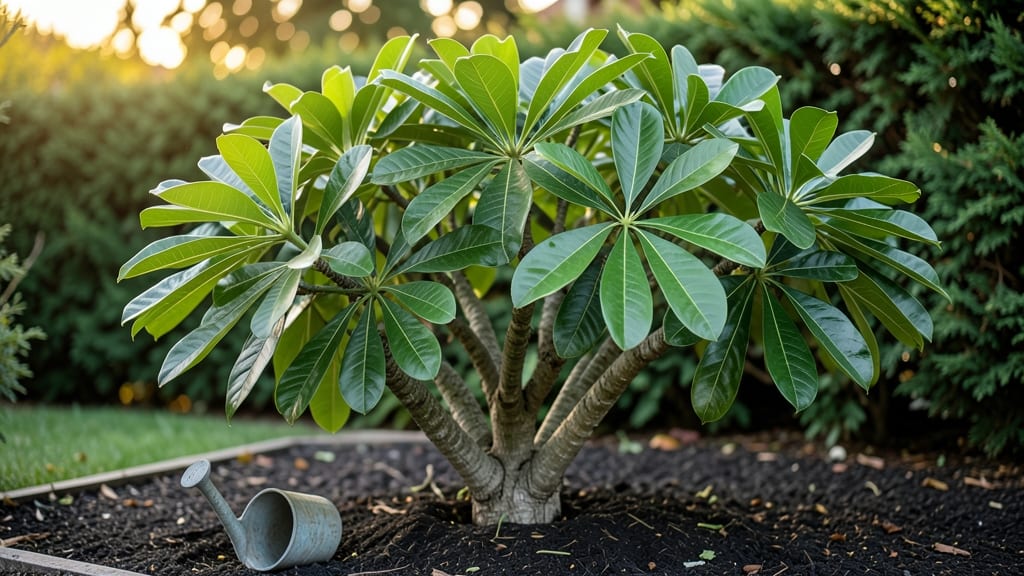
Growing an umbrella tree outdoors transforms any yard into a tropical escape—its glossy, star-shaped leaves create instant shade and drama. I’ve nurtured mine through Florida’s humidity and Texas’s brutal summers, and the key to its lush, year-round growth lies in pruning at the right times.
This tree thrives in USDA Zones 10-11 but can survive cooler climates with winter protection. Plant it in well-draining soil with partial shade, and water deeply when the top inch feels dry.
The real magic happens when you prune: light trimming in spring encourages bushiness, while harder cuts in late summer prevent legginess before winter.
You’ll end up with a vibrant, compact canopy that filters sunlight beautifully while resisting pests. The leaves stay glossy and full, and the tree grows 2-3 feet per year—fast enough to fill gaps but controlled enough for small spaces. Even in heatwaves, it stays lush if you adjust watering.
Works in containers too—just ensure drainage holes and upgrade pots every 2-3 years. For colder zones, bring it indoors before frost or wrap the pot in burlap. The payoff? A year-round tropical look with minimal fuss. Let’s get your tree thriving!
📚 In This Guide
- What you need
- Instructions
- Tips and common mistakes
- Wrapping up and next steps
What you need
- ● Pruning shears: Bypass pruners (sharp, clean, and sterilized with rubbing alcohol to prevent disease). Size: 6–8 inches for medium branches.
- ● Loppers: For thicker branches (½–1 inch in diameter). Look for: Bypass blades and a ratchet mechanism for ease.
- ○ Hand saw: Pruning saw with fine teeth for stubborn, woody stems. Optional: A folding saw for portability.
- ● Gloves: Heavy-duty, cut-resistant gloves (e.g., mechanics’ gloves) to protect from thorns and sap.
- ● Disinfectant: 70% isopropyl alcohol or hydrogen peroxide (3%) to sterilize tools between cuts.
- ○ Pruning sealant: Tree wound sealant (optional but helpful for large cuts to prevent decay).
- ● Timing: Prune during dormant seasons (late winter/early spring) or after flowering (summer). Avoid heavy pruning in fall.
- ● Weather: Choose a dry, overcast day to minimize stress on the tree and reduce sap bleeding.
- ● Safety gear: Safety goggles (to shield from debris) and long sleeves (sap can irritate skin).
- ● Cleanup supplies: Garden bags or bucket for clippings, plus a small broom to sweep up debris.
- ● 🔥 Sharpen your tools! Dull blades tear bark—hone shears with a file before starting.
- ● 🌡️ Work in layers: For thick branches, make 3 cuts (undercut, then top cut) to avoid bark stripping.
- ● ✨ Label your cuts: Use a permanent marker to mark branches to remove if you’re unsure.
Step-by-step pruning guide for year-round umbrella tree care
Mastering the art of seasonal pruning transforms your umbrella tree into a dense, vibrant focal point.
Assess Growth Patterns in Early Spring
Begin by examining the tree's structure when new growth emerges in late March or early April, just as buds swell but before leaves unfurl. Look for water sprouts—vigorous, upright shoots growing from the trunk or branches—and crossing branches that rub against each other. These are your first targets, as they compete for energy and weaken the canopy's integrity.
Use sharp, bypass pruning shears to make clean cuts at a 45-degree angle, just above a lateral bud or branch collar. Avoid leaving stubs, which invite disease. I always prune on a dry, overcast day to reduce stress on the tree, and I sterilize my tools with 70% isopropyl alcohol between cuts to prevent pathogen spread.
Thin the Canopy During Late Spring to Early Summer
Between June and early July, focus on thinning the interior canopy to improve air circulation and sunlight penetration. Remove 10-15% of the tree's total foliage by selectively pruning branches that grow inward or downward. Aim for an open vase shape, allowing light to reach the lower branches and trunk.
Start at the outer edges and work inward, cutting back to a strong lateral branch or the trunk. Avoid "lion's tailing," or shearing the tree into a rounded shape, as this encourages dense, weak growth. You'll notice the tree's natural growth habit more clearly once the canopy opens up—this is when the umbrella tree's signature layered look begins to form.
Light Pruning in Fall to Prepare for Winter
In late September or early October, perform a light maintenance prune to remove any dead, diseased, or broken branches that may have developed over the summer. Focus on weak growth at the tips of branches, which often signals the tree's preparation for dormancy. Prune these back to a stronger lateral branch to encourage bushier growth in the following spring.
This is also the time to remove suckers—shoots growing from the base of the tree or along the trunk. These divert energy away from the canopy and should be cut at the base with clean shears. Limit pruning to no more than 5-10% of the foliage during this period, as the tree is entering its dormant phase and needs to conserve energy.
Minimal Winter Pruning for Structural Integrity
Winter pruning is minimal and strategic, focusing only on safety and structural corrections. In January or February, inspect the tree for branches that may have been damaged by storms or heavy snow. Prune these immediately, making cuts just outside the branch collar to promote rapid healing.
If you notice dieback—dead or brown branches—cut these back to the nearest healthy growth. Avoid heavy pruning during winter, as the tree is dormant and cannot recover quickly. Instead, use this time to plan your spring pruning strategy, marking branches that need attention with twist ties or flagging tape for easy identification.
Tips & tricks for perfect year-round umbrella tree pruning
A few strategic adjustments can elevate your umbrella tree from ordinary to extraordinary—here’s how to refine your seasonal approach.
Tool Preparation: Before you begin pruning in late March, sharpen your bypass pruning shears to ensure clean cuts that heal faster. I keep a small file and sharpening stone in my toolbox specifically for this purpose. Dull tools crush branches instead of cutting cleanly, which creates larger wounds and invites disease. Sterilizing tools between cuts with 70% isopropyl alcohol (as mentioned in Step 1) is non-negotiable—this prevents cross-contamination that can spread fungal infections between branches.
Visualizing the Canopy: When thinning the interior canopy between June and early July, imagine you're creating an open vase shape from the inside out. Start by removing branches that grow inward or downward—these are the ones blocking sunlight from reaching the lower canopy. The goal is to see light filtering through the center of the tree when you step back. This technique not only improves air circulation but also encourages the tree to develop its signature layered appearance over time.
Seasonal Pruning Limits: Never exceed the recommended pruning percentages for each season. In late spring to early summer, removing 10-15% of foliage is ideal; in fall, keep it under 5-10%. Over-pruning stresses the tree, especially during dormancy. I’ve seen trees recover from heavy spring pruning, but winter over-pruning often leads to dieback. If you’re unsure, err on the side of caution—you can always prune more lightly in the following season.
Winter Planning: Use January and February to strategically mark branches for spring pruning. I use colorful twist ties to flag branches that need attention—this saves time and ensures you don’t miss anything when the growing season arrives. Focus on branches that are crossing, rubbing, or growing in awkward directions. This proactive approach transforms winter’s minimal pruning into a spring readiness checklist.
Pro Tips for Umbrella Tree Outdoors
- A few strategic adjustments can elevate your umbrella tree from ordinary to extraordinary—here’s how to refine your seasonal approach.
- Tool Preparation: Before you begin pruning in late March, sharpen your bypass pruning shears to ensure clean cuts that heal faster.
- Visualizing the Canopy: When thinning the interior canopy between June and early July, imagine you're creating an open vase shape from the inside out.
Frequently asked questions
Got questions about keeping your umbrella tree (Schefflera actinophylla) thriving outdoors with year-round pruning? Here are some of the most common ones—and their answers!
When is the best time to prune an umbrella tree outdoors?
Prune your umbrella tree year-round, but focus on late winter or early spring (just before new growth starts) for major shaping. Light trimming after flowering (summer) encourages bushier growth. Avoid heavy pruning in fall—it reduces winter hardiness. Pro tip: Use sterilized tools to prevent disease!
Can I prune an umbrella tree in winter?
Yes, but lightly! Winter pruning is best for removing dead or damaged branches. Avoid heavy cuts—umbrella trees are tropical and sensitive to cold stress. If your tree is in a frost-prone zone, wait until early spring. Pro tip: Mulch the base to protect roots from freezing!
How do I know if I’m pruning too much?
Over-pruning shows up as sparse foliage, slow regrowth, or leggy stems. Stick to removing no more than 1/3 of the canopy at a time. If you see excessive bare stems or yellowing leaves, you’ve likely cut too much. Troubleshoot: Fertilize lightly and water deeply to recover!
What should I do if my umbrella tree isn’t growing after pruning?
Slow growth could mean poor soil, lack of light, or over-pruning. Check for well-draining soil and place it in bright, indirect sunlight. If roots are bound, repot or trim roots gently. Boost growth: Use a balanced fertilizer in spring/summer!
Does an umbrella tree need special care after rain?
Umbrella trees handle rain well, but excessive moisture can cause root rot. Ensure pots have drainage holes or plant in well-draining soil outdoors. After heavy rain, check for pests (like scale) or fungal spots on leaves. Quick fix: Trim affected areas and treat with neem oil if needed!
Wrapping up and next steps
Mastering the art of pruning your umbrella tree outdoors ensures a thriving, lush canopy year-round! 🌿 With the right tools, timing, and techniques—like thinning cuts and deadheading—you’ll keep your tree healthy, vibrant, and full of life. Whether you’re a pruning pro or just starting, consistency is key!
Ready to give your umbrella tree the care it deserves? Grab your pruners, mark your calendar, and start small! Every trim brings you one step closer to that stunning, sun-kissed canopy you’ve always dreamed of. Happy pruning! ✂️