
Pruning
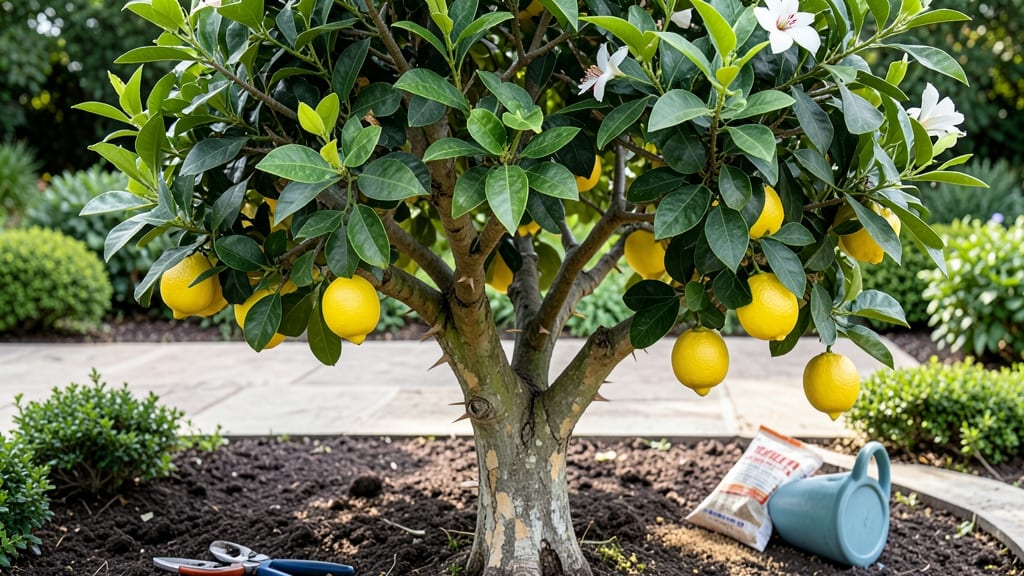
Pruning a thorny citrus tree isn't just about shaping—it's about unlocking healthier growth and safer handling. I learned the hard way that skipping this step leads to tangled branches, stunted fruit, and a yard that feels more like a fortress than a garden.
The key is timing, technique, and the right tools to keep both the tree and your hands safe.
You'll need sharp bypass pruners (dull blades tear bark), heavy-duty gloves rated for citrus thorns, and a clear day to work. Focus on removing crossing branches first—they compete for nutrients and create entry points for disease.
Every cut should aim to open the canopy to sunlight while maintaining the tree's natural shape. The payoff? Fewer thorns over time and fruit that's easier to reach.
What you'll end up with is a citrus tree that produces more fruit, resists pests better, and actually feels pleasant to work around. The thorns won't disappear, but strategic cuts redirect energy toward growth instead of defensive spines. Plus, you'll avoid the frustration of tangled limbs when harvesting.
This works for Meyer lemons, limequats, and other thorny varieties in containers or ground planting. The same principles apply whether you're shaping a dwarf tree or maintaining a mature specimen. Let's get those tools ready—your tree (and your hands) will thank you.
📚 In This Guide
- What you need
- Instructions
- Tips and common mistakes
- Wrapping up and next steps
What you need
- ● Pruning shears: Bypass pruners (for clean cuts on small branches, 4–6 inches long, with sharp, stainless-steel blades). Quantity: 1 pair.
- ● Loppers: Bypass loppers (for medium branches, 8–12 inches long, with a comfortable grip and ratcheting mechanism for leverage). Quantity: 1 pair.
- ● Pruning saw: Curved-tooth pruning saw (for thick branches over 2 inches in diameter). Quantity: 1.
- ● Heavy-duty gloves: Leather or reinforced garden gloves (thick enough to protect against thorns, with touchscreen-compatible fingertips if needed). Quantity: 1–2 pairs.
- ● Safety goggles: (to shield eyes from debris and thorns). Quantity: 1 pair.
- ○ Disinfectant (optional but recommended): 70% isopropyl alcohol or bleach solution (to sterilize tools between cuts and prevent disease spread).
- ● Rubbing alcohol or hand sanitizer: (for cleaning hands after handling thorns).
- ● First-aid kit: (include bandages, antiseptic wipes, and tweezers for thorn removal).
- ● Extension pole: (for high branches, 3–6 feet long, with a saw or lopper attachment).
- ● Ladder: (aluminum or fiberglass, sturdy enough for your height and the tree’s size).
- ● Tree wound dressing: (pruning sealant for large cuts, though many experts recommend against it for citrus trees).
- ● Notebook & pen: (to sketch the tree’s structure or note areas for future pruning).
- ● Spray bottle with water: (to mist tools and hands if working in dry conditions).
Step-by-step guide to pruning thorny citrus trees for healthy growth
Here's how I keep my citrus trees thriving—with fewer thorns and stronger branches.
✂️ Step 1: Gather the Right Tools and Safety Gear
Start with a sharp bypass pruner for clean cuts and a pair of heavy-duty gloves—thorny citrus will snag you if you're not careful. I also grab a ladder (if needed) and a bucket of rubbing alcohol to disinfect tools between cuts. The key here is sharpness: dull blades crush stems instead of cutting cleanly, which invites disease.
Wear long sleeves and closed-toe shoes. Citrus thorns aren't just painful—they can draw blood, and that's an open door for fungal infections. I like to work on a dry day when branches aren't slippery from dew or rain. Safety first, especially with these spiky trees.
✂️ Step 2: Remove Dead, Diseased, or Crossing Branches First
Scan the tree for branches that are brown and brittle (dead wood), mushy or oozing (diseased), or rubbing against each other (crossing). These are your top priorities. Cut them back to the nearest outward-facing bud or branch collar—the swollen area where the branch meets the trunk. This is where new growth will sprout.
I always make cuts at a 45-degree angle, about ¼ inch above the bud. If you cut too close, you'll damage the bud; too far, and the wound won't heal properly. For diseased branches, sterilize your tools with rubbing alcohol before moving to the next cut. This prevents spreading whatever's infecting your tree.
☀️ Step 3: Thin Out Overcrowded Areas for Better Airflow
Citrus trees grow dense, and that's great for fruit—but too many branches block sunlight and air, leading to fungal issues. Look for areas where branches are growing too close together. Remove one of every three branches in crowded spots, starting with the smallest or weakest. This opens up the canopy so light reaches the inner growth.
Here's the thing—citrus trees are resilient, but they'll send out new shoots to fill gaps. If you thin too aggressively, you'll end up with a bushy mess. I aim to keep the tree's natural shape while improving airflow. Step back occasionally to visualize the tree's structure. You'll see where branches are competing for space.
✂️ Step 4: Prune Thorns Strategically to Improve Access
Thorns are a citrus tree's natural defense, but they make harvesting and maintenance a pain. Focus on removing thorns from branches you frequently access—like those within arm's reach when picking fruit. Cut thorns back to the main branch, but leave a small stub to avoid damaging the branch itself.
Don't go overboard—removing too many thorns weakens the tree's natural protection. I target thorns on branches that are thicker than a pencil, as these are the most problematic. After pruning, I like to spray the cuts with a copper fungicide to prevent infections from setting in.
🌿 Step 5: Shape the Tree and Encourage New Growth
Now's the time to shape the tree into your ideal form—whether that's a single trunk with a rounded canopy or a more open, airy structure. I focus on outward-facing buds when making cuts, as these encourage growth away from the center. Avoid cutting back into the center of the tree, or you'll create a dense, shaded interior.
After pruning, your tree will send out new shoots from the buds you've exposed. These will grow quickly, so keep an eye on them. Within 4-6 weeks, you'll see fresh green leaves emerging—that's your signal the tree is recovering well. Water deeply after pruning to help the tree recover, but don't overdo it; citrus trees hate soggy roots.
Tips & tricks for pruning thorny citrus trees
These insights will help you prune with precision and keep your citrus tree thriving for years to come.
Tool Sharpness is Non-Negotiable: I can't stress this enough—dull pruners crush stems instead of making clean cuts. Test your bypass pruner by cutting a small twig; if it tears rather than slices cleanly, sharpen it first. I keep a small file in my toolkit for quick touch-ups between pruning sessions. Clean cuts heal faster and reduce disease risk, which is especially important with citrus trees that are prone to fungal infections.
Visualize the Tree's Structure: Before making any cuts in Step 3, step back and examine the tree's overall shape. Imagine how sunlight will reach the interior after thinning. I often sketch a rough diagram on paper to map out which branches to remove. This prevents over-thinning and helps maintain the tree's natural form while improving airflow—critical for preventing fungal issues in dense citrus canopies.
Timing Matters for New Growth: The 4-6 week window mentioned in Step 5 is when you'll see fresh green leaves emerge as new shoots. This is your confirmation that the tree is recovering well. If you don't see new growth after this period, your cuts may have been too severe. I recommend pruning in late winter or early spring when the tree is just starting to wake up from dormancy—this gives it plenty of time to heal before summer's heat stress.
Safety First with Thorny Trees: I've learned this the hard way—citrus thorns can draw blood, creating entry points for infections. Always wear long sleeves and closed-toe shoes, even if you're just doing light pruning. After finishing, I rinse my hands with rubbing alcohol to kill any potential pathogens. For stubborn thorns, I use a small pair of needle-nose pliers to remove them completely rather than risking cuts with the pruner.
Pro Tips for Thorny Citrus Tree
- These insights will help you prune with precision and keep your citrus tree thriving for years to come.
- Tool Sharpness is Non-Negotiable: I can't stress this enough—dull pruners crush stems instead of making clean cuts.
- Visualize the Tree's Structure: Before making any cuts in Step 3, step back and examine the tree's overall shape.
Frequently asked questions
Got questions about pruning your thorny citrus tree? You’re not alone—these plants can be tricky! Below, we’ve answered the most common concerns to help you tackle pruning like a pro.
When is the best time to prune a thorny citrus tree?
Prune your citrus tree in late winter or early spring (before new growth starts) to avoid stressing the plant. This timing promotes healing and encourages vigorous spring blooms. Avoid heavy pruning in summer or fall, as it can weaken the tree or invite pests. Pro tip: If you must prune in summer, do it early and keep cuts minimal!
How do I safely handle the thorns when pruning?
Thorns are sharp—wear thick gloves (leather or citrus-specific) and long sleeves to protect your skin. Use bypass pruners with a long handle to keep distance. If thorns snag your clothes, wrap the tree in a pruning cloth or use a thorn-resistant tool like a pole saw for high branches. Safety first!
Will pruning my citrus tree reduce fruit production?
Not if done correctly! Pruning opens the canopy to sunlight and air, which actually boosts fruit quality and yield in the long run. However, over-pruning (removing >25% of foliage at once) can stress the tree and reduce fruit. Focus on selective cuts—remove dead wood, crowded branches, and suckers to encourage healthy growth.
Can I prune a thorny citrus tree in containers?
Yes! Container-grown citrus trees need regular pruning to control size and shape. Since roots are confined, prune lightly but often—aim for 10-15% of foliage per session. Use sterilized tools to prevent disease, and repot every 2-3 years to avoid root-bound stress. Bonus: Pruning containers makes harvesting easier!
Why are my citrus tree’s new branches dying after pruning?
Dying branches often signal over-pruning, disease, or pest damage. Check for:
- Fungal issues (e.g., root rot)—use copper fungicide if soil is soggy.
- Insect infestations (aphids, scale)—spray with neem oil.
- Sunburn—if leaves scorch, provide afternoon shade.
Wrapping up and next steps
Pruning your thorny citrus tree doesn’t have to be intimidating—with the right tools, timing, and technique, you’ll encourage lush growth and bountiful fruit while keeping those sharp thorns in check. 🌿✂️ Remember, patience and precision are key, so take your time and enjoy the process.
Ready to transform your tree? Grab your pruners and get started today!
For even better results, consider marking your calendar for next year’s pruning season and keep an eye on your tree’s health year-round. Happy gardening!