
Pruning
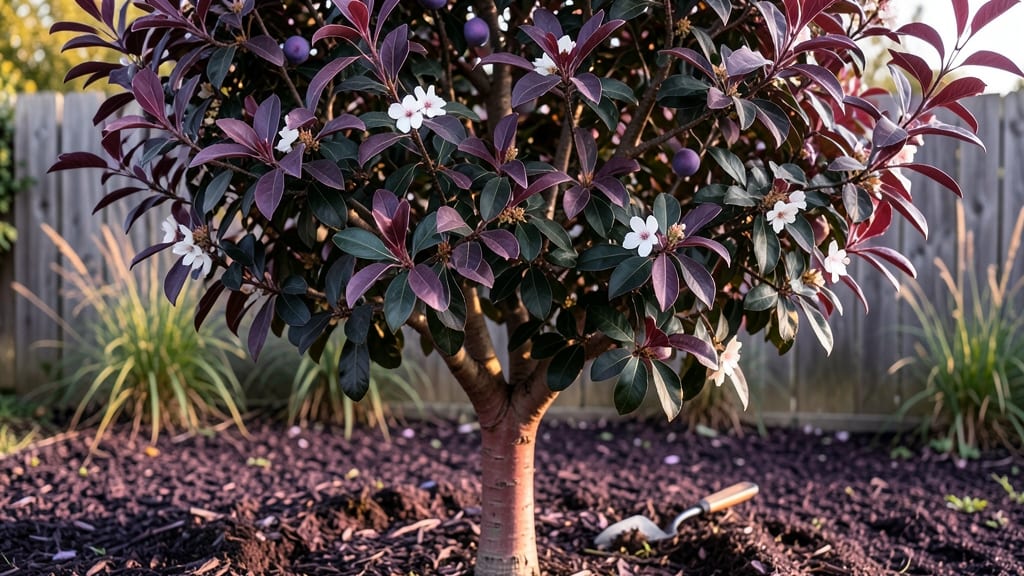
A purple leaf peach tree transforms your yard into a living masterpiece, blending fruit production with stunning foliage that shifts from deep purple to burgundy through the seasons. 🌿 I planted mine five years ago after seeing how the vibrant leaves held up even in winter—something standard peach trees can't match.
The key to keeping those colors vivid lies in smart pruning, which also boosts fruit quality and tree health.
This tree thrives in full sun and well-draining soil, but it’s surprisingly low-maintenance once established. You’ll need basic pruning tools, a ladder for taller branches, and about 30 minutes every late winter to shape it properly.
The real magic happens when you time your cuts right—just after dormancy but before buds swell—to encourage both bold foliage and sweet peaches.
By summer, you’ll have glossy purple leaves that pop against any landscape, plus a modest harvest of juicy fruit. The tree’s compact growth habit makes it perfect for small yards, and its disease resistance is better than most peach varieties.
With proper care, it becomes the showstopper of your garden, year after year.
Whether you’re a beginner or a seasoned gardener, this tree delivers drama with minimal fuss. The secret is balancing form and function—pruning for structure while preserving those stunning leaves. Let’s get your tree looking its best from season to season.
📚 In This Guide
- What you need
- Instructions
- Tips and common mistakes
- Wrapping up and next steps
What you need
- ● Pruning shears: Bypass pruners (for cuts under ½ inch thick) – look for sharp, stainless-steel blades.
- ● Loppers: For branches ½ to 1½ inches thick – choose bypass or anvil loppers (bypass is gentler on bark).
- ● Pruning saw: For branches 1½+ inches thick – opt for a curved blade for cleaner cuts.
- ● Gloves: Heavy-duty gardening gloves (cut-resistant for safety).
- ● Disinfectant: 70% isopropyl alcohol or a 10% bleach solution (to sterilize tools between cuts).
- ● Rubbing alcohol or hand sanitizer: For cleaning up sap and dirt.
- ○ Pruning sealant: (Optional) Tree wound pruning paste for large cuts (½ inch or wider).
- ○ Marking twine or tape: (Optional) To flag branches for removal.
- ● Weather: Prune on a dry, cloudy day (avoid wind or rain). Ideal temps: 40–65°F (4–18°C).
- ● Safety gear: Long sleeves/pants (to protect from thorns and sap).
- ● Cleanup supplies: Heavy-duty trash bags or a wheelbarrow for debris.
- ● Tree knowledge: Study your tree’s growth habits and last year’s pruning notes (if available).
- ● ✨ Sharpen your tools! Dull blades tear bark—file or replace blades annually.
- ● 🌡️ Avoid pruning in frost or extreme heat—stress weakens the tree.
- ● 🎯 Work from the top down to avoid damaging lower branches with falling debris.
How to prune a purple leaf peach tree for vibrant year-round color
Here’s the pruning method I’ve used for years to keep my purple leaf peach trees looking stunning—no dead branches, no overgrowth, just lush foliage all season.
✂️ Step 1: Prune in Late Winter Before Bud Break
Wait until late winter when the tree is still dormant—this is the best time to prune because you can see the branch structure clearly without leaves in the way. I like to do this in February when temperatures are above freezing but before buds swell. This timing prevents disease spread and encourages strong new growth.
Start by removing dead, diseased, or crossing branches first. These are easy to spot—they’re brown, brittle, or growing inward. Cut them back to the trunk or a healthy outward-facing bud. Use clean, sharp pruning shears to make smooth cuts at a 45-degree angle just above a bud or branch collar. Never leave stubs, as they invite infection.
✂️ Step 2: Thin Out Overcrowded Branches for Airflow
Next, focus on thinning the canopy to improve airflow and sunlight penetration. Purple leaf peach trees can get dense, and too many branches competing for light leads to weak growth. Look for branches that rub against each other or grow straight up—these are prime candidates for removal. I aim to keep about 6-8 main scaffold branches evenly spaced around the tree.
Cut back to a side bud or branch that grows outward, never leaving a stub. If you’re unsure which branch to keep, pick the one with the strongest angle (about 45-60 degrees from the trunk). This ensures the tree maintains a balanced shape while keeping foliage vibrant. Step back occasionally to check your progress—you want to see light filtering through the branches.
☀️ Step 3: Shape the Tree for Full Sun Exposure
Purple leaf peach trees thrive in full sun, so your goal is to create an open, airy structure that lets light reach all parts of the canopy. Focus on raising the lower branches to create a clear trunk and improve airflow at ground level. Remove any branches growing below 2-3 feet from the ground unless they’re part of your desired shape.
For a more natural look, I like to prune selectively to encourage a slightly rounded top while keeping the lower branches shorter. Avoid heavy pruning—never remove more than 25% of the tree’s foliage in one season. If you’re unsure, start conservatively and always leave more than you think you need. You can always prune more later, but you can’t undo over-pruning.
🌿 Step 4: Clean Up and Monitor for New Growth
After pruning, sterilize your tools with rubbing alcohol to prevent spreading disease. Rake up and dispose of all clippings—don’t leave them under the tree, as they can harbor pests or fungi. Water the base of the tree deeply to help it recover, but avoid overwatering, which can stress the tree.
In early spring, you’ll see new growth emerge from the pruned areas. This is a good sign! Watch for suckers (shoots growing from the base or roots) and remove them immediately—they drain energy from the main tree. If you notice any yellowing leaves or signs of stress, it could mean you pruned too aggressively. Purple leaf peach trees are resilient, but they do best with moderate pruning and consistent care.
Tips & tricks for pruning purple leaf peach trees
These simple strategies will help you transform your pruning session from a guess into a confident, vibrant tree transformation.
Timing is Everything: The February window for pruning is critical—it’s the sweet spot when the tree is still dormant but buds haven’t started swelling. I’ve learned this the hard way after accidentally pruning too early in January and seeing slower regrowth. If you miss February, wait until early spring, but avoid pruning after buds break—you’ll risk bleeding sap and stressing the tree. The goal is to catch that perfect moment when the tree is resting but ready to wake up.
Branch Angle Matters: When thinning branches in Step 2, pay close attention to the 45-60 degree angle rule. Branches growing straight up compete with the central leader and create weak attachment points. I always visualize the tree’s natural growth pattern—think of it like a graceful arch rather than a rigid ladder. If you’re unsure which branch to keep, hold your hand at a 45-degree angle from the trunk and look for the branch that fits naturally within that space.
Visual Cues for Pruning Success: Step back frequently to check your progress—this is how I catch mistakes before they become permanent. You should see light filtering through the canopy like sunlight streaming through a lace curtain. If you’re still squinting to see the center, you haven’t thinned enough. For the 2-3 feet lower branch rule in Step 3, use a tape measure or even a ruler to verify—this creates that elegant clearance at the base that makes the tree look professionally maintained.
Tool Maintenance Prevents Disaster: Sterilizing your pruning shears with rubbing alcohol after each cut is non-negotiable. I keep a small bottle of 70% isopropyl alcohol in my gardening toolkit and wipe down blades between every 3-4 cuts. This simple step prevents the spread of bacterial canker and other diseases that can turn vibrant purple foliage into a sad, brown mess. Also, sharpen your blades regularly—dull tools crush branches instead of making clean cuts, which stresses the tree.
Pro Tips for Purple Leaf Peach Tree
- These simple strategies will help you transform your pruning session from a guess into a confident, vibrant tree transformation.
- Timing is Everything: The February window for pruning is critical—it’s the sweet spot when the tree is still dormant but buds haven’t started swelling.
- Branch Angle Matters: When thinning branches in Step 2, pay close attention to the 45-60 degree angle rule.
Frequently asked questions
When is the best time to prune a Purple Leaf Peach Tree?
Prune your tree in late winter or early spring (before buds swell) to encourage vibrant foliage and fruit production. Avoid heavy pruning in fall, as it can stimulate new growth vulnerable to frost damage. Light shaping in summer (after harvest) is fine, but keep it minimal to avoid stressing the tree.
How much can I trim off a Purple Leaf Peach Tree without harming it?
Never remove more than 25% of the canopy in one season. Focus on dead, crossing, or overcrowded branches first. Thin out dense areas to improve airflow and sunlight penetration. Over-pruning weakens the tree and reduces next year’s fruit yield—go easy!
Why are the leaves turning yellow or brown? Is it a disease?
Yellowing leaves often signal nutrient deficiencies (like iron or zinc) or overwatering. Brown edges may mean underwatering or salt buildup from poor soil. Check for pests (aphids, mites) or fungal spots (like brown rot). If unsure, test your soil or consult a local extension office for targeted solutions.
Will pruning affect my peach harvest?
Pruning promotes better fruit quality by improving airflow and sunlight exposure. Remove water sprouts (shoots growing straight up) and suckers (shoots at the base) to redirect energy to fruit-bearing branches. Just avoid heavy cuts in fruit-bearing years—balance form and function!
Can I grow a Purple Leaf Peach Tree in a container?
Yes! Use a large pot (at least 20 gallons) with drainage holes and well-draining soil. Choose a dwarf variety if space is tight. Move containers indoors (or to a garage) if temps drop below 10°F (-12°C). Just know: container trees may produce smaller fruit and need frequent watering.
Wrapping up and next steps
Transforming your garden with a purple leaf peach tree is a rewarding journey that blends beauty and practicality—especially when you master the art of pruning! 🌿 With the right cuts, you’ll enjoy vibrant foliage, better fruit production, and a tree that thrives year-round.
Whether you’re a seasoned gardener or just starting, the key is patience and consistency.
Ready to take the next step? Grab your pruners, review your notes, and schedule your first pruning session this season. Your tree—and your garden—will thank you! 🌟