
Pruning
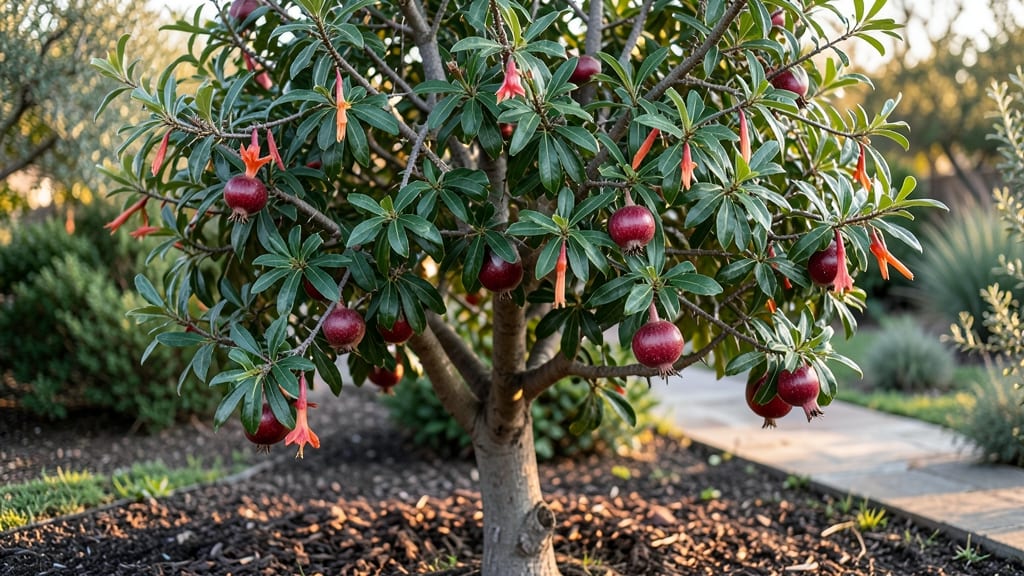
Your Georgia pomegranate tree could yield three times more fruit this year with just a few strategic cuts. I learned the hard way that pruning isn’t just about shaping—it’s about sunlight access, air circulation, and encouraging those iconic ruby-red clusters to form.
The key is timing: winter dormancy is prime, but summer thinning keeps branches from overloading with fruit.
You’ll need sharp pruning shears, a ladder for taller trees, and a clear day to avoid sap bleeding. Focus on removing dead wood first, then thin out crowded branches to let light reach the center.
Georgia’s humid summers mean diseases lurk, so clean cuts prevent infections. I’ve seen trees go from sparse harvests to heavy clusters just by opening up the canopy.
By mid-spring, you’ll notice new growth where you pruned, and by harvest season, those branches will bend under the weight of plump pomegranates. The fruit stays sweeter and more vibrant when the tree isn’t struggling to support too many at once.
Plus, pruned trees resist pests better—Georgia’s heat already stresses them enough.
This works for both dwarf varieties (like ‘Wonderful’) and standard trees in zones 7-9. Just adjust timing slightly for coastal areas where winters are milder. Ready to transform your tree’s productivity? Let’s get those shears out.
📚 In This Guide
- What you need
- Instructions
- Tips and common mistakes
- Wrapping up and next steps
What you need
- ● Pruning shears – Bypass-style, sharp, and sterilized (for small branches)
- ● Loppers – 8-10 inch, for thicker branches (½”–1½” diameter)
- ● Pruning saw – For stubborn, larger limbs (1½”+ diameter)
- ● Gloves – Heavy-duty, cut-resistant (pomegranate thorns are no joke!)
- ● Disinfectant – Rubbing alcohol (70%+) or bleach solution (1 part bleach to 9 parts water)
- ○ Pruning sealant (optional) – For sealing large cuts (½”+ diameter)
- ● Trash bags or bucket – For collecting pruned debris
- ● Rake or broom – To clean up fallen leaves/branches
- ● Ladder (if needed) – Sturdy, extendable (6–10 ft, depending on tree height)
- ○ Marking twine or tape (optional) – To tag branches for removal
- ● Knowledge of tree structure – Study your pomegranate’s growth habits (e.g., suckers, water sprouts, deadwood)
- ● Weather check – Prune on a dry, sunny day (avoid windy or rainy conditions)
- ● Safety first! – Wear long sleeves/pants (thorns!) and eye protection
How to prune a pomegranate tree in Georgia for maximum fruit
Georgia’s heat and humidity demand smart pruning—here’s the approach I’ve used to keep my trees thriving for years.
Understand the Right Time to Prune
Pomegranates need precise timing. In Georgia’s climate, prune late winter to early spring, just as buds begin to swell but before new growth starts. This is when the tree is dormant but ready to respond to shaping. Avoid pruning in summer—it stresses the tree and invites pests.
If you must remove dead or diseased branches outside this window, do it anytime. But for structural pruning, wait. You’ll know it’s the right moment when you see tiny green buds along the branches—those are your cue to begin.
Remove Dead, Diseased, or Damaged Branches First
Start with sanitation. Use clean, sharp pruning shears to cut out any branches that are dead, diseased, or crossing others. Look for branches with no leaves, brown or blackened wood, or signs of fungal growth like black spots or powdery residue. Remove these first—they’re the tree’s weak points.
Cut at a 45-degree angle just outside the branch collar (the swollen area where the branch meets the trunk). Never leave stubs, and don’t cut into the trunk itself. This step keeps your tree healthy and prevents the spread of disease.
Shape the Tree for Airflow and Light
Pomegranates need good airflow to prevent fungal issues like powdery mildew. Aim to create an open center by removing branches that grow inward or rub against others. Start from the outside and work your way in, thinning out about 20-30% of the canopy if needed.
Focus on keeping the tree’s natural shape while encouraging light penetration. You’ll see where branches are too dense—they’ll have fewer leaves and smaller fruit. Prune these back to a strong lateral branch or bud. This step ensures your tree produces bold, healthy fruit.
Lightly Prune for Fruit Production
After shaping, do a light prune to encourage fruit production. Remove any suckers (shoots growing from the base or trunk) and water sprouts (fast-growing vertical shoots). These compete with fruit-bearing branches for energy. Cut them back to a bud or branch junction.
For established trees, prune back about one-third of last year’s growth on fruit-bearing branches. This stimulates new growth and more flower buds, which means bigger harvests. You’ll notice new buds forming within a few weeks of pruning—this is your sign you’ve done it right.
Post-Pruning Care for Georgia’s Climate
After pruning, apply a thin layer of mulch around the base of the tree (but not touching the trunk) to retain moisture and regulate soil temperature. Water deeply to help the tree recover. In Georgia’s heat, pomegranates need consistent moisture, especially after pruning.
Monitor the tree for new growth and adjust care as needed. If you see signs of stress like yellowing leaves or wilting, give it more water or shade temporarily. With the right pruning, your pomegranate tree will reward you with bold, juicy fruit for years to come.
Tips & tricks for pruning pomegranate trees in Georgia
Georgia’s unique climate can turn pruning into a challenge—but these tricks will help you avoid common mistakes and keep your tree thriving.
Timing is Everything: The late winter to early spring window is critical because Georgia’s warm winters can trick trees into growing prematurely. If you prune too early, you risk exposing the tree to late frost; too late, and you disrupt bud formation. I always check for those tiny green buds—when they appear, that’s your exact cue to start. In years with unusually warm winters, delay pruning until you see consistent bud swell for at least 3-4 days.
Tool Sharpness Prevents Damage: Dull pruning shears can crush branches instead of making clean cuts, which invites disease. I invest in bypass pruners with sharp, stainless steel blades and hone them before each pruning session. For thicker branches, use a pruning saw—but always sterilize it with rubbing alcohol between cuts to prevent spreading fungal spores. This step alone has saved my trees from multiple infections over the years.
Branch Angle Matters More Than You Think: That 45-degree angle isn’t just for looks—it’s about directing water away from the cut. When you angle cuts just outside the branch collar, rainwater flows down the trunk instead of pooling at the wound, which drastically reduces rot risk. I mark my cuts with a pencil first to visualize the angle before making the final cut. For larger branches, I make a second cut about 1-2 inches further out to prevent tearing.
Post-Pruning Hydration is Non-Negotiable: After pruning, your tree has just lost its protective leaf canopy and is working hard to heal. In Georgia’s heat, I water deeply right after pruning—about 1-2 gallons per inch of trunk diameter—and then again every 3-4 days until new growth appears. The mulch layer helps, but don’t let it touch the trunk. I use pine straw because it breaks down slowly and adds organic matter without compacting the soil.
Pro Tips for Pomegranate Tree Georgia
- Georgia’s unique climate can turn pruning into a challenge—but these tricks will help you avoid common mistakes and keep your tree thriving.
- Timing is Everything: The late winter to early spring window is critical because Georgia’s warm winters can trick trees into growing prematurely.
- Tool Sharpness Prevents Damage: Dull pruning shears can crush branches instead of making clean cuts, which invites disease.
Frequently asked questions
Got questions about growing and pruning pomegranate trees in Georgia’s climate? Here are some of the most common ones—and their straightforward answers to keep your tree thriving!
When is the best time to prune a pomegranate tree in Georgia?
The ideal time is late winter or early spring (February–March), just before new growth begins. Avoid pruning in fall or winter when the tree is dormant, as cold snaps can stress it. Georgia’s mild winters may tempt early pruning, but wait until frost risk passes!
How do I prune a pomegranate tree in hot/humid Georgia summers?
Summer pruning is possible but risky—stick to light shaping or deadwood removal if needed. If you must prune, do it early morning or late evening to avoid heat stress. Over-pruning in summer can invite fungal diseases. Focus on airflow by thinning dense branches instead.
What if my pomegranate tree isn’t producing fruit? Can pruning help?
Yes! Overgrown trees often skip fruiting. Prune to open the canopy (remove 15–20% of branches) and encourage sunlight penetration. Also, ensure your tree gets 6+ hours of sun daily and well-draining soil. Young trees may need 2–3 years to bear fruit—patience pays off!
Why are my pomegranate leaves yellowing or dropping after pruning?
Yellow leaves can signal over-pruning, stress, or pests. If it’s recent pruning, wait a few weeks—new growth should emerge. Check for aphids or spider mites (common in Georgia’s humidity) and treat with neem oil if needed. Avoid fertilizing right after pruning; wait until spring.
Can I grow a pomegranate tree in containers in Georgia?
Dwarf varieties like ‘Wonderful’ or ‘Eversweet’ thrive in containers (15+ gallon pots). Prune regularly to control size, and move pots indoors or to a sheltered spot if temps drop below 20°F. Use fast-draining soil and fertilize lightly during growing seasons for best results.
Wrapping up and next steps
Growing a thriving pomegranate tree in Georgia is all about balancing patience, proper care, and smart pruning—whether you’re shaping it for beauty or boosting your harvest! 🌱 With the right tools, techniques, and timing, you’ll be rewarded with vibrant blooms and juicy fruits year after year.
Now that you’re armed with expert tips, it’s time to roll up your sleeves and give your tree the attention it deserves.
Ready to take the next step? Start by scheduling a quick pruning session this month—even a small trim can make a big difference! And don’t forget to monitor your tree’s health seasonally, adjusting your approach as it grows. Happy pruning, and here’s to a bountiful harvest ahead! 🍇✨