
Trees
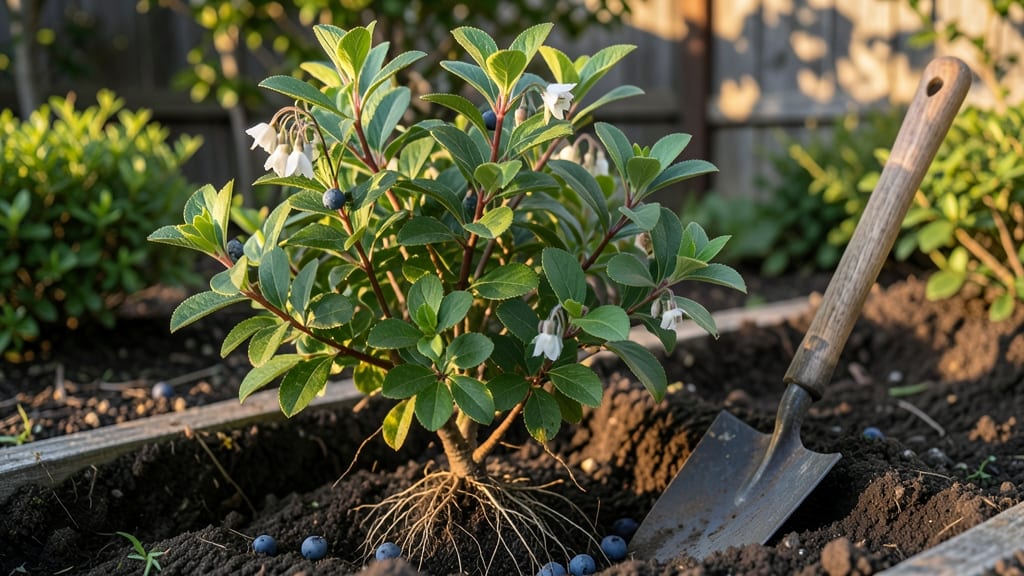
Planting blueberry trees in late fall gives their roots a natural cold-stress that hardens them for spring—something I learned the hard way after my first soft-planted bushes struggled through two winters.
The trick isn't just digging a hole; it's about soil acidity, drainage, and choosing the right variety for your climate. My highbush plants now produce pounds of fruit each season, while the lowbush ones thrive in colder zones where highbush would fail.
Start with well-draining soil—blueberries hate soggy roots—and mix in peat moss or sulfur to lower the pH to 4.5-5.5, the sweet spot for these finicky shrubs. Space highbush varieties 6-10 feet apart and lowbush 3-5 feet, since they spread aggressively.
A 3-inch layer of pine needles as mulch keeps the soil acidic and retains moisture, cutting down on summer watering chores.
What you'll end up with is a bush that bears fruit for decades, with berries that burst with flavor straight off the branch. The first harvest might take 2-3 years, but the patience pays off—my bushes now produce so heavily that neighbors ask for cuttings.
The key is consistent moisture the first year and avoiding fertilizers that raise pH.
Works for both backyard orchards and small urban lots—just adjust spacing and choose dwarf varieties if needed. Here's how to get those roots established right from the start.
📚 In This Guide
- What you need
- Instructions
- Tips and common mistakes
- Wrapping up and next steps
What you need
- ● Blueberry plants: 1–3 bare-root or container-grown plants (choose Northern Highbush for colder zones or Southern Highbush for milder climates).
- ● Shovel or trowel: 1 medium-sized digging tool (for planting and amending soil).
- ● Garden gloves: 1 pair (to protect hands from thorns and soil).
- ● Mulch: 2–3 inches of pine straw, wood chips, or peat moss (blueberries love acidic mulch!).
- ● Soil amendments: 1–2 bags of peat moss or sphagnum peat (to acidify soil).
- ● 1 bag of compost (for nutrients).
- ○ Optional: Sulfur (if soil pH is > 5.5; test first!).
- ● Watering can or hose: 1 with a gentle spray nozzle (blueberries hate soggy roots!).
- ● pH testing kit: 1 (to ensure soil pH is 4.5–5.5).
- ● Epsom salt: 1 box (for magnesium boosts during growth).
- ● Blueberry fertilizer: 1 bottle of acid-loving plant food (like Miracle-Gro Azalea, Camellia & Rhododendron).
- ● Row cover or frost cloth: 1 (for young trees in early spring/fall).
- ● Pruning shears: 1 pair (for shaping and removing dead branches).
- ● Drip irrigation system: 1 (to keep soil consistently moist).
- ● Compost tea: 1 batch (for a nutrient-rich soil boost).
How to plant blueberry trees for maximum cold hardiness and fruit production
Here's the method I've used to establish thriving blueberry bushes that survive harsh winters and produce heavy crops.
Choose the Right Location and Prepare the Soil
Blueberries thrive in acidic soil with a pH between 4.5 and 5.5—this is non-negotiable for root health and fruit production. Before planting, test your soil with a home pH kit or send a sample to your local extension office. If your soil is alkaline, amend it with sulfur or peat moss several months before planting to allow the pH to adjust naturally.
Select a site that receives full sun (6-8 hours daily) but with afternoon shade in hot climates to prevent leaf scorch. Blueberries also need well-draining soil—they'll rot in soggy ground. If your native soil is heavy clay, mix in 2-3 inches of organic matter (like compost or leaf mold) into the top 12 inches of soil when digging the hole. Work the amendments in thoroughly so roots can access them immediately.
Dig the Planting Hole and Prepare the Root System
Dig a hole twice as wide as the root ball but only as deep as the container—blueberries don't like being buried too deep. Gently remove the tree from its container and loosen the roots if they're circling or compacted. This prevents "pot-bound shock" where roots struggle to expand into new soil. I like to tease the roots apart with my fingers, being careful not to damage the feeder roots.
Soak the bare roots in lukewarm water for 10-15 minutes before planting. This revives any roots that may have dried out during transport. While the roots soak, place a 3-inch layer of pine fines or sulfur-treated wood chips at the bottom of the hole—this maintains acidity right where the roots will grow. Avoid fresh wood chips, which can rob nitrogen from the soil.
Plant and Mulch for Winter Protection
Position the tree so the top of the root ball sits 1-2 inches above ground level—this prevents water from pooling around the stem. Backfill the hole with the amended soil, tamping gently as you go to eliminate air pockets. Water deeply to settle the soil around the roots, then add a 3-inch layer of acidic mulch (like pine straw or pine bark) extending 2-3 feet out from the stem. Keep mulch 6 inches away from the trunk to prevent rot.
Here's the thing—blueberries need cold stratification to flower properly. In colder climates, plant in early fall so the roots establish before winter. In warmer zones, plant in late fall or winter to mimic natural dormancy. Water weekly during the first growing season, aiming for 1-1.5 inches of water per week—more in extreme heat. You'll know you're doing it right when the soil stays evenly moist but not soggy around the root zone.
Prune and Fertilize for First-Year Establishment
Skip pruning in the first year—let the tree focus on root growth. Instead, remove any suckers that form at the base in spring, as they drain energy from the main plant. In early spring, apply a slow-release, acidic fertilizer (like one formulated for azaleas or rhododendrons) following package rates. Blueberries are light feeders, so over-fertilizing causes weak growth and poor fruit set.
Watch for new growth in early spring—this is your signal the tree is establishing. If leaves appear yellow with green veins, your soil pH is too high. If they're small and pale, the plant needs more sunlight or nutrients. Adjust accordingly, but remember: blueberries are slow to show stress, so give them at least two growing seasons before expecting heavy fruit production. Patience here pays off with stronger, hardier bushes.
Tips & tricks for planting blueberry trees
These practical insights will help you establish blueberry bushes that thrive through winter and burst with fruit come harvest season.
Soil pH Precision: Testing your soil pH is non-negotiable—blueberries demand that 4.5-5.5 range like nothing else. I've seen gardeners add sulfur or peat moss months ahead, but if you're in a hurry, you can use cottonseed meal (1/2 pound per 100 square feet) as a quick acidifier. Just remember, it takes time to adjust pH, so don't wait until planting day to test.
Root System Revival: That 10-15 minute lukewarm water soak for bare roots isn't just a suggestion—it's crucial. I've watched roots that dried out during transport revive right before my eyes. Pro tip: Add a splash of seaweed extract (1 teaspoon per gallon) to the soaking water to give those roots an extra boost of nutrients and stress resistance.
Mulching Strategy: The 3-inch layer of acidic mulch extending 2-3 feet out from the stem isn't just for looks—it's a winter survival tactic. In colder climates, pile an extra 4-6 inches of mulch around the base for insulation. Just remember to keep it 6 inches away from the trunk to prevent rot. I've seen blueberries freeze back to the ground when mulch was piled too high against the trunk.
Watering Wisdom: Those 1-1.5 inches of water per week should be delivered deeply—not just a quick sprinkle. Use a rain gauge or tuna can to measure, and water in the morning so foliage has time to dry. In extreme heat, you might need to increase to 2 inches per week, but never let the soil become soggy. Blueberries hate wet feet more than anything else.
Pro Tips for Planting Blueberry Trees
- These practical insights will help you establish blueberry bushes that thrive through winter and burst with fruit come harvest season.
- Soil pH Precision: Testing your soil pH is non-negotiable—blueberries demand that 4.5-5.5 range like nothing else.
- Root System Revival: That 10-15 minute lukewarm water soak for bare roots isn't just a suggestion—it's crucial.
Frequently asked questions
Got questions about planting blueberry trees? You’re not alone!
Here are some of the most common concerns—plus expert answers to help you grow thriving bushes with minimal stress.
When is the best time to plant blueberry trees?
Plant in early spring (just as buds swell) or fall (6–8 weeks before frost). Avoid extreme heat or cold—roots need time to establish before stress sets in. Southern climates? Opt for fall planting to beat summer drought.
Can I plant blueberry trees in containers?
Containers work well for dwarf varieties (like ‘Top Hat’ or ‘Peach Sorbet’). Use well-draining soil, a pot ≥15 gallons, and acidic fertilizer (pH 4.5–5.5). Just move pots to partial shade in winter if temps drop below 10°F.
Why are my blueberry leaves turning yellow?
Yellow leaves often signal pH issues (too alkaline) or nutrient deficiencies (like iron or nitrogen). Test soil pH—amend with sulfur if needed. Overwatering or poor drainage can also cause stress. Prune affected branches and adjust care.
How do I protect blueberry trees in cold climates?
Mulch heavily (4–6 inches of pine straw or wood chips) around the base. Wrap young trees in burlap or use frost blankets. Avoid heavy snow buildup—gently brush it off branches. Everbearing varieties need extra winter protection.
Do blueberry trees need cross-pollination?
Most standard varieties (like ‘Duke’ or ‘Bluecrop’) are self-pollinating, but planting two different varieties nearby boosts fruit yield. Exception: Southern highbush types (e.g., ‘O’Neal’) may need a pollinator partner for best results.
Wrapping up and next steps
Planting blueberry trees is a rewarding journey that combines patience with the promise of luscious, homegrown fruit.
By selecting the right variety, preparing cold-stressed roots, and nurturing them with proper care, you’re setting the stage for a thriving, productive tree. Now that you’re equipped with the know-how, there’s no time like the present to roll up your sleeves and get planting!
Start by marking your calendar for early spring or fall—when the soil is cool but workable—and watch your blueberry dreams take root. Happy growing! 🌱