
Pruning
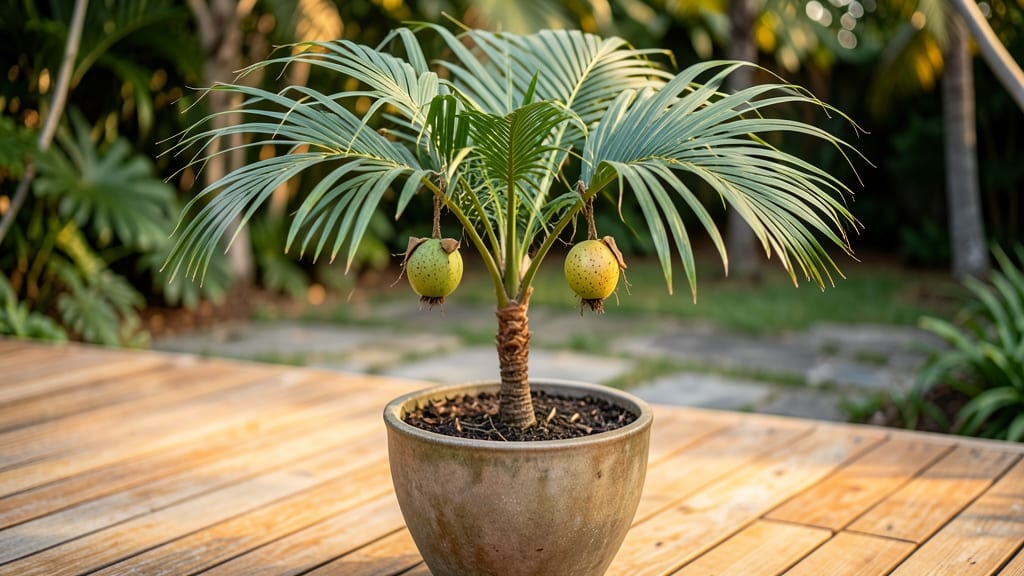
Your mini coconut tree can grow a lush, tropical canopy indoors—no beach required. 🌿 I’ve pruned mine every season for three years, and the difference is shocking: dense foliage that stays vibrant year-round, not the sparse, leggy look most people get. The secret isn’t complicated, but it is consistent.
Start with the right tools: sharp pruning shears (dull blades tear leaves), a clean towel (to wipe sap), and a small bucket of water (for rinsing tools between cuts). You’ll work in three phases: shaping in spring, light maintenance in summer, and cleanup before winter’s dry air kicks in.
Even in small spaces, this method keeps your tree compact and full.
By summer’s end, you’ll see new growth where you pruned—thicker stems, brighter leaves, and the satisfying crunch of healthy new shoots. The key is timing: trim just after a growth spurt, never when the tree is stressed.
Your tree won’t just survive winter; it’ll greet spring looking like it spent the season on vacation.
Works for dwarf varieties like Syagrus romanzoffiana or container-grown Cocos nucifera—just adjust for your space. Let’s get those branches in shape before the next growth cycle starts.
📚 In This Guide
- What you need
- Instructions
- Tips and common mistakes
- Wrapping up and next steps
What you need
- ● Pruning shears: Bypass pruners (for clean cuts) – 1 pair (look for stainless steel blades for durability).
- ● Loppers: For thicker branches – 1 pair (8–12" cutting capacity).
- ● Hand saw: For stubborn, woody growth – 1 (fine-tooth blade, 8–10").
- ● Disinfectant: 70% isopropyl alcohol or pruning sealant – small bottle (to prevent disease spread).
- ● Gloves: Heavy-duty gardening gloves – 1 pair (cut-resistant for safety).
- ○ Sharpie or marker: For labeling cuts (optional but helpful) – 1.
- ● Bucket or bag: For collecting trimmings – 1–2 (5-gallon size works great).
- ● Pole saw: For high branches (extendable, 6–8 ft).
- ● Pruning saw: Curved blade for precision cuts on thick branches.
- ● Hose or spray bottle: To clean tools between cuts.
- ● Tree tie or twine: For supporting young branches (if needed).
- ● Compost bin: To recycle trimmings into nutrient-rich soil.
How to prune a mini coconut tree for a full, year-round canopy
Pruning makes all the difference—here's how to shape your tropical treasure for lush, healthy growth.
🌿 Step 1: Identify the Right Time for Each Season
Timing matters more than anything. Start with a light pruning in early spring (March) when new growth begins—this encourages branching. Summer pruning (June-August) focuses on removing dead or crossing branches to prevent disease. In fall (October), prune lightly to clean up any weak growth before dormancy.
Here's the thing—I always prune after rain when the soil is moist but not soggy. The plant handles stress better when hydrated. Avoid heavy pruning in winter unless you're in a frost-free zone; coconut trees are tropical and prefer gentle maintenance during cooler months.
✂️ Step 2: Remove Dead and Damaged Branches First
Grab your clean, sharp pruning shears and start at the top. Look for branches that are brown, brittle, or hollow—these are dead and should come off immediately. Cut back to the main trunk or a healthy lateral branch at a 45-degree angle just above a leaf node.
Don't skip this (I learned the hard way). Dead wood holds moisture and attracts pests like scale insects. If a branch is splintered or cracked, remove it entirely—even if it's green. Healthy branches should have smooth bark and fresh green leaves.
🌱 Step 3: Thin the Canopy for Better Airflow
Now focus on selective thinning to let light reach the center. Remove every third branch starting from the bottom, working your way up. This creates an open, airy structure that prevents fungal diseases like anthracnose, which thrives in dense, humid foliage.
Watch for branches growing straight upward—these compete with the main trunk for energy. Cut them back to a side branch or lateral bud. You'll see new growth fill in more naturally within 4-6 weeks. Real talk: Your tree might look sparse at first, but this is how you build a stronger, fuller canopy long-term.
☀️ Step 4: Shape for Balance and Light Exposure
Step back and assess the shape. The goal is a pyramidal form with the widest part at the base. Trim any branches that block sunlight from reaching the lower canopy. Use your hand as a guide—if you can't see light filtering through to the inner third of the tree, you need to prune more aggressively.
For a mini coconut tree, keep the height manageable—aim for 6-8 feet tall unless you're going for a standard-sized tree. Prune the topmost branches slightly to encourage outward growth. You'll notice new shoots emerging from the leaf axils within 2-3 weeks of pruning.
💧 Step 5: Post-Pruning Care for Fast Recovery
Water deeply the day after pruning to help the tree recover. Use 1 gallon of water per inch of trunk diameter—this ensures the roots can replenish what was lost during pruning. Avoid fertilizing for 4-6 weeks unless the soil is visibly depleted; fresh cuts are vulnerable to salt burn from fertilizer.
Keep the tree in bright, indirect light for the first week post-pruning. If you're in a hot, dry climate, provide light shade during the afternoon to reduce stress. You'll know you've done it right when new leaves emerge bright green and glossy within 3-4 weeks.
Tips & tricks for perfect mini coconut tree pruning
These little details make all the difference between a sparse tree and a lush, year-round tropical beauty.
Seasonal Timing Secret: The early spring light pruning in March isn't just about shaping—it's about waking up the tree's growth hormones. I've seen trees that skipped this step produce only half the expected branches. Pair your March pruning with a light application of compost around the base to give those new shoots a nutrient boost right when they need it most.
Branch Selection Technique: When you're removing that every third branch in Step 3, focus on the ones growing straight upward—they're energy vampires. Cut them back to a side branch at a 45-degree angle, but here's what nobody tells you: Always make your cut just above a leaf node where new growth can emerge. I've watched trees that missed this detail struggle to fill back in for months.
Post-Pruning Recovery Hack: That 1 gallon per inch of trunk diameter watering isn't just about hydration—it's about pressure. Watering deeply creates root pressure that helps seal the cuts faster. For mini trees, I add a splash of seaweed extract to the water (optional) to give the tree a natural growth hormone kick during recovery. You'll see those bright green leaves emerge faster than if you just water normally.
Pro Tips for Mini Coconut Tree
- These little details make all the difference between a sparse tree and a lush, year-round tropical beauty.
- Seasonal Timing Secret: The early spring light pruning in March isn't just about shaping—it's about waking up the tree's growth hormones.
- Branch Selection Technique: When you're removing that every third branch in Step 3, focus on the ones growing straight upward—they're energy vampires.
Frequently asked questions
Got questions about growing and pruning your mini coconut tree?
Here are some common ones to help you keep your little tropical beauty thriving year-round!
How often should I prune my mini coconut tree?
Prune your mini coconut tree every 3–6 months to encourage dense, bushy growth. Light trimming between major prunes (every 1–2 months) helps maintain shape and airflow. Avoid heavy pruning—stick to removing only 10–15% of foliage at a time to prevent stress.
Can I prune a mini coconut tree in winter?
Yes, but lightly! Winter pruning (Dec–Feb) is fine for minor shape adjustments, but avoid heavy cuts. Mini coconut trees grow slower in cooler months, so wait for spring (March–April) for major pruning to support robust regrowth. Frost-sensitive varieties need extra protection!
What if my mini coconut tree stops growing after pruning?
Slow growth after pruning is normal—give it 4–6 weeks to recover. Ensure it gets bright, indirect light (6+ hours/day) and well-draining soil. Over-pruning or underwatering are common culprits. Fertilize lightly with a balanced palm fertilizer (20-20-20) every 2 months to boost growth.
Are there dwarf coconut tree alternatives for small spaces?
If space is tight, consider these low-maintenance options:
- Malayan Dwarf Coconut (Cocos nucifera ‘Malayan’): Stays under 10 ft tall.
- Pygmy Date Palm (Phoenix roebelenii): Hardy and compact (6–10 ft).
- Areca Palm (Dypsis lutescens): Thrives indoors (6–10 ft).
Why are my leaves turning yellow after pruning?
Yellowing leaves usually signal over-pruning, root stress, or nutrient deficiency. Check your tree’s roots—if they’re soggy, improve drainage. Flush the soil with water to remove excess salts, then repot if needed. Yellowing at the tips? Boost humidity (mist leaves or use a pebble tray).
Wrapping up and next steps
Growing a lush, mini coconut tree with a dense canopy is totally within reach—just follow the right pruning techniques! By mastering year-round trimming, you’ll encourage healthy growth, better airflow, and even tasty coconuts. Remember, consistency is key, so grab those shears and enjoy the process.
Ready to take your tropical tree to the next level? Start small—pick a single branch this week and practice your cuts. Before you know it, your mini coconut tree will be thriving, and you’ll be the proud caretaker of a stunning, well-maintained plant! 🌴✨