
Pruning
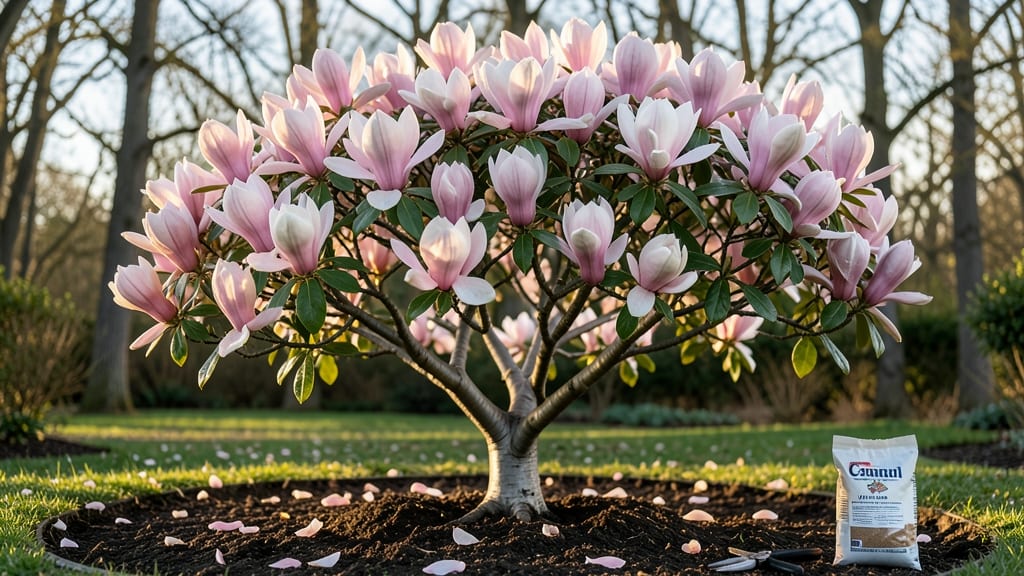
This is your magnolia tree’s moment to shine—spring pruning unlocks bold new growth and keeps those iconic blooms coming year after year. 🌸 I’ve pruned magnolias for over a decade, and these four cuts make all the difference between a tree that just survives and one that thrives with glossy leaves and showstopping flowers.
The secret isn’t cutting more—it’s cutting smart. Focus on shaping the canopy, removing dead wood, and thinning crowded branches to let light and air circulate. Most gardeners over-prune, stripping away next year’s blooms, but with this method, you’ll actually encourage bigger, healthier flowers.
Just grab your pruners and a ladder, and we’ll get started in 30 minutes.
By summer, you’ll see the payoff: vibrant green foliage and clusters of blooms that outshine anything from last year. The tree will look fuller, grow stronger, and even resist pests better. Spring pruning isn’t just maintenance—it’s an investment in next season’s beauty.
Works for all magnolia types—southern, star, or saucer—whether you’ve got a mature giant or a young sapling. Let’s make those branches work for you instead of against you.
📚 In This Guide
- What you need
- Instructions
- Tips and common mistakes
- Wrapping up and next steps
What you need
- ● Pruning shears: Bypass pruners (sharp, 6–8" blades) for clean cuts on small branches (under ½ inch thick). Quantity: 1 pair.
- ● Loppers: Bypass or anvil-style (8–10" handles) for medium branches (½–2 inches thick). Quantity: 1 pair.
- ● Pruning saw: Curved-tooth or folding saw for thick branches (2+ inches). Quantity: 1.
- ● Ladder: Aluminum or fiberglass (extendable to 12–16 ft, depending on tree height). Quantity: 1 (or a sturdy stool for low branches).
- ● Disinfectant: 70% isopropyl alcohol or bleach solution (1 part bleach to 9 parts water) to sterilize tools between cuts. Quantity: Small spray bottle or wipe.
- ● Gloves: Heavy-duty, cut-resistant (gardening or pruning-specific). Quantity: 1 pair.
- ● Safety glasses: ANSI-rated to protect from debris. Quantity: 1 pair.
- ○ Tree wound dressing: Optional but helpful (e.g., Tanglefoot Tree Wound Pruning Sealer) for larger cuts. Quantity: Small tube.
- ● Weather check: Prune on a dry, cloudy day (avoid wind or rain). Ideal temps: 50–70°F.
- ● Tree health assessment: Inspect the magnolia for diseased or dead branches (they’ll snap easily—remove first!).
- ● Safety first: Wear closed-toe shoes and avoid working alone if the tree is tall.
- ● Cleanup supplies: Garden bags or buckets for debris (quantity: 1–2).
Step-by-step guide for spring magnolia tree pruning
Here's how to refresh your magnolia with precision cuts that keep it healthy and stunning.
✂️ Step 1: Remove Dead or Damaged Branches First
Start by identifying branches that are completely dead, broken, or diseased—these are your first targets. Look for branches without leaves, brown or cracked bark, or any signs of fungal growth like black spots or mold. Use sharp, clean pruning shears to make a clean cut just outside the branch collar, the swollen area where the branch meets the trunk.
Real talk: If you hesitate to cut a branch, wait until after the tree has fully leafed out in late spring. That's when you'll spot hidden damage more easily. Never leave stubs—uneven cuts invite decay and weaken the tree's structure.
✂️ Step 2: Thin Out Crowded Branches for Better Airflow
Next, focus on branches that are rubbing against each other or growing inward toward the center of the tree. These compete for sunlight and nutrients, creating weak spots. Select 2-3 branches per section to remove—never take more than a third of the tree's foliage in one season. Cut these branches back to their point of origin, where they meet another branch or the trunk.
I like to step back every few cuts to visualize the tree's shape. You're aiming for an open, vase-like structure that lets sunlight reach all branches. If your magnolia has a natural, layered look, preserve that—don't force symmetry unless it's already there.
✂️ Step 3: Shape the Tree for Optimal Growth
Now it's time for light shaping. Magnolias grow best with a slightly rounded top and open sides. Look for branches that are growing straight up or outward too aggressively—these can be trimmed back by about one-third to encourage a more balanced shape. Avoid heavy pruning on young trees; they're still establishing their structure.
Here's the thing—magnolias bloom on old wood, so never cut back flowering branches. Wait until after the blooms fade to prune. If you're unsure which branches produced flowers, leave them alone. You'll see new growth emerging from the sides of branches where you made cuts—that's your signal you're on the right track.
✂️ Step 4: Clean Up Small Branches and Encourage New Growth
Finally, tackle any small branches that are crossing or growing in awkward directions. These can be trimmed back to a lateral bud or side branch. Avoid cutting into the trunk or large branches unless absolutely necessary—magnolias heal slowly, and large cuts can take years to close properly.
After pruning, give your magnolia a deep watering to help it recover. You'll notice fresh, vibrant growth appearing within 4-6 weeks. This is your reward for careful pruning—healthier branches and more abundant blooms next season.
Tips & tricks for perfect magnolia tree spring pruning
These simple strategies will help you prune your magnolia like a pro—keeping it healthy and blooming beautifully for years.
Tool Prep: Always use sharp, clean pruning shears to make precise cuts that heal properly. Dull blades tear bark and damage the tree. I sterilize my tools with rubbing alcohol between cuts on different branches to prevent spreading disease—especially important when dealing with potential fungal growth.
Timing Secret: Wait until after your magnolia has fully leafed out in late spring to spot hidden damage. This is when you'll see dead branches that blend in during winter. Never prune during the blooming season—magnolias bloom on old wood, so cutting back flowering branches means fewer flowers next year. Mark branches that bloomed this season with ribbon if you're unsure.
Visual Cues: When trimming back branches in Step 3, look for the "one-third rule"—cutting back by about one-third encourages balanced growth. For small branches in Step 4, trim back to a lateral bud or side branch (you'll see it as a small bump on the stem). This encourages new growth in the right direction and prevents unsightly stubs that invite decay.
Recovery Care: After pruning, give your magnolia a deep watering to help it recover. The 4-6 weeks mentioned for new growth is when the tree is most vulnerable—keep the soil consistently moist but not waterlogged. I also add a layer of mulch around the base to retain moisture and protect roots from temperature fluctuations.
Pro Tips for Magnolia Tree Spring
- These simple strategies will help you prune your magnolia like a pro—keeping it healthy and blooming beautifully for years.
- Tool Prep: Always use sharp, clean pruning shears to make precise cuts that heal properly.
- Timing Secret: Wait until after your magnolia has fully leafed out in late spring to spot hidden damage.
Frequently asked questions
Got questions about pruning your magnolia tree this spring? You’re not alone! Here are some of the most common concerns—and straightforward answers—to help you get started with confidence.
When is the exact best time to prune a magnolia tree in spring?
The ideal window is right after flowering but before new leaves fully unfurl—typically late April to early May in most U.S. zones. Avoid pruning during active blooming, as you’ll trim off next year’s flowers! For late-blooming varieties (like Magnolia grandiflora), wait until June.
Can I prune a magnolia tree in late spring if I missed the ideal window?
Yes, but with caution! If you miss the post-bloom window, light pruning is still safe—just avoid heavy cuts. Focus on removing dead wood or crossing branches. For major shaping, wait until late summer or early fall (after 50% of leaves drop) to minimize stress on the tree.
Why does my magnolia tree bleed sap when I prune it?
Sap bleeding (or "weeping") is normal and harmless! Magnolias produce a sticky, milky sap when cut, especially in spring. To reduce mess, prune on a dry, cool day and seal cuts with pruning sealant (optional but helpful for large branches). The sap will dry within a few days.
What’s the difference between pruning a Southern magnolia vs. a star magnolia?
| Southern Magnolia (M. grandiflora) | Star Magnolia (M. stellata) |
|---|---|
| Prune after flowering (May–June) to avoid cutting off next year’s large, fragrant blooms. | Prune immediately after flowering (March–April)—these trees bloom on old wood but tolerate light spring cuts. |
| Focus on removing dead wood and suckers; minimal shaping needed. | Light shaping is fine, but avoid heavy pruning to preserve next year’s showy star-shaped flowers. |
My magnolia’s branches look weak after pruning—what went wrong?
Over-pruning or cutting too close to the trunk (within 1/4 inch) can stress the tree. Signs of trouble: Wilting leaves, excessive sap, or slow regrowth. Fix it by watering deeply and applying a balanced fertilizer (like 10-10-10). If branches die back, they’ll likely sprout new growth by next spring!
Wrapping up and next steps
Spring is the perfect time to shape your magnolia tree into a stunning, year-round centerpiece! By mastering the four strategic cuts—thinning, heading back, deadwood removal, and shaping—you’ll encourage lush blooms, robust growth, and a healthier tree.
Remember, patience and precision pay off, so take your time and enjoy the process.
Ready to transform your magnolia? Grab your pruners, follow your plan, and watch your tree thrive! 🌸✂️ For extra confidence, snap a before-and-after photo—your future self (and neighbors!) will love it.
Next step: Mark your calendar for late spring or early summer to give your magnolia another light trim if needed.