
Pruning
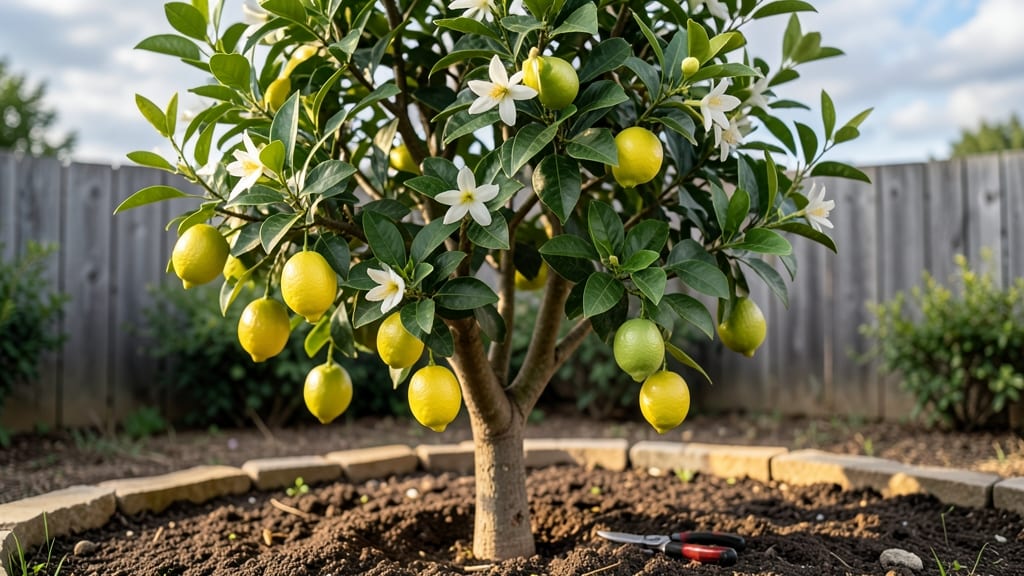
Growing a lemon tree in New Jersey might seem tricky, but I’ve done it—and so can you. 🌿 The key is pruning it right to handle our cold winters and hot summers. My tree thrives because I prune it twice a year, shaping it for both health and fruit production.
New Jersey’s climate means you’ll need to protect your lemon tree from frost, but the right pruning helps it recover faster in spring. Start with sharp pruners and focus on removing dead or crossing branches first. This keeps air flowing and reduces disease risks.
By summer, you’ll see vibrant new growth and fragrant blooms—proof it’s working. The tree becomes more productive each year, and you’ll harvest sweet lemons even in small spaces. Just watch for pests like aphids and keep the soil moist but not soggy.
Whether you’re growing indoors near a sunny window or outdoors in a protected spot, these pruning tips work. With patience, your lemon tree will reward you with fresh fruit and lush foliage year after year.
📚 In This Guide
- What you need
- Instructions
- Tips and common mistakes
- Wrapping up and next steps
What you need
- ● Pruning shears: Bypass pruners (sharp, clean, and sterilized with rubbing alcohol or bleach to prevent disease). Opt for ergonomic handles for comfort.
- ● Loppers: For thicker branches (½”–1.5” diameter). Choose bypass-style loppers for precision cuts.
- ● Hand saw: For stubborn, larger branches (1.5”+ diameter). A pruning saw with a curved blade works best.
- ● Gloves: Heavy-duty, cut-resistant gloves (e.g., mechanics’ gloves or gardening gloves with reinforced palms).
- ● Disinfectant: 70% isopropyl alcohol or 10% bleach solution (1 part bleach to 9 parts water) to sterilize tools between cuts.
- ○ Sealing wax or pruning paste: Optional but helpful for sealing large cuts (e.g., Tanglefoot Tree Wound Pruning Sealer).
- ● Bucket or bag: For collecting pruned branches (a 5-gallon bucket or heavy-duty trash bag works).
- ● Ladder or step stool: For tall trees. Ensure it’s stable and rated for your weight.
- ● Timing: Prune in late winter/early spring (Feb–March in NJ) for best results. Avoid pruning during active blooming or fruiting.
- ● Weather: Choose a dry, overcast day (wet conditions can spread disease).
- ● Safety gear: Safety glasses (to protect from debris) and closed-toe shoes.
- ● Tree health check: Inspect your lemon tree for pests (e.g., aphids, scale) or disease (e.g., root rot) before pruning.
- ● Plan ahead: Sketch a rough pruning map of your tree’s structure (or take photos) to visualize cuts.
- ● Tree pruning spray: Hydrogen peroxide (3%) or neem oil spray to disinfect cuts and deter pests.
- ● Labeling tags: For marking branches to remove (useful if pruning in stages).
- ● Compost bin: To recycle pruned branches (lemongrass or small branches can compost!).
- ● Extension pole: For high branches (e.g., 3–6 ft telescoping pole with pruners attached).
How to prune a lemon tree for strong growth in NJ's climate
Here's the straightforward method I use to keep my lemon tree thriving through NJ's cold winters and hot summers.
✂️ Step 1: Prune After the Last Frost but Before New Growth
Wait until after your last frost date—typically mid-April in NJ—but before you see new buds forming. This timing ensures you're not cutting off potential blooms or damaging tender new growth. I like to prune in early April when the tree is still dormant but spring is approaching.
Use sharp, clean pruning shears to make cuts at a 45-degree angle, about ¼ inch above a leaf node or outward-facing bud. This angle helps water run off the cut and prevents rot. Avoid cutting into old, healed cuts—you'll see these as slightly raised, darker lines on the branches.
✂️ Step 2: Remove Dead, Diseased, or Crossing Branches
Start by inspecting the tree for branches that are dead, diseased, or rubbing against each other. Dead branches are easy to spot—they're brown, brittle, and don't have any leaves. Diseased branches may have dark spots, ooze, or unusual growths. Cut these out first, making your cuts 6-12 inches back from the damage to ensure you remove the entire infected area.
Next, look for branches that cross or rub against each other. These create wounds that invite pests and disease. Remove the weaker of the two branches—usually the one growing inward or downward. You'll know you're on the right track when the tree's structure starts to look more open and airy.
☀️ Step 3: Thin Out the Canopy for Better Airflow and Sunlight
Lemon trees need good airflow to prevent fungal diseases, especially in NJ's humid summers. Step back and look at the tree's overall shape. Aim to create an open center by removing branches that grow inward or downward. Start from the bottom and work your way up, cutting back branches that are growing too close together.
I like to keep the tree's height manageable—around 6-8 feet for indoor/outdoor pots in NJ. If your tree is taller, focus on pruning the top branches to encourage bushier growth lower down. Watch for new shoots that start growing from the base of the tree; these are great candidates for pruning to shape the tree and encourage a fuller form.
✂️ Step 4: Lightly Prune to Encourage Blooms After Summer Fruit Set
Once your lemon tree has finished fruiting in late summer, give it a light pruning to promote new growth and next year's blooms. Focus on trimming back any overly long or leggy branches by about ⅓ of their length. This encourages the tree to branch out and become fuller.
Pay special attention to branches that are growing too close to the ground. These can become weak and may not produce as many fruits. Cut them back to a strong, outward-facing bud. Avoid heavy pruning at this stage—you want to give the tree enough time to recover before winter sets in.
🪴 Step 5: Clean Up and Protect Your Tree for Winter
After pruning, clean up all the debris from the ground around your tree. This helps prevent pests and diseases from taking hold over winter. I also like to apply a thin layer of mulch around the base—but not touching the trunk—to help insulate the roots during NJ's cold winters.
If you're growing your lemon tree in a container, move it to a protected spot like a garage or basement during the coldest months. Keep it in a cool, 50-60°F environment and reduce watering to once every 2-3 weeks. This mimics the tree's natural dormancy period and helps it stay healthy until spring.
Tips & tricks for pruning lemon trees in NJ's climate
Here's what I've learned after years of keeping lemon trees thriving in NJ's tricky seasons.
Timing is Everything: NJ's last frost date is your golden window—mid-April is ideal. I check the National Weather Service for local frost predictions, but I also watch my tree closely. If you see tiny buds forming, wait a few more days. The goal is to prune when the tree is still dormant but spring is on the horizon. This balance prevents cutting off potential blooms while avoiding tender new growth that can't handle cold snaps.
Tool Prep Matters: Your pruning shears are just as important as your timing. Always sterilize them with rubbing alcohol between cuts, especially when dealing with diseased branches. I also sharpen my shears annually—dull blades tear wood instead of making clean cuts. For larger branches, I use a pruning saw, but I keep it dedicated to my lemon tree to avoid cross-contamination with other plants.
Visual Cues for Perfect Cuts: When making that 45-degree angle cut, look for the leaf node or outward-facing bud. It should be about ¼ inch below your cut. I imagine drawing a line from the bud outward—this is where new growth will emerge. For thicker branches, I make the cut just outside the branch collar (that swollen area where the branch meets the trunk). This collar contains healing tissues that help the tree recover faster.
Seasonal Adjustments: NJ's summers are humid, so I focus extra on airflow during Step 3. I stand back and squint—if I can't see through the center of the tree, I need to thin more. For container trees, I might prune even more aggressively since they're more vulnerable to fungal issues. In winter, I reduce watering to every 2-3 weeks and keep the tree in a cool 50-60°F environment, which mimics its natural dormancy period.
Pro Tips for Lemon Tree Nj
- Here's what I've learned after years of keeping lemon trees thriving in NJ's tricky seasons.
- Timing is Everything: NJ's last frost date is your golden window—mid-April is ideal.
- Tool Prep Matters: Your pruning shears are just as important as your timing.
Frequently asked questions
When is the best time to prune a lemon tree in NJ?
The ideal time to prune is late winter or early spring (February–March), just before new growth begins. This helps stimulate fresh blooms and fruit while avoiding cold snaps. Light pruning can also occur in summer (June–July) to shape the tree and improve airflow.
Can I prune my lemon tree in winter? What about NJ’s cold snaps?
Prune only after the last frost (around mid-April in NJ) to avoid damaging tender new growth. If you must prune in winter, do so mildly—focus on removing dead branches or crossing limbs. Heavy pruning in cold weather stresses the tree. Pro tip: Wait until temps consistently stay above 40°F (4°C).
How much should I trim? Will cutting too much hurt my lemon tree?
Remove no more than 25–30% of the tree’s foliage in one session. Over-pruning reduces energy for fruit production and blooms. Focus on:
- Dead or diseased branches (cut to the main trunk).
- Crossing or rubbing branches (trim at the branch collar).
- Overcrowded growth (thin out to improve sunlight penetration).
Will pruning my lemon tree affect fruit production?
Pruning correctly actually boosts fruit production by improving air circulation and sunlight exposure. However, avoid heavy pruning during the fruiting season (spring–summer). If your tree isn’t blooming, prune in late winter to encourage new growth and flowers. Fun fact: Lemon trees produce more fruit when pruned to an open, vase-like shape!
What if my lemon tree isn’t blooming after pruning?
Lack of blooms could stem from:
- Insufficient sunlight: NJ lemon trees need 6+ hours of direct sun daily.
- Nutrient deficiency: Feed with citrus-specific fertilizer (high in nitrogen in spring, potassium in fall).
- Overwatering: Let soil dry slightly between waterings.
- Age: Young trees (under 3 years) may not bloom yet.
How do I protect my lemon tree from NJ’s harsh winters?
Lemon trees are tender perennials and need winter care:
- Move potted trees to a garage or sheltered spot (50–60°F/10–15°C).
- Wrap outdoor trees with burlap or frost cloth (remove in spring).
- Avoid fertilizing in winter—wait until early spring.
- Mulch the base with straw or pine needles for insulation.
Wrapping up and next steps
Growing a thriving lemon tree in NJ is entirely within your reach—with the right pruning techniques, your tree will reward you with abundant blooms, juicy lemons, and lush foliage year after year! 🌿🍋 Remember, consistency is key: prioritize seasonal trimming, remove dead branches, and shape your tree for airflow and sunlight.
Whether you're a beginner or a seasoned gardener, every snip brings you closer to a bountiful harvest.
Ready to take the next step? Mark your calendar for your first pruning session—spring is the perfect time to start! Grab your tools, put on your gardening gloves, and give your lemon tree the care it deserves. Happy pruning! 🌱✨