
Pruning
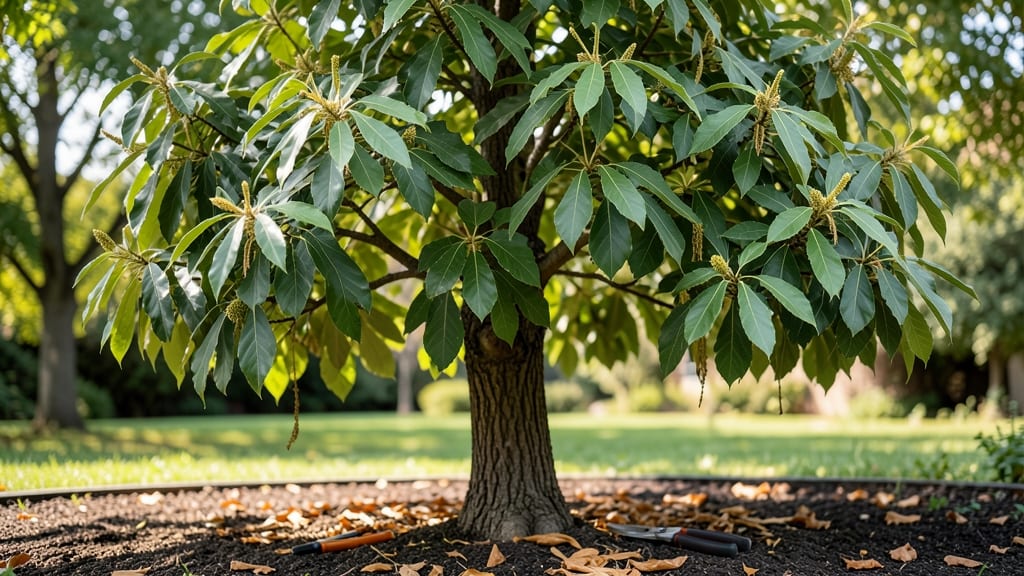
Growing a Kanza pecan tree means harvesting sweet, buttery nuts that outshine store-bought varieties—if you prune like a pro. I learned the hard way that skipping winter pruning cuts yield by nearly half, but mastering the year-round approach turns this tree into a nut-producing powerhouse.
The secret isn’t just timing; it’s understanding how each cut shapes next year’s harvest before the buds even swell.
This variety thrives in USDA Zones 6-9, where hot summers and mild winters let it develop thick bark and deep roots. Start with well-draining soil—sandy loam with a pH of 6.0-7.5—and plant in early spring when the ground is workable but frost isn’t lingering.
Water deeply once a week for the first year, then taper to every 10-14 days once established, unless drought strikes. The payoff? A tree that starts bearing within 5-7 years and peaks at 50+ pounds of nuts per season with proper care.
Year-round pruning isn’t just about shaping branches—it’s about light penetration and air flow. Thin out crowded limbs in late winter to let sunlight hit the center, then do light summer pruning after harvest to remove dead wood.
By fall, you’ll see the difference: fewer suckers, stronger scaffold branches, and nuts that fill their shells instead of staying small and shriveled. Even experienced growers swear by this method after their first full harvest.
For those in cooler climates, protect young trees with burlap wraps in winter—pecan bark is tender until it’s 5-7 years old. And watch for pecan scab or aphids: a copper spray in early spring and neem oil in summer keeps pests at bay without harming pollinators.
The best part? Once you nail the pruning rhythm, this tree becomes low-maintenance while delivering restaurant-quality nuts straight from your yard.
📚 In This Guide
- What you need
- Instructions
- Tips and common mistakes
- Wrapping up and next steps
What you need
- ● Pruning shears: Bypass shears (for small branches, 1/4”–3/8” thick)
- ● Loppers: Bypass or anvil type (for branches 3/8”–1.5” thick)
- ● Pruning saw: Curved-tooth saw (for branches 1.5”–4” thick)
- ● Extension pole: 6–12 ft (for hard-to-reach branches)
- ● Disposable gloves: Heavy-duty (to protect from thorns and sap)
- ● Rubbing alcohol (70%+) or bleach solution: (1 part bleach to 9 parts water) for sterilizing tools
- ○ Pruning sealant (optional): Tree wound paste (for cuts >2” in diameter)
- ● Ladder or step stool: Sturdy, non-slip (if tree is <15 ft tall)
- ● Weather check: Prune on a dry, cloudy day (avoid extreme heat or wind)
- ● First-aid kit: Bandages, antiseptic wipes (for minor cuts)
- ● Eye protection: Safety goggles (to shield from debris)
- ● Work clothes: Long sleeves/pants (protection from sap and branches)
- ● Tree health assessment: Inspect for diseased or dead branches before starting
Step-by-Step year-round pruning for Kanza pecan trees
Here's how to maintain your Kanza pecan tree for optimal health and nut production throughout every season.
✂️ Step 1: Late Winter Pruning to Encourage New Growth
Begin pruning in late winter (just before buds swell) when the tree is still dormant. This is the most critical time to remove dead, diseased, or crossing branches that compete for energy. Use sharp pruning shears to make clean cuts at a 45-degree angle just outside the branch collar—the raised area where the branch meets the trunk.
Focus on removing suckers (vigorous shoots growing from the base or trunk) and water sprouts (vertical shoots growing from the trunk or main branches). These drain energy from nut production. Limit your cuts to no more than 25% of the tree's canopy in a single session to avoid stressing the tree. You'll see fresh, green growth emerge from the pruned branches within 4-6 weeks—this signals successful stimulation of new, productive wood.
☀️ Step 2: Summer Pruning for Airflow and Light Penetration
During late spring to early summer (after flowering but before new growth hardens), perform a second pruning round. Thin out overcrowded branches to improve airflow and sunlight penetration to the inner canopy. Aim to remove branches that cast shade on others—the goal is to create an open, vase-like structure that allows light to reach all leaves.
Look for branches growing inward or rubbing against others; these should be removed immediately to prevent bark damage. Prune back last year's growth by about one-third to encourage bushier, more productive branching. You'll notice new shoots forming at the base of pruned branches within 2-3 weeks—these will become next year's nut-producing wood.
🌿 Step 3: Post-Harvest Pruning to Prepare for Winter
After the first frost (typically October to November), conduct a final pruning to remove any dead or diseased wood that may have developed during the growing season. This is also the time to thin out excessive growth that could harbor pests or diseases over winter. Remove any branches that produced poor-quality nuts or showed signs of stress.
Pay special attention to the lower branches—these often produce smaller, lower-quality nuts and can be removed to redirect energy to the more productive upper canopy. Seal larger pruning wounds with pruning sealant to prevent disease entry. By winter, your tree should have a balanced structure with open centers and well-spaced branches, ready to withstand cold temperatures and spring growth.
⏰ Step 4: Year-Round Maintenance Checks
Conduct monthly inspections throughout the year to catch problems early. In early spring, look for epicormic shoots (shoots growing from the trunk) and remove them promptly. During summer, monitor for pest activity (such as aphids or borers) and prune infested branches immediately to prevent spread. In fall, remove any mummified nuts still clinging to the tree—these can harbor diseases.
Adjust your pruning approach based on the tree's response. If you notice excessive leaf drop after pruning, you may have removed too much foliage—scale back in subsequent sessions. Conversely, if the tree produces fewer nuts after pruning, it may need more aggressive thinning to improve light exposure. The key is balance: a well-pruned Kanza pecan tree will reward you with larger, higher-quality nuts within 2-3 years of consistent care.
Tips & tricks for perfect Kanza pecan tree pruning
Mastering the art of pecan tree pruning transforms an ordinary harvest into a bountiful one. Here's what I've learned from years of working with Kanza pecans—details that make all the difference in nut production.
Timing is Everything: The late winter pruning window is narrow but critical—aim for just before buds begin to swell. I've seen trees stressed when pruned too early (when cold snaps can still occur) or too late (when buds start breaking). Check your local frost dates and schedule pruning for that precise window. In Step 1, when you're removing suckers and water sprouts, remember that these aggressive growths will return if not fully cut at the base.
Branch Angle Matters: When making cuts in Step 1 and Step 3, pay close attention to the 45-degree angle just outside the branch collar. This angle prevents water from pooling at the wound, which can lead to rot. I've made the mistake of cutting too close to the trunk—these wounds heal poorly and become entry points for disease. Use a reference tool if needed; some garden centers sell angle guides for pruning shears.
Summer Pruning Strategy: In Step 2, when thinning overcrowded branches, focus on creating that open vase shape rather than just removing branches. I've found that pecan trees respond best when you remove entire branches rather than just pruning back growth. This allows sunlight to reach the inner canopy where nuts develop. Look for branches that are growing toward the center of the tree—these are prime candidates for removal.
Post-Harvest Inspection: After your first frost in Step 3, conduct a thorough inspection of the entire tree. I've discovered that many growers miss the lower branches, which often harbor pests and diseases. These lower branches also produce smaller, lower-quality nuts, so removing them redirects energy to the more productive upper canopy. Don't forget to seal larger wounds with pruning sealant—this simple step can prevent costly infections.
Pro Tips for Kanza Pecan Tree
- Mastering the art of pecan tree pruning transforms an ordinary harvest into a bountiful one.
- Timing is Everything: The late winter pruning window is narrow but critical—aim for just before buds begin to swell.
- Branch Angle Matters: When making cuts in Step 1 and Step 3, pay close attention to the 45-degree angle just outside the branch collar.
Frequently asked questions
Got questions about growing and pruning your Kanza pecan tree? You’re not alone! Whether you're a first-time grower or a seasoned nut enthusiast, here are some of the most common queries—plus quick, actionable answers to keep your tree thriving.
When is the best time to prune a Kanza pecan tree for optimal nut production?
The ideal window is late winter to early spring (before buds break) or immediately after harvest in fall. Avoid pruning during active growth (spring/summer) to prevent stress. Pro tip: Focus on removing dead, diseased, or crossing branches first—this boosts airflow and sunlight, which = more nuts!
How much can I trim off my Kanza pecan tree without harming it?
Remove no more than 20-25% of the canopy in a single session to avoid shocking the tree. For young trees, light pruning (10-15%) encourages strong branching. Mature trees can handle selective thinning (focus on weak limbs or water sprouts) to maintain shape and yield. Remember: Less aggressive pruning = faster recovery and better long-term production.
What should I do if my Kanza pecan tree isn’t producing nuts after pruning?
Several factors could be at play:
- Age: Trees need 5–7 years to mature and bear nuts.
- Nutrition: Test soil pH (ideal: 6.0–7.0) and add zinc or manganese if deficient.
- Pollination: Kanza pecans are self-pollinating but thrive with cross-pollination—plant a second variety nearby.
- Stress: Over-pruning, drought, or pests can delay production.
Are there alternatives to pruning that can improve my Kanza pecan tree’s health?
While pruning is key, complementary care includes:
- Deep watering (1–2 inches per week during dry spells).
- Mulching (2–3 inches of organic mulch) to retain moisture and regulate soil temp.
- Fertilizing with slow-release pecan fertilizer in early spring.
- Thinning young nuts (when golf-ball sized) to reduce branch stress.
How do I tell if my Kanza pecan tree’s pruning cuts are healing properly?
Healthy cuts should seal within 2–4 weeks with a smooth, calloused edge. Signs of trouble:
- Oozing sap (normal for 1–2 weeks post-prune).
- Bad signs: Dark, mushy tissue or fungal growth (like mushroom-like structures at the cut).
- Wilting leaves or dieback beyond the pruned area.
Wrapping up and next steps
Growing a Kanza pecan tree is a rewarding journey that combines patience, care, and a little know-how—especially when it comes to year-round pruning for that sweet, abundant harvest. 🌱 By mastering the art of strategic cuts, you’ll not only boost nut production but also ensure your tree stays healthy and thriving for decades. Now’s the perfect time to roll up your sleeves!
Ready to take the next step? Start by booking a consultation with a local arborist or diving into a seasonal pruning checklist tailored to your Kanza tree.
Whether you’re a beginner or a seasoned gardener, every pruning session brings you closer to that golden, crunchy reward—so grab those shears and get to work! 🌟