
Pruning
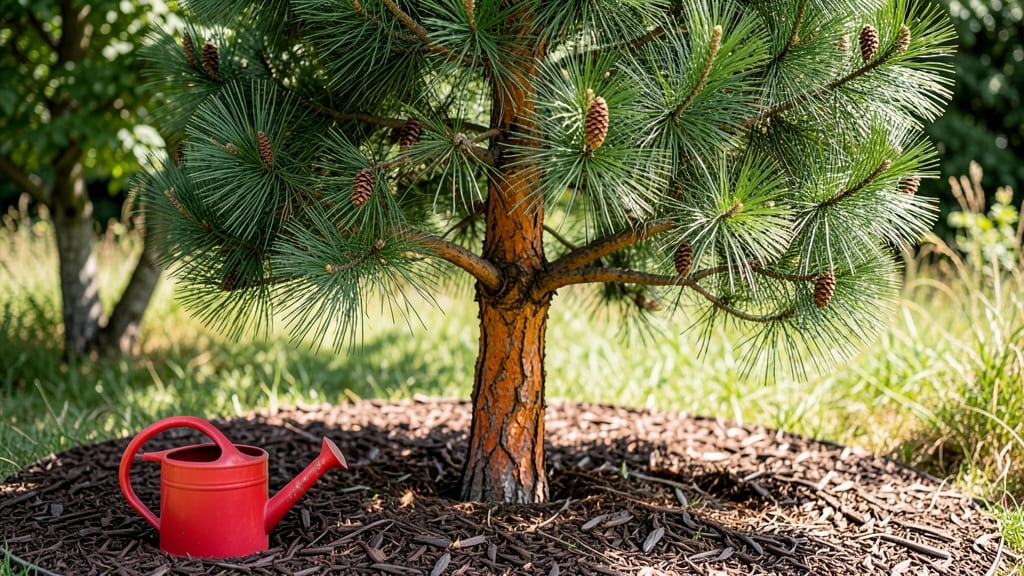
Caring for a pine tree starts with understanding its stubborn independence—these trees thrive on neglect almost as much as they do on attention. 🌲 My first pine nearly died when I overwatered it, thinking more moisture meant happier growth, but pines hate soggy roots.
The key is matching their natural habitat: well-draining soil, infrequent deep watering, and full sun exposure.
Pines need sandy, acidic soil (think forest floor, not clay) and 6-8 hours of sunlight daily. Most species tolerate drought once established, but young trees need 1-2 inches of water weekly—less in winter.
Pruning? Only remove dead branches or crossing limbs with clean cuts; pines don’t respond well to heavy trimming. Norfolk Island pines are more forgiving than Scotch pines, which need strict winter protection.
You’ll notice sharper needles, fewer brown patches, and steady growth when you get it right. The biggest mistake? Overwatering or fertilizing too much—pines prefer lean soil. With the right balance, your tree will become a low-maintenance evergreen that outlasts most garden trends. Let’s get those roots happy.
Seasonal tweaks matter: mulch heavily in winter (but keep it 3 inches from the trunk) and reduce watering in fall. Pines handle heat better than cold snaps, so watch for frost damage on young shoots.
Once you master the basics, your pine will reward you with decades of lush greenery—and almost no effort.
📚 In This Guide
- What you need
- Instructions
- Tips and common mistakes
- Wrapping up and next steps
What you need
- ● Pruning shears or loppers – Bypass pruners (for clean cuts) or loppers (for thicker branches). Choose sterilized, sharp tools (e.g., Felco or Fiskars brands).
- ● Hand saw – A pruning saw with a curved blade for larger branches (avoid chainsaws—pine bark is delicate!).
- ● Gloves – Heavy-duty, cut-resistant gloves (e.g., Mechanix or garden gloves) to protect from sap and sharp needles.
- ● Disinfectant (70% isopropyl alcohol or bleach solution) – 1 part bleach to 9 parts water to sterilize tools between cuts and prevent disease.
- ● Watering can or hose with a gentle nozzle – Pines prefer deep watering; a soaker hose or drip irrigation works best for young trees.
- ○ Mulch (optional but recommended) – 3–4 inches of organic mulch (pine bark, wood chips, or straw) to retain moisture and regulate soil temperature.
- ● Fertilizer (slow-release or organic) – Balanced 10-10-10 or pine-specific fertilizer (e.g., Espoma Pine-Tone). Avoid high-nitrogen fertilizers.
- ● Soil pH test kit – Pines thrive in acidic soil (pH 4.5–6.0). Test annually and amend with sulfur or peat moss if needed.
- ● Tree wound dressing – Pruning sealant (e.g., Tanglefoot Tree Wound Pruning Seal) for large cuts (though many experts recommend skipping this—pines heal naturally!).
- ● Fungicide (preventative) – Copper fungicide (e.g., Bonide Copper Fungicide) if your area has a history of pine diseases like needle blight.
- ● Tree tie or support straps – For young or storm-damaged pines to stabilize weak branches.
- ● Wheelbarrow or bucket – For hauling mulch, soil amendments, or pruned branches.
Step-by-Step guide to pine tree care for year-round health
Pines thrive with consistent care—here’s the straightforward approach I’ve used for decades.
🌱 Step 1: Assess Your Pine’s Light and Soil Needs
Pines demand full sun—at least 6-8 hours daily—but tolerate partial shade in hot climates. Check your tree’s needles: if they’re sparse on one side, rotate the pot or trim nearby obstructions. Most pines prefer well-draining, slightly acidic soil (pH 4.5-6.0). Amend heavy clay with 3-4 inches of coarse sand or pine bark fines to prevent root rot.
Dig a small hole around the base (but not too deep) to inspect drainage. If water pools after 30 minutes, your soil needs more organic matter. I add 2-3 inches of pine needles or oak leaves annually to maintain acidity naturally. This mimics their forest floor habitat and keeps roots happy.
☀️ Step 2: Water Deeply but Infrequently
Pines hate soggy roots—water only when the top 2-3 inches of soil feel dry to the touch. Deep watering once every 7-10 days (more in summer, less in winter) encourages strong root growth. Use a soaker hose or drip irrigation to deliver moisture slowly at the base, avoiding wet foliage.
Here’s the trick: water in the morning so excess evaporates by evening. Overwatering causes yellow needles and fungal issues. If your pine’s lower branches turn brown, it’s often a sign of overwatering—not drought. Let the soil dry between waterings, especially in winter when growth slows.
✂️ Step 3: Prune for Shape and Health
Prune pines only in late winter or early spring before new growth starts. Remove dead, diseased, or crossing branches with clean, sharp pruners. Cut just outside the branch collar (the swollen area where the branch meets the trunk) to prevent damage. Never prune more than 25% of the canopy at once—pines are slow to recover.
Watch for spider mites or pine bark beetles—common pests that attack stressed trees. If you see sawdust-like frass (beetle droppings) or webbing, treat with neem oil or introduce beneficial nematodes to the soil. Healthy pines rarely need pesticides, but early intervention saves them.
🪴 Step 4: Fertilize Strategically
Pines grow slowly and need minimal feeding. In early spring, apply a slow-release, acid-loving fertilizer (look for low nitrogen, high phosphorus/potassium like 10-10-10 or 7-7-7). Scatter ½ cup per inch of trunk diameter around the root zone, then water deeply. Avoid high-nitrogen fertilizers—they burn roots and promote weak growth.
For container-grown pines, I mix 1 tablespoon of sulfur into the soil annually to maintain acidity. Organic options like cottonseed meal (high in nitrogen) or bone meal (for phosphorus) work well. Over-fertilizing causes needle burn and stunted growth—so less is always better.
⏰ Step 5: Protect in Winter and Summer
Young pines need winter protection if temperatures drop below 10°F. Wrap the trunk with burlap and mulch heavily (but not against the trunk) with 3-4 inches of wood chips. In summer, shade cloth (30-50%) prevents needle scorch if your climate exceeds 90°F. Pines adapt to cold better than heat stress.
Check for winter desiccation (needle browning) in windy areas. A light anti-desiccant spray (like Wilt-Pruf) helps retain moisture. For container pines, move them to a sheltered spot or indoors (if small) during freezing snaps. Pines are tough, but extreme conditions test their limits.
Tips & tricks for perfect pine tree care
Keeping your pine tree thriving year-round doesn't have to be complicated—just a few key adjustments make all the difference. Here's how I've learned to optimize each step for long-term health.
Soil Test Strategy: Before amending your soil, grab a simple pH test kit (available at garden centers) to confirm the acidity level. Pines prefer 4.5-6.0 pH, but many garden soils run neutral or alkaline. If your test shows above 6.5, mix in elemental sulfur (¼ cup per 10 square feet) to lower the pH gradually. I test again after 3 months to avoid over-acidifying, which can harm beneficial soil microbes.
Watering Timing Secret: The 7-10 day watering schedule in Step 2 assumes average conditions, but adjust based on your microclimate. In containers, soil dries faster—check moisture every 5-7 days in summer. For in-ground pines, use the screwdriver test: push a 6-inch screwdriver into the soil. If it resists, water deeply. If it slides in easily, wait another day. Morning watering prevents fungal issues, but if you must water in the evening, avoid wetting the needles to reduce disease risk.
Pruning Precision: When pruning in late winter/early spring, focus on branches that are dead, diseased, or crossing—these are the only ones you should remove. Live branches with green needles should stay intact. For larger branches, make your cut just outside the branch collar (the swollen area where the branch meets the trunk) using sharp, clean pruners. If you're unsure, make a small notch first to test the cut before committing. This prevents tearing the bark and invites pests.
Fertilizer Application Tip: The ½ cup per inch of trunk diameter measurement might seem small, but pines are sensitive to over-fertilizing. For container-grown pines, reduce this by half since their root systems are more confined. I also recommend watering the soil first before applying fertilizer to prevent root burn. If you notice yellowing needles after fertilizing, flush the soil with water to leach out excess salts. And remember—less is more with pines!
Pro Tips for Care For A Pine Tree
- Keeping your pine tree thriving year-round doesn't have to be complicated—just a few key adjustments make all the difference.
- Soil Test Strategy: Before amending your soil, grab a simple pH test kit (available at garden centers) to confirm the acidity level.
- Watering Timing Secret: The 7-10 day watering schedule in Step 2 assumes average conditions, but adjust based on your microclimate.
Frequently asked questions
Got questions about keeping your pine tree healthy and happy? You’re not alone! Here are some of the most common concerns—plus quick, actionable answers to help you troubleshoot and care like a pro.
How often should I water a pine tree?
Pine trees are drought-tolerant but still need consistent moisture, especially in their first year or two. Water deeply once a week during dry spells (check soil 2–3 inches down—it should be slightly moist, not soggy). Mature pines usually thrive on natural rainfall but may need occasional watering in extreme heat. Pro tip: Mulch around the base (2–4 inches) to retain moisture and protect roots!
When is the best time to prune a pine tree?
Prune late winter or early spring (before new growth starts) to avoid stressing the tree. Avoid heavy pruning in summer or fall, as it can encourage disease or pest issues. For shape adjustments, trim dead or crossing branches anytime, but keep cuts clean and use sharp tools to prevent damage. Warning: Never prune more than 25% of the canopy in one session!
Why are my pine needles turning brown? What’s wrong?
Brown needles are usually a sign of stress, but the cause varies:
- Overwatering: Yellow/brown needles + mushy roots = root rot. Let soil dry out and improve drainage.
- Underwatering: Dry, crispy needles = thirsty tree. Water deeply and mulch.
- Pests (e.g., spider mites, bark beetles): Check for webs or tiny holes. Treat with neem oil or insecticidal soap.
- Sunburn: Sudden bright light can scorch needles. Gradually acclimate young trees to full sun.
If the issue persists, test for nutrient deficiencies (e.g., magnesium) or fungal diseases like dothistroma needle blight.
Can I top a pine tree to make it shorter?
No—never top a pine tree! Unlike some broadleaf trees, pines won’t regrow from a stump. Topping removes the protective leader (top bud), leading to deformed growth, disease, or death. Instead, prune selectively to shape or remove dead branches. For drastic height reduction, consider gradual thinning over years or consult an arborist for crown reduction techniques.
Are there low-maintenance pine tree alternatives?
If you want easy-care evergreens with less fuss, try these pine alternatives:
- Dwarf Alberta Spruce: Slow-growing, cold-hardy, and pest-resistant (great for small yards).
- Italian Stone Pine: Drought-tolerant with silvery-blue needles and minimal pruning needs.
- Eastern Red Cedar: Native, deer-resistant, and thrives in poor soil with almost no upkeep.
- Thuja (Arborvitae): Fast-growing, disease-resistant, and perfect for hedges or privacy screens.
Tip: Choose native species for your climate—they’re naturally adapted to local conditions!
Wrapping up and next steps
Caring for your pine tree is all about patience, consistency, and a little love—just like nurturing a prized plant in your garden! 🌲 With the right watering, pruning, and soil care, your pine will thrive year-round, offering beauty and shade for decades.
Now that you’re armed with these simple steps, take action: grab your tools, inspect your tree, and give it the attention it deserves. Your green thumb is ready—let’s keep that pine standing tall and proud! 💪