
Pruning
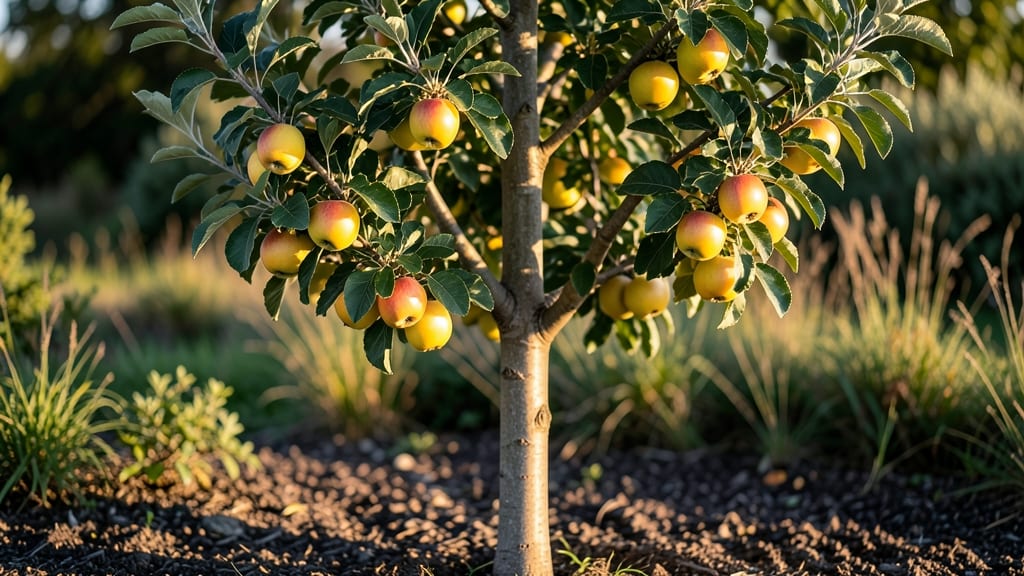
That Honeycrip apple tree thrives—and rewards you with the juiciest, sweetest bites—when you meet its simple growing needs. I’ve grown mine for five years, and the difference between a mediocre harvest and a jaw-dropping one comes down to sunlight, soil, and timing.
That first taste of a Honeycrisp in late summer? Worth every pruning session.
This variety thrives in well-drained soil with a pH between 6.0 and 6.5, and it demands full sun—at least 6-8 hours daily—to develop its signature crunch and flavor.
My tree produces 200+ pounds of fruit annually once established, but only if I prune aggressively in winter and thin fruit in summer. The secret weapon? A 3-inch layer of mulch around the base to lock in moisture and keep roots cool.
By late August, you’ll be picking apples that practically sing when you bite into them—juicy, honey-sweet, with just a hint of tartness. The tree also resists common apple diseases like scab and fire blight better than most varieties, though I still spray copper fungicide at bud break as insurance.
Your neighbors will ask where you bought your apples, and you’ll just smile while loading up your harvest.
Works in USDA Zones 3-8, though southern growers should choose a dwarf rootstock to avoid heat stress. Whether you’re a first-timer or a seasoned orchardist, the key is consistency—water deeply once a week during dry spells, fertilize in early spring, and never skip the winter pruning.
Let’s get your tree set up for that legendary harvest.
📚 In This Guide
- What you need
- Instructions
- Tips and common mistakes
- Wrapping up and next steps
What you need
- ● Honeycrisp apple tree: 1 bare-root sapling (2–3 years old, disease-resistant rootstock like Malling 9 or Antonovka)
- ● OR 1 potted tree (3–4 years old, with established root ball)
- ● Pruning tools: 1 pair bypass pruners (sharp, 7–8” blades for clean cuts)
- ● 1 pruning saw (for thick branches, 8–10” curved blade)
- ● 1 loppers (for medium branches, 18–24” reach)
- ● Safety gear: 1 pair gloves (cut-resistant, like Felco or Fiskars)
- ○ 1 pruning sealant (optional but recommended for large cuts, e.g., Tree Wound Pruning Seal)
- ● Planting supplies: 1 shovel (for digging, 10–12” wide)
- ● 1 garden fork (for loosening soil)
- ● 1 5-gallon bucket (for mixing soil amendments)
- ● Soil amendments: Compost (5–10 lbs) or aged manure (for nutrient-rich planting hole)
- ● Slow-release granular fertilizer (10-10-10 or organic options like fish emulsion)
- ● Tree support: 1 tree stake (2–3 ft tall, for young saplings)
- ● 1 tree tie (soft fabric or rubber, to secure stakes)
- ● Disease prevention: Copper fungicide (for apple scab prevention)
- ● Horticultural oil (for pest control, e.g., mite or aphid management)
- ● Mulch: Wood chips or straw (2–3 inches deep, to retain moisture)
Step-by-step instructions for planting and cultivating a Honeycrisp apple tree
Here’s how to establish a thriving Honeycrisp apple tree with minimal fuss and maximum flavor.
🌱 Step 1: Choose the Perfect Planting Site and Prepare the Soil
The Honeycrisp variety thrives in full sun—select a location that receives at least 6-8 hours of direct sunlight daily. Avoid low spots where cold air pools, as this can damage the tree during winter. I always test the soil pH before planting; Honeycrisp apples prefer a slightly acidic range of 6.0-6.5. If your soil tests higher, amend it with peat moss or sulfur to adjust the pH gradually.
Dig a hole twice as wide as the root ball but only as deep as the container it came in. Loosen the soil at the bottom of the hole with a garden fork to encourage root spread. The tree’s root system will need room to establish before it can support heavy fruit production. If your soil is heavy clay, mix in 2-3 inches of compost into the hole to improve drainage and fertility.
🪴 Step 2: Plant the Tree at the Right Depth and Stake for Support
Remove the tree from its container and gently tease out any circling roots—these can strangle the tree if left intact. Place the root ball into the hole so the graft union (the bump where the scion was attached) sits 2-3 inches above the finished soil line. This prevents the union from being buried, which can lead to disease or poor growth. Fill the hole with soil, tamping it down lightly as you go to eliminate air pockets.
Stake the tree only if necessary—young Honeycrisp trees can handle light winds, but if your area gets strong gusts, use two stakes placed on opposite sides of the tree. Attach them loosely with soft tree ties (never wire or anything that can cut into the bark). The goal is to provide temporary support, not restrict growth. Water the tree deeply after planting to settle the soil around the roots.
☀️ Step 3: Water Deeply and Mulch to Retain Moisture
Water the tree immediately after planting with 10-15 gallons of water, spread evenly over the root zone. This helps eliminate air pockets and encourages root contact with the soil. For the first 2-3 weeks, water 2-3 times per week to keep the soil consistently moist but not soggy. You’ll know it’s right when the top 2 inches of soil feel damp but not saturated.
Apply a 3-inch layer of organic mulch (like wood chips or straw) around the base of the tree, keeping it 6 inches away from the trunk to prevent rot. Mulch conserves moisture, regulates soil temperature, and suppresses weeds—all critical for young trees. Replenish the mulch annually as it breaks down. Avoid piling mulch against the trunk, as this can trap moisture and invite disease.
✂️ Step 4: Prune for Structure and Disease Prevention
Prune your Honeycrisp tree in late winter or early spring before new growth begins. Remove any dead, diseased, or crossing branches first—these can harbor pests or block sunlight from reaching the interior of the tree. Cut back to a healthy bud or branch collar, making clean cuts at a 45-degree angle to prevent water from pooling.
Open the center of the tree to improve airflow, which reduces the risk of fungal diseases like apple scab. Aim for a vase-shaped structure with a strong central leader and well-spaced branches. Avoid over-pruning; the goal is to shape the tree, not stunt its growth. After pruning, apply a fungicide spray (like neem oil) to protect fresh cuts from infection.
🌿 Step 5: Fertilize and Monitor for Pests/Diseases
Fertilize your Honeycrisp tree in early spring with a balanced, slow-release fertilizer (like 10-10-10) spread evenly over the root zone. Follow the package instructions for application rates—over-fertilizing can lead to excessive leaf growth at the expense of fruit production. In mid-summer, apply a low-nitrogen, high-phosphorus fertilizer to encourage root development and fruit set for the next season.
Keep an eye out for common apple tree pests like aphids, codling moths, and apple maggots. Use row covers for young trees or apply organic insecticidal soap as needed. For diseases, spray with a copper fungicide in early spring to prevent apple scab and powdery mildew. Regularly inspect leaves and fruit for signs of trouble—catching issues early makes them much easier to manage.
Tips & tricks for perfect Honeycrisp apple tree cultivation
Real talk: The difference between a mediocre apple harvest and a jaw-dropping bounty often comes down to these small but critical details.
Site Selection Secrets: While the instructions emphasize full sun, I've found that Honeycrisp trees actually perform best when they receive morning sun and afternoon shade in hot climates. This prevents sunburn on the fruit while still giving them the 6-8 hours of light they need. Look for locations with gentle slopes rather than flat areas—this improves drainage and prevents water pooling around the roots during heavy rains.
Soil Prep Strategy: The 2-3 inches of compost recommendation is solid, but I take it further by adding a handful of mycorrhizal fungi to the planting hole. These beneficial fungi form symbiotic relationships with tree roots, dramatically improving nutrient uptake and drought resistance. You can find them in powder form at garden centers—just mix it with the compost before planting. This is especially valuable in the first two years when your tree's root system is still developing.
Pruning Precision: When pruning in late winter, I focus on creating what arborists call "light interception zones"—basically, I space branches so sunlight can reach all parts of the canopy. Aim to remove about 15-20% of the tree's total volume during each pruning session. The 45-degree angle cuts are crucial, but I also make sure to leave a small "lip" of bark at the base of each cut to prevent water from running down the trunk and causing rot.
Fertilizer Timing: The early spring and mid-summer fertilization schedule works, but I've found that adding a light application of fish emulsion in early fall helps build root mass for the following year. This isn't a replacement for the spring fertilizer, but it gives your tree a nutritional head start. Just be careful not to fertilize after mid-August—this can stimulate late-season growth that won't harden off before winter, making the tree more susceptible to cold damage.
Pro Tips for Honeycrip Apple Tree
- Real talk: The difference between a mediocre apple harvest and a jaw-dropping bounty often comes down to these small but critical details.
- Site Selection Secrets: While the instructions emphasize full sun, I've found that Honeycrisp trees actually perform best when they receive morning sun and afternoon shade in hot climates.
- Soil Prep Strategy: The 2-3 inches of compost recommendation is solid, but I take it further by adding a handful of mycorrhizal fungi to the planting hole.
Frequently asked questions
Got questions about the Honeycrip apple tree? You’re not alone!
Whether you're a first-time grower or a seasoned orchard enthusiast, these answers will help you navigate pruning, care, and troubleshooting like a pro.
How often should I prune a Honeycrip apple tree?
Prune your Honeycrip apple tree twice a year: once in late winter (before buds swell) to shape the tree and remove dead wood, and again in summer (June–July) to thin out crowded branches. This keeps airflow strong and reduces disease risk. See our step-by-step pruning guide for specifics!
Why are my Honeycrip apples cracking?
Cracking is common in Honeycrip apples due to uneven watering or rapid growth. To prevent it, water deeply but consistently, especially during fruit development. Mulch the base to retain moisture, and avoid overhead irrigation. If cracks appear, they won’t affect taste—but harvest promptly to avoid pests!
When do Honeycrip apples ripen, and how do I know they’re ready?
Honeycrip apples typically ripen in late August to early October, depending on your climate. Check for readiness with the "twist test": Gently twist the fruit—if it separates easily from the stem, it’s ripe! Also, look for a golden-yellow blush and a sweet aroma near the stem.
Can I grow Honeycrip apples in containers or small spaces?
Yes! Honeycrip trees thrive in containers if you choose a dwarf or semi-dwarf variety (like ‘Honeycrip’ grafted onto M.9 or B.9 rootstock). Use a 15–20 gallon pot with well-draining soil, and place it in full sun. Just be prepared for smaller harvests—container trees need more TLC to bear fruit.
What pests or diseases should I watch for with Honeycrip apples?
Honeycrip apples are disease-resistant, but watch for apple maggots, aphids, or powdery mildew in humid climates. Preventive tips:
- Use row covers early in the season to block pests.
- Apply neem oil or insecticidal soap if you spot aphids.
- Prune for good airflow to deter mildew.
What’s a good alternative if Honeycrip trees aren’t available?
If Honeycrip apples are hard to find, try these disease-resistant, sweet varieties:
- ‘Liberty’ – Resistant to fire blight and scab, with crisp fruit.
- ‘Enterprise’ – Cold-hardy and scab-resistant, similar flavor.
- ‘Akane’ – Stunning red-yellow fruit, great for fresh eating.
Wrapping up and next steps
Growing a Honeycrip apple tree is a rewarding journey that yields juicy, sweet fruit while keeping pests and diseases at bay. With the right pruning techniques, soil care, and seasonal attention, you’ll enjoy a year-round harvest of flavorful apples—perfect for fresh eating, baking, or preserving. 🍏✨
Ready to take the next step? Start by sketching your tree’s layout based on your space, then gather your tools and dive into pruning with confidence. Your future harvests will thank you!