
Pruning
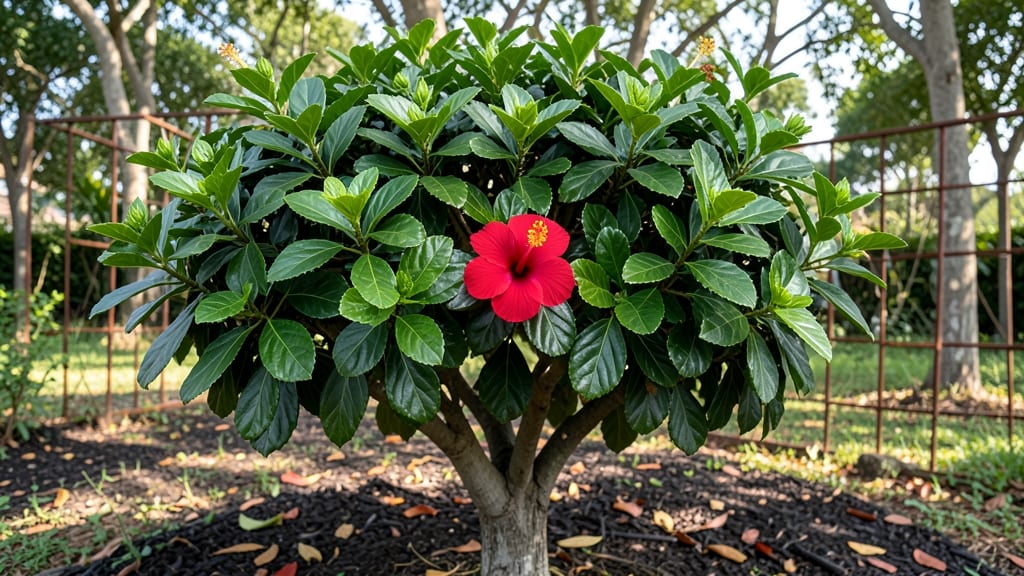
Proper hibiscus tree maintenance ensures your plant’s health—pruning isn’t just about shaping, it’s about unlocking next year’s boldest blooms and sturdiest branches.
I’ve learned the hard way that skipping this step means fewer flowers and weaker wood, but with the right timing and technique, you’ll transform a scraggly shrub into a showstopper. The key? Pruning in late winter or early spring when the tree’s dormant, before new growth begins.
That’s when you’ll see the most dramatic turnaround in just a few months.
Most people overcomplicate hibiscus maintenance, but the essentials boil down to three things: sharp pruners, a clean workspace, and a simple rule—cut back to the nearest outward-facing bud or branch.
I use sterilized shears to avoid disease, and I never remove more than a third of the foliage in one go. For outdoor trees, this means trimming dead wood first, then shaping the canopy to let sunlight reach the center. Indoor hibiscus?
The same rules apply, just with a little more patience for slower recovery.
What you’ll end up with is a tree that blooms like crazy—think clusters of vibrant flowers from early summer through frost, with branches that don’t snap in storms.
The secret’s in the details: watering deeply but infrequently, fertilizing with a balanced formula every 6-8 weeks, and watching for pests like aphids or spider mites. A quick spray of neem oil keeps them at bay without harsh chemicals. The payoff?
A hibiscus that looks like it belongs in a tropical paradise, not just your backyard.
This works for both tropical hibiscus (hardy to zone 10) and the more cold-tolerant varieties (zone 5-9), though adjustments are needed for winter care in cooler climates.
Whether you’re trimming a 3-foot potted plant or a 15-foot landscape tree, the principles stay the same. Ready to give your hibiscus the care it deserves?
📚 In This Guide
- What you need
- Instructions
- Tips and common mistakes
- Wrapping up and next steps
What you need
- ● Pruning shears: Sharp, bypass-style shears (4-6" blade) for clean cuts on small branches.
- ● Loppers: 8-10" bypass loppers for thicker branches (up to 2" diameter).
- ● Pruning saw: Curved-tooth saw for branches thicker than 2".
- ● Garden gloves: Heavy-duty, cut-resistant gloves (e.g., Mechanix Wear or Felco brand).
- ● Disinfectant: 70% isopropyl alcohol or bleach solution (1:9 ratio) to sterilize tools between cuts.
- ● Hibiscus fertilizer: Balanced 10-10-10 or 8-3-9 formula (organic options like fish emulsion or compost tea work too!).
- ● Mulch: 2-3 inches of wood chips or pine straw to retain moisture and regulate soil temp.
- ● Watering can or hose: With a gentle spray nozzle for post-pruning hydration.
- ● Hand pruners with ratchet: For extended pruning sessions (reduces hand fatigue).
- ● Tree wound dressing: Pruning sealant (controversial—only use if your hibiscus is in a humid climate).
- ● Soil pH test kit: To check acidity (hibiscus loves 6.0–6.5 pH).
- ● Staking materials: Bamboo stakes + soft ties if your tree needs support after heavy pruning.
- ● Safety glasses: For protection when sawing thick branches.
Step-by-step guide to year-round hibiscus tree maintenance
Here's how I keep my hibiscus trees thriving with seasonal trimming—it's easier than you think.
⏰ Step 1: Plan Your Seasonal Trimming Schedule
Hibiscus trees bloom best when pruned at the right times. I start with a light shaping trim in early spring (March-April) right after the last frost, when new growth begins. This removes any dead or crossing branches and encourages strong new shoots. Avoid heavy pruning now—you'll sacrifice next year's flowers.
Mid-summer is for maintenance trimming (July-August) to shape the tree and remove any leggy growth. Cut back just above a leaf node to promote bushier growth. I never trim more than one-third of the plant in any single session—this keeps stress low and blooms abundant.
Finally, do a light cleanup in late fall (October-November) to remove any dead wood or branches that might harbor pests over winter. This is just about tidying up, not reshaping.
✂️ Step 2: Prune for Health and Structure
Always use clean, sharp pruners to make cuts at a 45-degree angle about ¼ inch above a leaf node. This prevents water from pooling on the cut and encourages new growth. I start by removing any dead, diseased, or crossing branches—these compete with healthy growth and reduce flowering.
Next, I look for water sprouts (thin, upright growth) and suckers (growth at the base). These divert energy from blooms. Cut them back to the main trunk or branch. For shaping, I remove about 10-15% of the plant's total growth per session—this keeps the tree balanced and encourages dense foliage.
Here's the thing—hibiscus trees bloom on new wood, so avoid heavy pruning in late winter or early spring. If you must prune then, do it lightly to remove only the most damaged branches.
☀️ Step 3: Encourage Abundant Blooms with Strategic Cuts
To maximize flowers, I focus on air circulation—this reduces fungal diseases that can kill blooms. Thin out crowded branches to let sunlight penetrate to the center of the tree. You'll see more buds form in areas with good airflow and light.
I also make sure to prune just above a leaf node when cutting back branches. This ensures the plant has energy reserves to produce new growth and flowers. Avoid cutting into old wood—it won't regenerate new shoots.
Watch for leggy growth (long, sparse branches with few leaves). These branches produce fewer flowers. Trim them back by one-third to encourage shorter, bushier growth with more blooms.
💧 Step 4: Post-Pruning Care for Recovery
After trimming, I give the tree a deep watering to help it recover. Hibiscus trees need 1-2 inches of water per week, especially after pruning. Mulch around the base with 2-3 inches of organic mulch to retain moisture and protect roots.
I also apply a balanced fertilizer (10-10-10) in early spring and again after summer pruning. This gives the tree the nutrients it needs to produce strong new growth and abundant blooms. Avoid over-fertilizing—too much nitrogen leads to leafy growth at the expense of flowers.
Finally, keep an eye out for new growth in the weeks after pruning. This is your sign that the tree is recovering well. If you see yellowing leaves, it might be a sign of over-pruning or nutrient deficiency—adjust your approach next time.
⏰ Step 5: Monitor and Adjust Year-Round
Hibiscus trees need year-round attention to stay healthy. Every few weeks, I do a quick check for pests like aphids or spider mites and treat them early with insecticidal soap. I also look for diseased leaves and remove them immediately to prevent spread.
In winter, I reduce watering slightly but keep the soil evenly moist. Hibiscus trees are tropical and need consistent moisture, even in cooler months. If you live in a cold climate, move potted hibiscus indoors before temperatures drop below 40°F—they won't survive frost.
Adjust your pruning approach based on how the tree responds. If it blooms heavily after summer trimming, keep that schedule. If growth seems stunted, scale back on pruning and focus on soil health and fertilization.
Tips & tricks for year-round hibiscus tree maintenance
Let me share the practical lessons I've learned after years of keeping hibiscus trees blooming beautifully—these details make all the difference.
Timing is Everything: The March-April spring trim should happen immediately after your last frost date, not before. I check my local frost calendar and mark the date—this ensures new growth is already starting but hasn't become too tender. For summer maintenance in July-August, I always wait until after the first major flush of blooms has finished. This gives the tree time to recover and set new buds for the next flowering cycle.
Pruning Precision: When cutting branches, I use a simple trick to make perfect 45-degree angles—place the branch against my pruners and align it with the angle guide on my pruning saw. This prevents water from pooling on the cut, which could lead to rot. For thicker branches, I make the cut just above a leaf node where new growth will emerge. You'll notice the difference in how quickly new shoots appear compared to random cuts.
Seasonal Adjustments: In colder climates, I adjust my winter care based on the 40°F threshold mentioned. If temperatures are consistently above 40°F, I keep my potted hibiscus outdoors but move it to a sheltered spot. Below 40°F, I bring it indoors near a south-facing window. This simple adjustment prevents cold damage that could affect next year's blooms. I also reduce watering slightly in winter but never let the soil dry out completely.
Pro Tips for Hibiscus Tree Maintenance
- Let me share the practical lessons I've learned after years of keeping hibiscus trees blooming beautifully—these details make all the difference.
- Timing is Everything: The March-April spring trim should happen immediately after your last frost date, not before.
- Pruning Precision: When cutting branches, I use a simple trick to make perfect 45-degree angles—place the branch against my pruners and align it with the angle guide on my pruning saw.
Frequently asked questions
Got questions about keeping your hibiscus tree thriving? Here are some of the most common ones—and their answers—to help you maintain a lush, blooming beauty year-round.
When is the best time to trim a hibiscus tree?
Prune your hibiscus tree after it blooms in late spring or early summer. This timing encourages new growth and more vibrant flowers. Avoid heavy trimming in fall or winter, as it can stress the plant before dormancy. Light shaping in late winter (before buds swell) is fine, but avoid cutting into old wood.
How much can I trim a hibiscus tree without harming it?
You can remove up to one-third of the plant’s growth in a single session, but avoid drastic cuts. Focus on dead, diseased, or crossing branches first. For mature trees, aim for selective pruning—trim just enough to open the canopy to sunlight and air. Over-pruning weakens the tree and reduces blooms.
Why aren’t my hibiscus flowers lasting long, even after pruning?
Short-lived blooms often signal over-fertilization (especially with nitrogen) or poor drainage. Hibiscus flowers naturally drop quickly, but yellowing leaves or weak stems may mean root stress or pests. Check for aphids or mites, and adjust to a balanced bloom-boosting fertilizer (low nitrogen, high phosphorus/potassium) every 4-6 weeks during growing season.
Do hibiscus trees need special care during winter?
In colder climates (<30°F), protect your hibiscus with a breathable frost cloth or move potted trees indoors. Reduce watering but keep soil moist. Prune lightly in late winter to remove dead growth, and avoid fertilizing until spring. In warmer zones, minimal care is needed—just watch for pests like scale that thrive in dry conditions.
Can I grow a hibiscus tree from a cutting?
Take a 4-6 inch cutting from a healthy branch (just below a leaf node) in spring or summer. Dip the cut end in rooting hormone, plant in moist perlite or sand, and cover with a plastic bag to retain humidity. Keep in bright, indirect light until roots form (4-8 weeks). Transplant once established—great for propagating your favorite variety!
Wrapping up and next steps
Caring for your hibiscus tree is all about consistent love and a little strategic effort—and the rewards are stunning blooms and a thriving plant year after year! 🌺 With the right tools, seasonal trimming techniques, and a watchful eye for pests or diseases, you’ll keep your hibiscus strong, healthy, and bursting with color. Remember, patience and regular check-ins are key!
Ready to take your hibiscus tree to the next level? Start by scheduling your next trim—whether it’s a light prune after summer blooms or a deeper shape-up in early spring.
And if you’re feeling inspired, explore creative ways to display your hibiscus’s beauty in your garden or even indoors with cuttings! 🌿