
Pruning
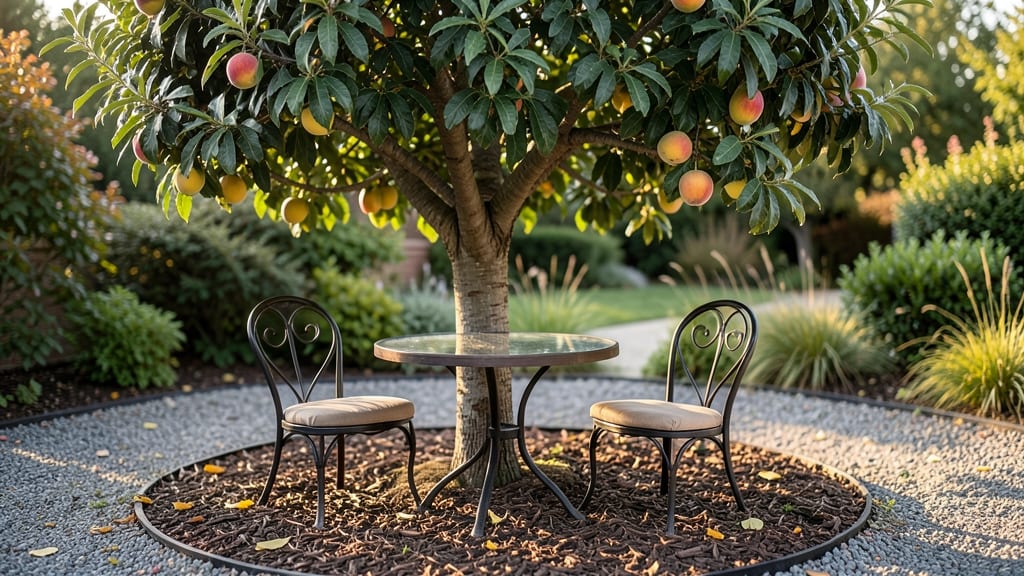
A full-grown patio peach tree near your bonfire pit needs strategic pruning to keep it safe, beautiful, and manageable—without sacrificing those sweet summer fruits. I learned this the hard way after my first tree grew too close to the fire pit, forcing me to prune aggressively in one season.
The key is shaping it early so branches stay clear of flames while still letting sunlight filter through for those juicy peaches.
Start with three main cuts: remove any low-hanging branches within 6 feet of the fire pit, thin out crowded limbs to improve airflow, and shape the canopy to keep it under 12 feet tall.
You’ll need sharp pruning shears, a ladder, and disinfectant to prevent disease—trust me, skipping this step leads to messy, uneven cuts that heal poorly. The best time to prune is late winter, when the tree is dormant but before buds swell.
After pruning, your tree will reward you with safer outdoor gatherings and a more open, airy shape that lets you enjoy both the shade and the fire without worry.
The branches will redirect energy into fruit production, giving you bigger, sweeter peaches by summer. Just avoid heavy pruning in fall—it stresses the tree before winter dormancy sets in.
For extra safety, plant fire-resistant ground cover like gravel or pavers beneath the tree to reduce fire risk, and consider adding outdoor string lights to highlight its branches at night. This setup keeps your patio both functional and stunning—no more choosing between s’mores and shade!
📚 In This Guide
- What you need
- Instructions
- Tips and common mistakes
- Wrapping up and next steps
What you need
- ● Pruning shears – Bypass pruners (for cuts up to ½ inch thick). Pro tip: Choose sharp, high-quality shears to avoid crushing branches! ✨
- ● Loppers – For branches ½ to 2 inches in diameter (extendable loppers help with taller trees).
- ● Pruning saw – For thick branches (2+ inches). A curved blade works best for peach trees.
- ● Gloves – Heavy-duty, cut-resistant gloves to protect your hands from thorns and rough bark.
- ● Disinfectant (70% isopropyl alcohol or bleach solution) – Clean tools between cuts to prevent disease spread.
- ● 5-gallon bucket or tarp – For collecting pruned branches and debris.
- ● Ladder or sturdy step stool – If your tree is over 6 feet tall (safety first! ⚠️).
- ● Permanent marker & tape measure – For marking cuts and measuring branch thickness.
- ● Pruning sealant – For large cuts (controversial but some swear by it for wound healing).
- ● Tree wound dressing – Avoid overuse; peach trees heal best when left open to air.
- ● Work boots or closed-toe shoes – Protect your feet from dropped branches or sharp tools.
- ● Safety glasses – Especially useful if you’re dealing with thick branches or using a saw.
- ● Notebook & pen – To sketch your tree’s structure before and after pruning.
- ● Check local regulations—some areas restrict bonfire pits near trees (safety first!).
- ● Prune during dormant season (late winter/early spring) for best results.
- ● Ensure your tree is healthy—avoid pruning if it shows signs of disease (e.g., oozing sap, dead branches).
- ● Have a plan! Sketch your tree’s canopy to visualize open space for your patio bonfire.
Step-by-step pruning guide for your patio peach tree
Here's how to keep your tree healthy, productive, and safe year-round.
Time Your Pruning for Optimal Growth
Prune your patio peach tree during late winter or early spring, just before buds swell but before new growth begins. This timing ensures you remove dead wood while stimulating fresh, vigorous growth. Avoid pruning in fall—it leaves wounds open to disease and frost damage. If you must prune in summer, do so after harvest to redirect energy toward next year's fruit.
I always check the weather before pruning—wait for a dry, 50-60°F day. Wet conditions spread bacterial infections through fresh cuts. The tree's natural sap flow slows in cooler weather, helping cuts heal faster. If you missed the ideal window, prune as soon as possible, but avoid heavy cuts in extreme heat or cold.
Assess and Remove Problem Branches First
Start by removing dead, diseased, or crossing branches—these are the top priorities. Dead wood is easy to spot: it's brittle, lacks bark, and often has no leaves. Diseased branches may ooze sap or have dark, sunken spots. Use clean, sharp pruners to make 45-degree cuts just outside the branch collar (the swollen area where the branch meets the trunk).
Next, look for branches growing inward or rubbing against others. These create wounds that invite pests and rot. Thin out crowded branches to improve airflow and sunlight penetration. I like to step back every few cuts to visualize the tree's shape—this helps me see what's still needed. Never remove more than 25% of the tree's canopy in one session, or you'll stress the plant.
Shape for Balance and Airflow
Peach trees thrive with an open-center shape, allowing sunlight to reach the center and fruit to ripen evenly. Start by removing any suckers (vigorous shoots growing from the base or trunk) and water sprouts (vertical shoots growing straight up). These drain energy from fruit production. Use your hands to snap off small suckers or prune larger ones at ground level.
For larger branches, aim to create a rounded, vase-like structure with the main scaffold branches spaced 12-18 inches apart. Prune back lateral branches to 1/3 of their length to encourage bushier growth. Avoid "heading back" (cutting just above a bud) unless you're training new growth—it often leads to weak, leggy branches. Instead, cut back to a strong lateral branch or bud.
Clean Up and Protect the Tree
After pruning, rake up all debris and dispose of it in the trash—never compost diseased wood. Sterilize your pruners with rubbing alcohol between cuts to prevent spreading pathogens. Seal larger cuts (over 1/2 inch in diameter) with pruning sealant to reduce moisture loss and infection risk. For smaller cuts, let them heal naturally—the sealant isn't necessary and can trap moisture.
Water the tree deeply after pruning to help it recover. Mulch around the base with 2-3 inches of organic mulch, keeping it 6 inches away from the trunk to prevent rot. This conserves moisture and regulates soil temperature. Avoid heavy pruning in the last 6 weeks of summer—new growth won't harden off before winter, making the tree vulnerable to frost damage.
Tips & tricks for perfect patio peach tree pruning
Here's what I've learned after years of keeping my patio peach tree thriving—these little details make all the difference.
The Ideal Pruning Window: Late winter or early spring is non-negotiable for that perfect balance between removing dead wood and stimulating new growth. I've learned the hard way that fall pruning leaves wounds vulnerable to winter diseases, and summer pruning after harvest is your only alternative if you miss the spring window. The key is watching those buds—prune just as they're starting to swell, but before any green appears.
Branch Collar Technique: When making those 45-degree cuts in Step 2, focus on cutting just outside the branch collar—the swollen area where the branch meets the trunk. This is where healing tissues form naturally. I've seen too many pruning mistakes where people cut too close to the trunk, creating permanent weak spots. Use a sharp pruner and make clean cuts to minimize damage and speed up healing.
Visualizing the Tree's Shape: Step back every few cuts to visualize your tree's final shape. This is where most people go wrong—they get too focused on individual branches and lose sight of the big picture. Aim for that open-center shape with branches spaced 12-18 inches apart. The goal is sunlight reaching all parts of the tree, which means you'll need to thin out crowded areas ruthlessly. Remember, you're sculpting a work of art here!
Pruner Care Between Cuts: Sterilizing your pruners with rubbing alcohol between each cut is one of those small details that prevents big problems. I keep a small bottle of alcohol handy and wipe down my pruners after every branch. This simple step stops the spread of bacterial infections that can turn a healthy tree into a sick one. Don't skip this—it's your first line of defense against disease.
Pro Tips for Full Grown Bonfire Patio Peach Tree
- Here's what I've learned after years of keeping my patio peach tree thriving—these little details make all the difference.
- The Ideal Pruning Window: Late winter or early spring is non-negotiable for that perfect balance between removing dead wood and stimulating new growth.
- Branch Collar Technique: When making those 45-degree cuts in Step 2, focus on cutting just outside the branch collar—the swollen area where the branch meets the trunk.
Frequently asked questions
Got questions about managing a full-grown patio peach tree near your bonfire pit? You’re not alone! Here are answers to the most common concerns—from safety to seasonal care—so you can enjoy both your tree and your s’mores without stress.
How close can a bonfire patio be to a full-grown peach tree without harming it?
Aim to keep the fire pit at least 15–20 feet away from your tree’s dripline (the outermost branches). Peach trees are sensitive to heat stress, and embers or smoke can scorch leaves or bark. If your space is tight, consider a gas-powered fire pit with controlled flames for safer proximity.
When is the best time to prune a peach tree to avoid interfering with fruit production?
Prune late winter or early spring (before buds swell) for best results—this encourages strong new growth and fruit development. Avoid heavy pruning in summer or fall, as it can stress the tree or invite pests. Light shaping trims during dormancy (Dec–Feb) are fine, but skip major cuts after harvest.
What if my peach tree’s branches are already too close to the fire pit? Can I move it?
Moving a full-grown peach tree is extremely difficult (root systems are massive!) and often causes transplant shock. Instead, prune strategically to thin branches toward the fire pit, redirecting growth away from danger zones. If the tree is young (<5 years), relocating might be possible with professional help—but plan for a year of recovery.
Will pruning a peach tree reduce its fruit yield the first year?
Not if done correctly! Proper pruning improves fruit quality and yield long-term by boosting airflow and sunlight. However, heavy pruning in one season may reduce fruit the first year as the tree focuses on regrowth. Space cuts over 2–3 years to minimize impact. Thin out water sprouts and crossing branches first—they steal energy from fruit production.
How do I protect a peach tree from fire pit smoke damage in winter?
Smoke can weaken trees by clogging stomata (leaf pores). To protect your peach tree:
- Use a temporary windbreak (like a tarp or mesh screen) on windy days.
- Avoid burning treated wood or trash—opt for dry, clean firewood.
- Water the tree deeply before winter to help it tolerate smoke stress.
- Apply a light mulch layer (2–3 inches) to shield roots from heat.
Pro Tip: Label your pruning cuts!
Use colored tape or paint to mark branches you plan to remove over time. This helps you track progress and avoid over-pruning. Example: Red = remove this year, yellow = next year.
Wrapping up and next steps
Transforming your full-grown patio peach tree into a stunning, safe bonfire centerpiece is totally doable with the right care! 🌳✨ Remember, consistent pruning keeps your tree healthy, your patio cozy, and your gatherings worry-free.
Whether you’re trimming for aesthetics or safety, the key is patience and precision—your tree (and future s’mores!) will thank you.
Ready to take the next step? Mark your calendar for your next pruning session—spring or early summer is ideal—and grab those shears! With each cut, you’re not just shaping a tree; you’re crafting a year-round haven for warmth, beauty, and memories. Happy pruning!