
Pruning
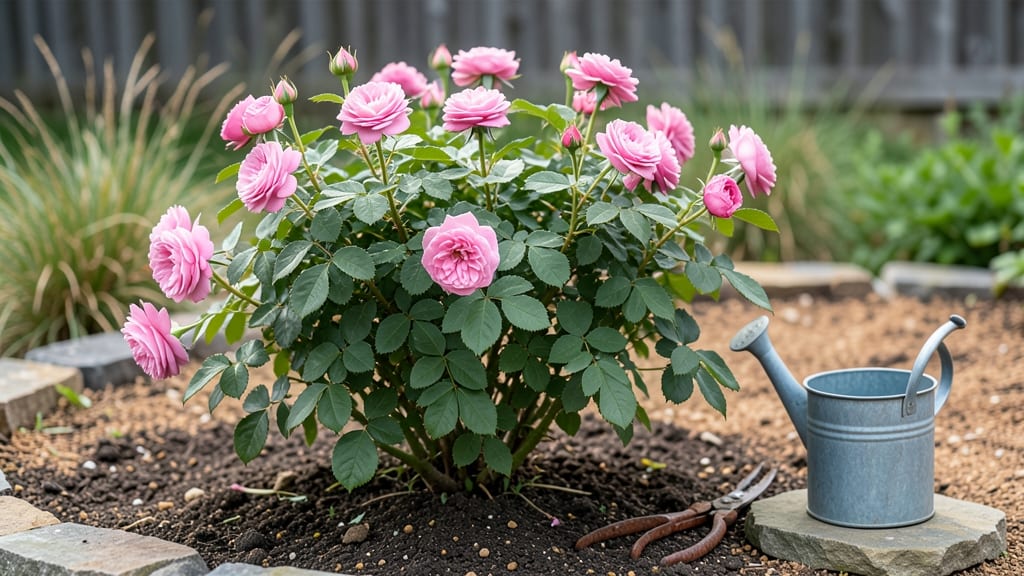
Your flowering rose tree could bloom year-round with just four well-timed cuts—no fancy tools or horticultural degree required. I’ve pruned these grafted beauties for years, and the secret lies in understanding their unique structure: a sturdy trunk supporting a bushy top, where most roses fail to thrive.
The first cut after flowering transforms leggy growth into dense, vibrant blooms, while the final winter trim protects the graft union from freezing. Most gardeners overlook the mid-season shape-up, which is where the magic happens for continuous color.
You’ll need sharp pruners, rubbing alcohol for sterilization, and a clear day to work—no need for expensive gear. The process takes about 30 minutes per tree, and the payoff is three to four flushes of blooms instead of one.
I’ve seen Knock Out roses produce flowers from spring until frost with this method, and even standard grafted varieties respond beautifully. The key is cutting back by one-third at each session, never more, to avoid stressing the plant.
By summer’s end, your rose tree will look like a cloud of blooms instead of a tangled mess. The flowers stay larger and more abundant, and the structure remains strong enough to support heavy blooms.
You’ll notice fewer bare stems, better air circulation (which means fewer pests), and a shape that actually shows off the tree’s natural form. This isn’t just pruning—it’s sculpting a living work of art that keeps giving all season.
Works for grafted varieties like Knock Out, Floribunda, and Hybrid Tea rose trees, even in small spaces. The same principles apply whether you’re dealing with a 6-foot specimen or a dwarf variety in a container. Once you master these four cuts, you’ll wonder why you ever struggled with roses before.
📚 In This Guide
- What you need
- Instructions
- Tips and common mistakes
- Wrapping up and next steps
What you need
- ● Bypass pruners – Sharp, high-quality bypass pruners (e.g., Felco or Fiskars) for clean cuts on stems up to ½ inch thick.
- ● Loppers – Heavy-duty loppers (e.g., Corona or Bahco) for branches ½ to 1½ inches thick.
- ● Pruning saw – A curved-tooth pruning saw (like the Felco F-2) for thick, woody branches over 1½ inches.
- ○ Hand pruners (optional) – For delicate trimming of small shoots or deadheading.
- ● Garden gloves – Heavy-duty, thorn-resistant gloves (e.g., Mechanix or Dr. McGill’s) to protect your hands.
- ● Disinfectant – 70% isopropyl alcohol or a 10% bleach solution to sterilize tools between cuts.
- ○ Pruning sealant (optional) – Tree wound dressing (like Tanglefoot Tree Wound Pruning Sealer) for large cuts over ½ inch.
- ● Sharpie or paint marker – For marking branches to remove (great for planning ahead!).
- ● Bucket or tarp – To collect pruned branches and debris.
- ○ Extension pole (optional) – A 3- to 6-foot pole with a saw attachment for high branches.
- ● Safety glasses – To shield your eyes from flying debris.
Instructions for pruning a flowering rose tree
Here's the straightforward approach I've used for years to keep roses blooming abundantly.
✂️ Step 1: Perform the Late Winter Cleanup Cut
This is your most important pruning—do it in late winter, just before buds begin to swell. Start by removing any dead, diseased, or crossing branches first. Cut these back to healthy wood at a 45-degree angle about ¼ inch above an outward-facing bud. This ensures water runs off and new growth heads outward.
Next, look for branches that are too crowded or growing inward. Roses need good airflow to prevent fungal diseases. Thin these out completely, cutting all the way back to the main stem or a strong lateral branch. You'll know you're doing it right when you can see light filtering through the center of the plant.
Don't worry about being too aggressive here—this is the time to open up the plant's structure. I like to shape the plant into an open vase form, with the center completely clear. This creates room for next year's blooms and better air circulation.
✂️ Step 2: Light Pruning After the First Spring Bloom
After your rose finishes its first flush of spring blooms, give it a light pruning to encourage a second round of flowers. This time, focus on cutting back the spent blooms to just below the next set of five larger leaves. This is called "heading back" and it stimulates new growth from that leaf node.
Remove any weak or spindly growth that doesn't look like it will produce strong blooms. These shoots will compete with your main flower stems for energy. Also trim back any branches that are growing too long and leggy—they'll produce fewer flowers and may flop over.
I like to do this pruning on a dry day when the plant is well-watered. The fresh cuts will heal faster, and you won't risk spreading any fungal spores that might be present in wet conditions.
✂️ Step 3: Summer Pruning for Continuous Blooms
Throughout the growing season, keep up with regular deadheading to maintain continuous blooming. As soon as a flower fades, cut it back to the nearest five-leaf cluster. This prevents the plant from putting energy into seed production and keeps it focused on producing more flowers.
In mid-summer, give your rose tree a light shaping prune. Look for any branches that are growing too long or getting too woody. Cut these back by about ⅓ to encourage bushier growth. You'll also want to remove any suckers—those are the shoots growing from the base of the plant or from the graft union.
This is also the time to check for any signs of pests or diseases. Remove and destroy any infected leaves or branches immediately. I always sterilize my pruning shears with rubbing alcohol between cuts to prevent spreading any potential problems.
✂️ Step 4: Final Light Pruning in Early Fall
About 6-8 weeks before your first expected frost, give your rose tree one last light pruning. This helps it prepare for winter by removing any weak, diseased, or crossing branches. Cut back any growth that looks like it won't have time to harden off before winter.
Focus on thinning out the center of the plant again, making sure there's good airflow. This helps prevent winter diseases and gives the plant a chance to dry out before the cold sets in. You'll also want to remove any seed pods that have formed—they'll only drain energy from the plant.
After this final pruning, give your rose tree a good watering and apply a 2-3 inch layer of mulch around the base. This helps protect the roots from temperature fluctuations and keeps the soil moist over winter.
Tips & tricks for pruning a flowering rose tree
These simple but powerful techniques will help you keep your roses thriving all year long.
The Right Time is Everything: Late winter cleanup is your most important pruning—it's when roses are dormant and can handle aggressive cuts. I can't stress enough how critical this timing is. If you miss this window, wait until after the first flush of spring blooms. Never prune in fall after the first frost or you risk damaging new growth trying to sprout.
Cutting Technique Matters: When making your cuts, always use clean, sharp shears and make your cuts at a 45-degree angle about ¼ inch above an outward-facing bud. This simple technique ensures water runs off the cut and new growth heads outward. I've seen people make cuts too close to buds or at awkward angles, which leads to poor regrowth and weak stems.
Shape Matters More Than You Think: In Step 1, focus on creating an open vase form with light filtering through the center. This isn't just aesthetic—it's crucial for airflow that prevents fungal diseases. Think of it like giving your rose a spa day: you're removing the crowded, stressed branches to let it breathe and grow stronger. The open center also creates space for next year's blooms to develop properly.
Seasonal Attention is Key: Don't let your pruning efforts go to waste by neglecting maintenance. In summer, make deadheading a habit—cutting back faded blooms to the nearest five-leaf cluster keeps your rose focused on producing more flowers rather than seeds. I've seen roses go from sporadic bloomers to continuous flowering gardens just by adding this simple step. Even 10 minutes of deadheading every few days makes a world of difference.
Pro Tips for Flowering Rose Tree
- These simple but powerful techniques will help you keep your roses thriving all year long.
- The Right Time is Everything: Late winter cleanup is your most important pruning—it's when roses are dormant and can handle aggressive cuts.
- Cutting Technique Matters: When making your cuts, always use clean, sharp shears and make your cuts at a 45-degree angle about ¼ inch above an outward-facing bud.
Frequently asked questions
Got questions about keeping your flowering rose tree in tip-top shape? We’ve got answers! Whether you’re a newbie or a seasoned gardener, these FAQs will help you prune like a pro and keep those blooms coming year-round.
When is the best time to prune a flowering rose tree?
The ideal time depends on your rose type! For spring-blooming varieties (like hybrid teas), prune in late winter or early spring (before buds swell). For repeat-blooming roses (like floribundas), prune in both early spring and after summer blooms to encourage continuous flowers. Avoid heavy pruning in fall—it can stress the plant before winter.
How much can I cut back my rose tree?
Most flowering rose trees can be pruned back by 1/3 to 1/2 of their height, but avoid overdoing it. For young trees, remove dead, diseased, or crossing branches first, then shape the canopy. Mature trees may need 3-4 main branches left to maintain structure. Never cut into old wood—focus on younger, green stems for better regrowth.
What if my rose tree isn’t blooming after pruning?
Several factors could be at play: over-pruning (too much in one go), poor sunlight (roses need 6+ hours of sun), or nutrient deficiencies. Try fertilizing with rose-specific food in early spring, watering deeply, and checking for pests (like aphids or spider mites). If the issue persists, your rose may need rejuvenation pruning—a drastic cut back to stimulate new growth.
Can I prune a flowering rose tree in winter?
Light pruning (removing dead or broken branches) is fine in mild winters, but avoid heavy cuts. Cold snaps can weaken the plant, and dormant pruning (before buds break) is key for spring blooms. If you must prune in winter, do it on warmer days (above 40°F) and clean tools with rubbing alcohol to prevent disease spread.
What’s a good alternative if my rose tree isn’t thriving?
If your rose tree struggles with disease, pests, or poor blooming, consider replacing it with a hardier variety like Knock Out® roses (disease-resistant) or climbing roses (for vertical space). For containers, try miniature roses or polyantha roses, which are low-maintenance and bloom prolifically. Always match the variety to your climate and sunlight conditions!
Wrapping up and next steps
Transforming your flowering rose tree into a stunning year-round masterpiece is simpler than you think!
With just four strategic cuts—spring, summer, fall, and winter—you’ll encourage vibrant blooms, healthier growth, and a shape that steals the show. 🌹 Pruning isn’t just about trimming; it’s about nurturing your rose’s potential with confidence and care.
Ready to take the next step? Grab your pruners, review your seasonal checklist, and start small. Even a single cut can make a difference—so don’t wait! Your rose tree will thank you with lush, fragrant blooms and a garden that feels like a work of art. Happy pruning! ✂️