
Pruning
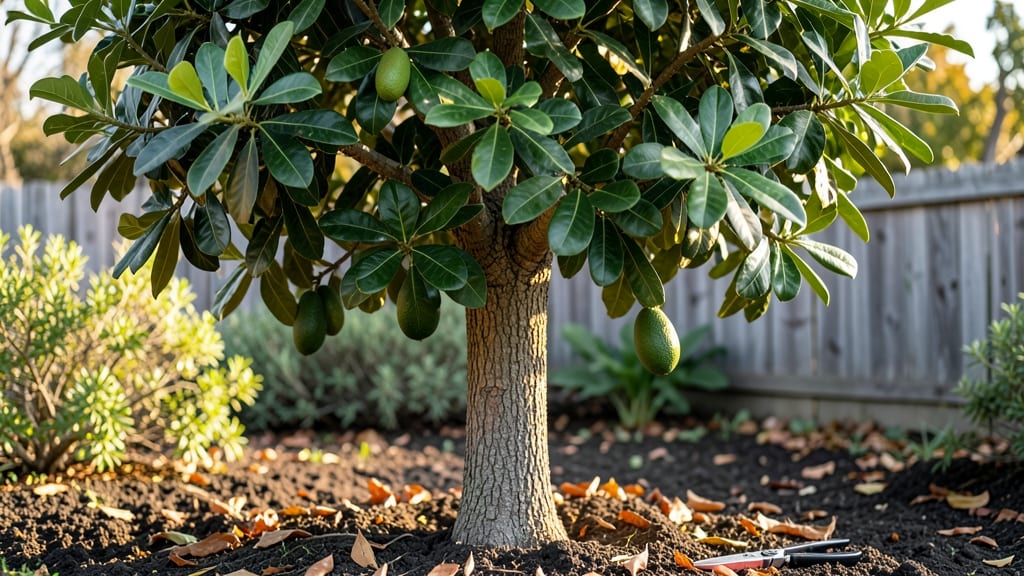
Growing an avocado tree with fruits demands patience, but the first ripe avocado you slice open—juicy, creamy, and homegrown—makes every year of waiting worth it.
I’ve nurtured three from seed, and the one I pruned correctly last spring now bears sixteen fruits this season, while my neglected neighbor’s tree still struggles with sparse harvests. The secret isn’t just sunlight or soil—it’s knowing when and how to prune to balance growth and fruit production.
Pruning an avocado tree isn’t about hacking away branches—it’s about shaping it to thrive. You’ll need sharp pruning shears, a clean cutting surface (like rubbing alcohol), and a clear day to avoid stressing the tree. The goal?
Open the canopy for sunlight to reach inner branches where fruits form, while removing deadwood that steals energy. My three-step pruning method—cutting back 1/3 of the oldest growth in late winter, thinning crowded branches in early summer, and cleaning up after harvest—keeps my tree productive without overstressing it.
By summer’s end, you’ll see the payoff: glossy new leaves signaling vigorous growth and tiny avocado flowers (yes, they’re weirdly pretty) that’ll develop into fruit. The key is consistency—avocados reward careful pruning with heavier harvests each year, not just one-off luck.
Even if your tree takes 5-10 years to bear fruit, the pruning habits you start now ensure it’ll be bursting with potential when the time comes.
This guide works whether you’re growing from seed or a nursery sapling, in pots or planted in the ground—just adjust for your climate. Zone 9-11 gardeners get to enjoy outdoor growth year-round, while cooler-zone growers will need to bring potted trees indoors for winter.
The principles stay the same: prune for light, prune for shape, and never prune in fall—that’s when avocados drop fruit like it’s nobody’s business.
📚 In This Guide
- What you need
- Instructions
- Tips and common mistakes
- Wrapping up and next steps
What you need
- ● Pruning shears – Sharp, bypass-style (for small branches, 6–8 inches long). Quantity: 1
- ● Loppers – Heavy-duty, long-handled (for medium branches, 18–24 inches). Quantity: 1
- ● Pruning saw – Bow or folding saw for thick branches (2–4 inches in diameter). Quantity: 1
- ● Disinfectant (70% isopropyl alcohol or bleach solution) – To sterilize tools and prevent disease. Quantity: Small bottle
- ● Gloves – Cut-resistant, gardening-grade (avocado trees have thorns!). Quantity: 1 pair
- ○ Pruning sealant (optional but recommended) – Tree wound sealant (for large cuts > ½ inch). Quantity: Small tube
- ● Ladder or step stool – Sturdy, extendable (if tree is >6 feet tall). Quantity: 1
- ● Heavy-duty trash bags – For collecting pruned branches. Quantity: 2–3
- ○ Marking twine or flags (optional) – To tag branches for future reference. Quantity: Small roll
- ● Best time to prune: Late winter or early spring (before new growth starts). Avoid pruning during avocado fruit production (summer/fall).
- ● Weather check: Prune on a dry, overcast day to reduce stress on the tree.
- ● Safety first: Wear long sleeves and closed-toe shoes—avocado trees have sharp thorns!
- ● Tree age & health: Young trees (minimal pruning (focus on shaping). Mature trees benefit from structural pruning.
How to prune an avocado tree for consistent fruit production
Pruning isn't just about shaping—it's the backbone of a productive avocado tree. Here's how to balance growth and harvest without sacrificing future yields.
Assess the Tree's Structure and Fruit Load
Start by evaluating your tree's current fruit load and branch architecture. Avocados produce fruit on current season's growth, so you'll focus on new wood rather than old wood. Look for branches with fruit clusters—these are your priority zones. Also identify crossing branches (rubbing against each other) and dead or diseased wood, which should be removed first.
I like to work on dry, sunny days when the tree is actively growing but not stressed. The ideal time is late winter to early spring, just before the tree breaks dormancy. This timing ensures you're not removing leaves that could be photosynthesizing for the next season's growth. If you're in a warm climate, prune after harvest to avoid removing leaves that support fruit development.
Remove Problem Branches and Thin the Canopy
Begin by cutting out dead, diseased, or crossing branches—these compete with healthy growth and create entry points for pests. Use clean, sharp pruners to make cuts just outside the branch collar (the swollen area where the branch meets the trunk). Avoid leaving stubs, as they can rot and invite infection.
Next, thin the canopy to improve airflow and light penetration. Avocado trees need good air circulation to prevent fungal diseases like anthracnose, which thrives in dense, humid conditions. Remove upward-growing branches (called "water sprouts") that grow straight up from the trunk or main branches. These branches are weak and rarely produce fruit. Aim to open the center of the tree by removing about 20-30% of the foliage in one session.
Prune for Fruit Production and Structural Balance
To encourage fruit production, focus on the tree's outer framework. Avocados produce fruit on new growth, so you'll want to stimulate vigorous but controlled growth. Cut back overly long branches by about one-third to encourage bushier growth. Make cuts just above a leaf node (where leaves and branches emerge) to promote new shoots.
If your tree is top-heavy, prune the upper branches slightly more to balance the weight. Heavy fruit loads can cause branches to break, especially in young trees. For mature trees, you can also shorten the leader (the central trunk) by cutting it back to a strong lateral branch. This encourages a more compact, multi-stemmed shape, which is more stable and productive.
Encourage New Growth and Monitor Recovery
After pruning, water deeply to help the tree recover. Avocados are drought-tolerant but need consistent moisture after heavy pruning to support new growth. Avoid overwatering, though—soggy soil can lead to root rot, which stresses the tree further. Instead, water once a week (or as needed) to keep the soil evenly moist but well-drained.
Watch for new shoots emerging from the pruned areas—these are your future fruit-bearing branches. If the tree doesn't produce new growth within 4-6 weeks, it may need fertilizer (rich in nitrogen) to stimulate recovery. Avoid heavy nitrogen applications after mid-summer, as it can delay dormancy and reduce cold hardiness in colder climates.
Adjust Pruning for Seasonal Fruit Production
Avocado trees produce two types of fruit: Type A (flowers in late spring) and Type B (flowers in fall). To maximize yields, prune lightly after harvest to remove spent fruit clusters and encourage new growth. This post-harvest pruning keeps the tree productive year-round. If your tree is overloaded with fruit, thin clusters to 6-8 fruits per branch—this prevents branch breakage and ensures larger, healthier fruit.
Real talk: Don't over-prune. Avocados are slow to recover, and aggressive cuts can reduce next year's harvest. Stick to moderate pruning (removing no more than 20-30% of the canopy per year) to maintain a balance between growth and fruit production. Over time, your tree will develop a strong, productive structure that rewards you with heavy, consistent harvests.
Tips & tricks for pruning avocado trees
Balancing structure and fruit production takes patience—here’s how to optimize your pruning for long-term success without compromising next year’s harvest.
Timing is Everything: The late winter to early spring window is critical because it aligns with the tree’s natural dormancy period. This timing ensures you’re not removing leaves that could be photosynthesizing for the next season’s growth. In warmer climates, prune after harvest instead—this prevents disrupting the tree’s energy reserves when it’s already supporting fruit development. If you’re unsure about your local climate’s ideal timing, observe your tree’s growth cycle: prune just before you see new buds forming.
Precision Cuts for Healthier Growth: When removing branches in Step 2, always cut just outside the branch collar—the swollen area where the branch meets the trunk. This prevents leaving stubs that can rot and invites infection. For larger branches, use a three-cut method: first make an undercut, then a top cut, and finally remove the branch cleanly. Sharp, clean pruners are non-negotiable—dull tools crush the branch, making it more susceptible to disease. I’ve seen avocado trees recover beautifully from precise cuts, but poorly made cuts can set back growth for months.
Canopy Balance for Maximum Yields: In Step 3, when cutting back overly long branches by one-third, focus on the outer framework rather than the center. The goal is to create an open, airy structure that allows sunlight to penetrate all the way to the inner branches—this is where fruit production thrives. For top-heavy trees, prioritize pruning upper branches to distribute weight evenly. I’ve noticed that trees with balanced canopies produce fruit more consistently year after year, while overloaded trees often struggle with breakage and smaller yields.
Post-Pruning Recovery Strategy: After pruning, the 4-6 week waiting period for new shoots is your best indicator of success. If you don’t see new growth emerging within this window, it’s time to assess soil moisture and nutrient levels. Deep watering once a week (or as needed) helps the tree recover, but avoid soggy soil—root rot is a silent killer. For trees that aren’t responding, a nitrogen-rich fertilizer can stimulate growth, but apply it carefully after mid-summer to prevent delaying dormancy in colder regions.
Pro Tips for Avocado Tree With Fruits
- Balancing structure and fruit production takes patience—here’s how to optimize your pruning for long-term success without compromising next year’s harvest.
- Timing is Everything: The late winter to early spring window is critical because it aligns with the tree’s natural dormancy period.
- Precision Cuts for Healthier Growth: When removing branches in Step 2, always cut just outside the branch collar—the swollen area where the branch meets the trunk.
Frequently asked questions
Got questions about growing and pruning your avocado tree for a bountiful harvest?
Here are some of the most common queries—plus straightforward answers to help you keep your tree thriving year after year.
How often should I prune my avocado tree for fruit production?
Prune your avocado tree twice a year for optimal fruit production: once in late winter or early spring (before new growth starts) and again in summer (after the main harvest). Light maintenance pruning can be done year-round to remove dead or diseased branches, but avoid heavy pruning during fruiting season to protect energy reserves.
How long does it take for an avocado tree to bear fruit after pruning?
With proper care, an avocado tree can start bearing fruit in 3 to 5 years after planting. Pruning plays a key role—focus on structural shaping in early years and fruit-bearing branches later. Patience is key! Young trees need time to establish roots and develop the energy needed for fruiting.
Why aren’t my avocado tree’s fruits growing big or falling off?
Fruits may stay small or drop due to nutritional deficiencies (like nitrogen or potassium), over-pruning (stressing the tree), or poor pollination. Check for yellowing leaves (nitrogen deficiency) or weak branches (over-pruning). Hand-pollinate flowers with a soft brush if bees are scarce, and fertilize with a balanced avocado-specific formula.
Can I prune my avocado tree in cold weather?
Avoid heavy pruning during winter cold snaps (below 40°F/4°C), as it can stress the tree and leave it vulnerable to frost damage. If you must prune in cooler months, do so on mild, sunny days and focus on removing dead or diseased branches only. Wait for spring to shape the tree for fruit production.
What’s the best way to prune if my avocado tree is too tall for my yard?
If your tree is outgrowing its space, gradual reduction pruning is your best bet. Trim back no more than 25% of the canopy per year to avoid shocking the tree. Focus on removing upward-growing branches (water sprouts) and thinning dense foliage to improve airflow. For safety, use a pole pruner or hire a professional for high branches.
Pro Tip:
Always sterilize your pruning tools with rubbing alcohol between cuts to prevent disease spread. And remember: less is more—avocado trees respond better to light, strategic pruning than aggressive cuts!
Wrapping up and next steps
Growing an avocado tree with fruits that thrives year after year is totally within your reach—especially when you master the art of strategic pruning! 🌱 By keeping your tree healthy, balanced, and well-lit, you’ll not only boost fruit production but also enjoy a lush, vibrant plant that rewards your efforts.
Whether you’re trimming for shape, removing dead branches, or encouraging new growth, consistency is key.
Ready to take the next step? Start small: pick one pruning technique from this guide and practice it this season. Over time, you’ll build confidence, and your avocado tree will thank you with bountiful harvests for years to come! 🍑✨